Tag Archives: Pathfinder

Life In The Big City – Chase Rules

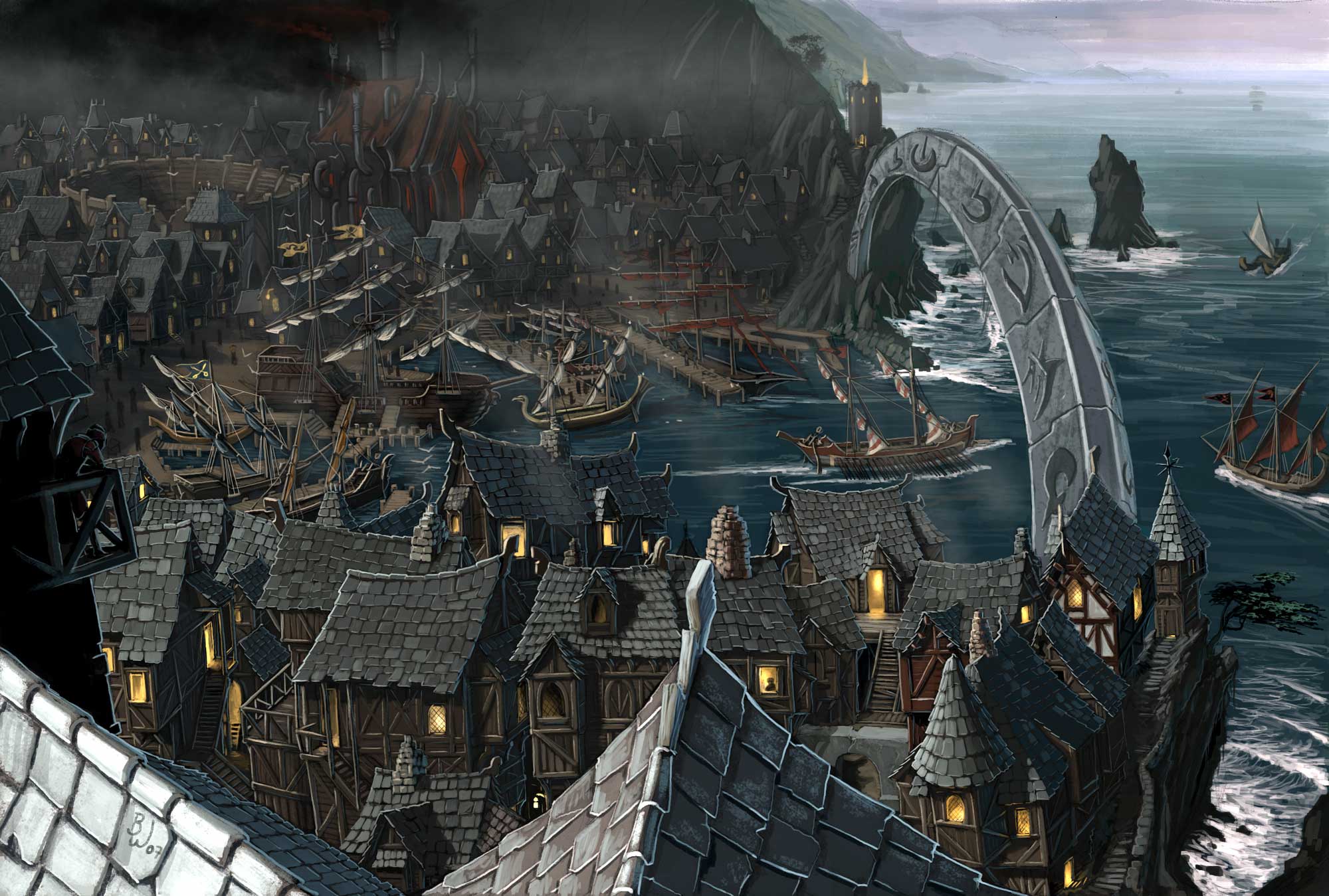
My Reavers on the Seas of Fate campaign is well underway and the PCs are all over the mean streets of Riddleport.  There’s some common scenarios that come up in urban adventures that I wanted to streamline; here’s my current efforts for your edification and comment!  They’re Pathfinder based but very easily adapted to anything d20-ish.  First, we have chase rules!

Chase Rules

Exciting chase scenes, the staple of action movies everywhere, are very hard by default in D&D because though every other part of the rules has variance built in – from stats to skills to damage – movement has always been completely static.  “30 feet a round whether you need it or not!”

I got Adamant Entertainment’s Tome of Secrets for Pathfinder when it came out, and it has chase rules, but those rules are like a lot of chase rules I’ve seen in RPGs over time – way too complicated.  They’re 40 damn pages of specific maneuvers and all.  The entire Combat chapter in the Pathfinder RPG is only 25 pages.  I wanted something that could be run without everyone having to do homework; in my opinion if a new bolt-on special case ruleset is more than about 2 pages then “you’re doing it wrong.”

So here’s what I came up with.  It was hard to balance it out but after a couple playtest chases in the real campaign I think they are pretty light and easy to use, fair, and keep the PCs engaged.

The Movement Check

A character’s Move check is +2 per 5′ of base speed.  For an unencumbered human that moves 30′, that’s +12.  In a self-powered race like a footrace, you can add your STR bonus to this in a given round but then have to make a DC 15 Fort save to not become fatigued from the exertion.   Use this same formula for other movement types (riding, swimming) because it takes differing speeds into account well.  (as a bonus, this means you can have a chase where various participants are using different modes of movement).

The Chase Track

Rather than keeping up with specific distances, a chase has distance represented by an arbitrary condition track.  It’s defined relative to whoever’s in the lead, and has six levels –

  1. Close Contact – within melee range of leader.  Subject to all obstacles the leader has to deal with.
  2. Point Blank – close range (all those “within 30 feet” powers proc here).  Take leader’s obstacles or take an alternate path at DC 20.
  3. Short – Take leader’s obstacles or an alternate path at DC 15.  -2 on ranged attacks.
  4. Medium – From this far back, it’s usually easy to avoid obstacles.  -4 on ranged attacks.
  5. Long – -6 on ranged attacks.
  6. Lost – you done lost ’em.   If you have allies still in the chase and you can still run (not fatigued or just giving up) you can run after them sufficiently to at least arrive on the scene once it’s all over, but you can’t get back into the actual chase.

For each 5 points by which you beat the leader’s movement check,  you close by one category on the track; similarly you slip back by one for each 5 points by which you miss their check.

Chase participants start at a chase level that makes sense – if they are right there with the leader and take off after them when they take off, they can start at point blank.  If they’re a round of movement away, or pause to shoot or take another action before they get going, start them at medium range.

Obstacles

In a chase, there’s a bunch of different kinds of obstacles and complications that can come up.  Here’s a sample but not comprehensive list.  In general the checks to pass these obstacles are DC 15.  If you fail the check, you drop back one level on the chase track; if you miss by 5 you take 1d6 nonlethal damage from a collision or similar mishap.  This is an urban specific list.  In a crowded urban environment, each round has a 1 in 3 chance of bringing a mandatory obstacle, or the leader can deliberately head towards obstacles as desired.  Roll 1d8 for what type, or choose one:

  1. Simple (Acrobatics, attack an object) – barrels, gate, street vendor’s blanket, etc.
  2. Barrier (Acrobatics) – fruit cart, unexpected turn
  3. Wall (Climb) – traditional “end of alley” wall, fence
  4. Gap (Acrobatics/Jump) – ditch, open manhole, pit
  5. Traffic (Acrobatics/Overrun) – pedestrians, mule team, orc pirates
  6. Squeeze (Escape Artist) – crawlspace, hole in wall
  7. Water (Swim) – river, wharf, pool, fountain
  8. Terrain (Acrobatics) – gravel, mud bank, slick cobblestones

Chase participants farther back on the chase track can choose whether or not to hit the same obstacle.  Chasers in close contact have to negotiate the same obstacles as the leader.  Chasers in point blank can take the obstacle or make an alternate check at DC 20 to avoid it – for example, “I can’t swim, I’m going to run around the reflecting pool instead.”  Chasers at short range can take the obstacle or an alternate check at DC 15.  Chasers farther back can generally avoid routine obstacles, but the DM can require them if it’s logically necessary (the leader swam across the river, for example).

You’d choose different obstacles and skills for other kinds of chase – a horseback chase would use Ride instead of Acrobatics, and a chase in the country would have trees and hedges instead of crates and alleys.

Actions

Anyone in close contact with the leader can conduct melee attacks on them.  Whoever wins initiative gets to determine if attacks or Movement checks happen first.

A character can take a missile attack but automatically drops back one level on the chase track when they do.

If the chase goes a number of rounds equal to anyone’s CON score they have to make DC 20 Fort saves each round or become fatigued, and effectively drop out.

Chase Playtest

Our PCs ranged from halflings and humans in encumbering armor (Move +8) to barbarians and monks (Move +16).

In their first chase, they went after the Splithog Pauper, a skilled rogue.  He had a normal Move (+12) but high Acrobatics, Climb, and Escape Artist checks.

The chase was pretty long.  Everyone managed to stay in the chase; as the slower guys dropped back they benefitted from not having to negotiate as many obstacles.  The Pauper wasn’t rolling well on his movement checks and deliberately hit a lot of obstacles to try to shake the faster guys – the barbarian stayed with him, but he managed to push the rest of them back with this tactic. The cleric was the only one with a ranged attack; he shot an icicle at him a couple times but to limited effect.

There was a cool obstacle moment that everyone thought was very “parkour,” where the Pauper ran and dash vaulted through a fruit stand; one PC followed through the gap with his own leap but the next didn’t quite make it and busted, spraying fruit everywhere.  The barbarian caught up with him legitimately and was stabbing him with his boarding pike (after a pretty bad string of misses he finally was connecting); the cleric used an Infamy Point to find a shortcut to head him off and gave him a good clotheslining; at that point we dropped out of chase mode and the two PCs cut him down before he could maneuver away from them.

The next chase was interestingly different.  This was the party trying to follow a guy through the tenements, but he spotted them and ran.  He was just a level 1 expert, nothing special, but he rolled really well and lost most of the party except for the tracker (the rest of the party was staying an increment behind the tracker to avoid detection).  But the fleeing guy totally sucked at obstacles, and after a couple slowed him, the tracker got into close contact and dragged him to the ground for a good cuffing and stuffing.

In the end these rules rewarded faster Speeds and higher relevant skills without being overwhelming – in an earlier draft I was using the Acrobatics skill as the Movement check but it made that skill too much of a “whoever has it wins and whoever doesn’t loses” power.   The quarries had a good chance to get away in both situations but after a good hard run they got them.  The chases were long enough they were interesting but went quickly enough and were dynamic enough that they held interest.

These rules work well for a “one on many” chase; it’s not clear how they’d work for a complex many-on-many chase (e.g. horde of zombies vs. party of PCs).

Reavers on the Seas of Fate – Sixth Session Summary

The characters become more proactive in their criminal enterprises in the sixth installment of Reavers on the Seas of Fate, “Three Days to Kill.”  It’s based on a 3e Atlas Games adventure also called “Three Days to Kill.”

Sixth Session (14 page pdf) – One of the crime lord Clegg Zincher’s capps, Braddikar Faje, is headed out of town on the road to Roderic’s Cove to conduct some kind of sale at a villa in the hills.  Jacking up Zincher’s day is more than enough motivation for Saul to send his favorite scum off to break up the deal.

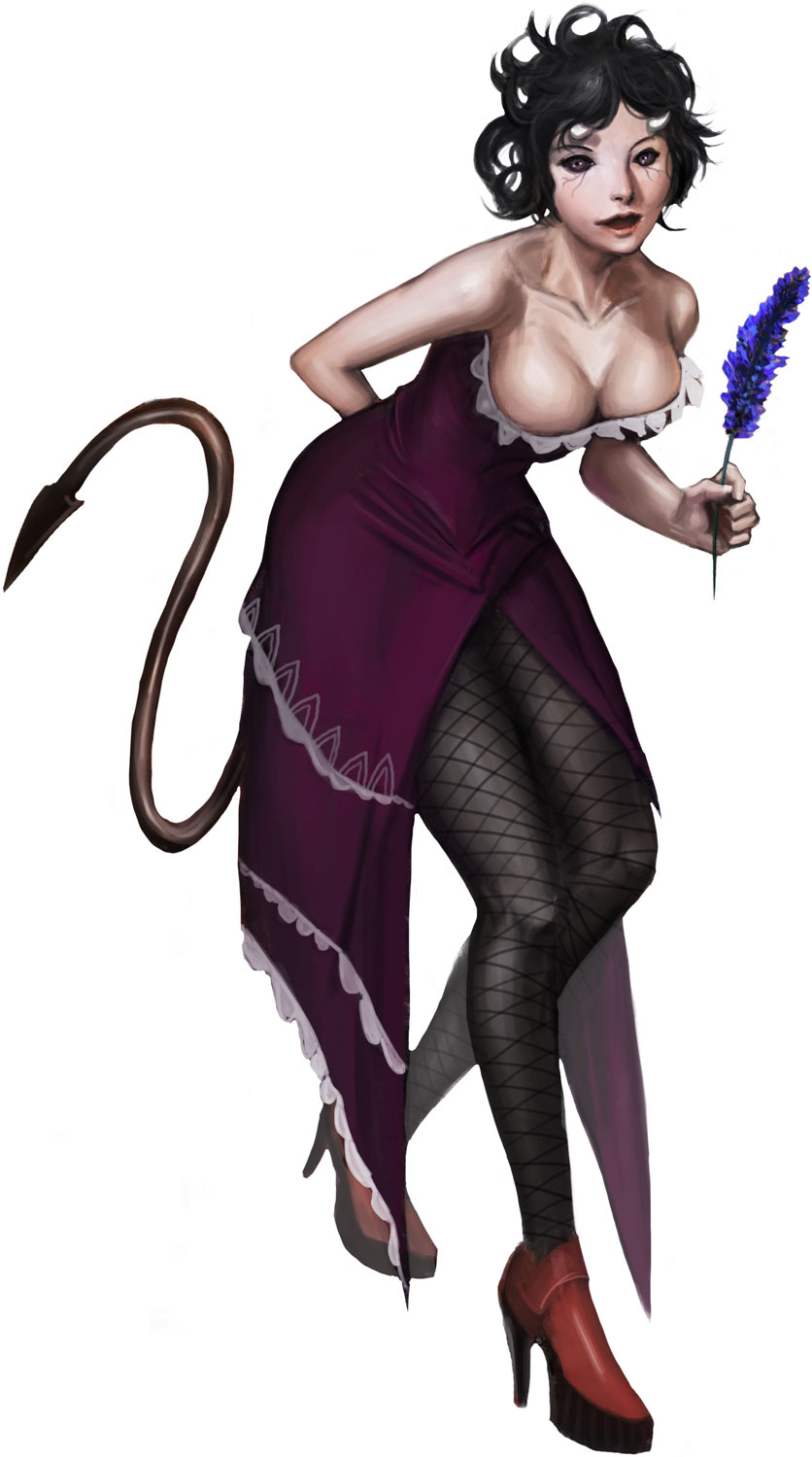
But first, Tommy heads to the local whorehouse/temple of Calistria to see his favorite gal, Lavender Lil.  He finds her hiding behind a tapestry; Captain Scarbelly and his orc pirate crew are visiting, and, as she says, “I like it a little rough, but not orc rough.” So Tommy tells her he and his comrades are headed out into the woods to try to find the secret Calistrian lesbian orgy they hear tell of, as a cover story for their real job.

It’s probably about this time I should share the rumors the PCs got from hitting the streets of Riddleport.  It may explain otherwise bizarre behavior on the part of the guys.  (The weird terminology is mostly Riddleport slang…  As you can tell they are meant to be exactly as a random Riddleporter would relate them.)

Bonfires are sometimes seen in the mountains to the northeast.  I hear a bunch of priestesses of Calistria gather there every new moon for secret all-lesbo orgiastic rituals, and they murder any man who glimpses them.  It still sounds pretty tempting to try.  Woooo!  Man, I wonder if that Pamodae sideshow goes there… Mmmmm…..

When the missionary who founded St. Casperian’s Mission died, he left behind a treasure cache of the money he defrauded from credulous citizens.  Although the building is dilapidated and overrun with grog-blossoms, there is a secret room beneath the ground where the priest hid his ill-gotten gains.  They say it’s guarded by a magical protector that has disappeared everyone that’s tried to claim it.

There are orcs wandering the streets of Riddleport!  Captain Scarbelly’s pirate ship, the Bloody Vengeance, is in town and the whole crew is orc.  People say he’s killed twenty-nine men in hand to hand combat.  He’s probably hooked up with Boss Croat, that snout-lover.  I could totally take an orc.  It’s about speed, not strength!

Gebediah Crix, keeper of the Riddleport Light, got killed by one of those devils he summons.  His parts were strewn all over the lighthouse.  The gendarmes have posted guards outside the place.  I wonder if the devil’s still around?  Hey, I recently came across some Vudran charms, guaranteed to keep evil spirits away.  Wanna buy one?

There’s some kind of gang of whiskers that operates in the Rotgut District.  I have a cousin who got robbed by a bunch of rats in an alley that suddenly turned into people.  And the gendarmes don’t do jack crap about it, say they’re low on funding.  The rats must be connected and that’s why they’re getting a pass.

Some guy, an out of town wizard, wanted to become a fancyboy, but when they wouldn’t let him in, he insulted Elias Tammerhawk, the Speaker of the Order of Cyphers.  They had a duel in Zincher’s arena.   Tammerhawk totally wasted that guy’s dumb ass in short order and magiced up a swarm of rats to eat the body.  He said that was what he got for running his rathole.  Haw haw haw!

There’s been some turf changes on the streets lately.  I hear Avery Slyeg is totally Croamarcky’s bitch now and they’re consolidating and looking to squeeze competitors out of the gambling biz.

The completely false St. Casperian rumor is what caused them to go all SWAT team on the mission last session.  Although their minds are going overtime, and they mentioned that “planting a rumor like that would be a good way to get someone to go in and kill off a rival gang…”

Anyway, they head out to the Trail’s End villa and get a lot more than they bargained for – besides Faje and his men, there’s Asmodean cultists, Marcello Marcellano (the Chelish son of Ox’s former owner from “Water Stop”), and a bunch of raiding Shoanti braves.  They actually carve through the guards OK, but when the Asmodeans start summoning freaky demons from the mirror Faje is selling them, they decide to bail (over Serpent’s objections, who really really wants to kill Faje and everyone else, despite Saul instructing them not to kill him.)

The PCs for some reason thought they had done poorly, I guess because of the default D&D expectation that the only success is found in killing everything in sight and looting it.  But Saul praised them – they killed everyone but Faje and one of his goons, who had to ride into town two to one horse.  The Asmodeans got the mirror without paying for it.  So Clegg is out like 8 guys, a bunch of horses, and the mirror with nothing to show for it, and Faje did NOT get killed and bring the wrath of Zincher and potentially other crime lords down on the Gold Goblin.  The PCs kinda wanted to murder the Asmodeans, Marcellano, and the Shoanti (which Saul couldn’t care less about) and Faje (which would have pissed him off mightily).

But before they got back…  They happened upon the secret Calistrian lesbian orgy ritual.  Or, at least, Tommy snuck up onto something that might have been it and promptly got chased off by a manticore!

I was prepared to run an actual chase scene here, with the mounted PCs fleeing from the manticore, using chase rules from Adamant Entertainment’s Tome of Secrets for Pathfinder.  It was not to be, however, as the usual D&D group problem emerged of one guy refusing to run and that making the rest of the party stand with him.  We then had a weird start-and-stop chase as Sindawe stopped to fight.  But when the manticore dropped his horse in one shot, he thought better of that and hid in the underbrush.  But of course Wogan and Serpent had stopped to help him…  They got away by popping obscuring mist and letting the manticore eat all their horses.  Ah well, all’s well that ends well.

Once they got back, they went with the guy that they let live from the Splithog Pauper’s gang, Madrat, to hit one of Avery Slyeg’s couriers.  Of course, Madrat was a mole working for Slyeg.  So we left off with the PCs facing down a dozen crossbowmen and a crime lord in a warehouse.  Will they sleep with the fishes?  Find out next time, in Reavers on the Seas of Fate: Death in Freeport Riddleport!

New Paizo Class Playtests Continue

Today, the playtests for the new Paizo Advanced Player’s Guide classes continue with the Summoner and the Witch.  (Previously, it was the Cavalier and Oracle.)  Go get ’em, it’s a free download from all from the Paizo store.

I was really looking forward to the Summoner, since I put a lot of work into playing a good summoner in 3.5e, the Internet-famous Valgrim the Malconvoker!

Hey, the summoner is really cool.  It’s a CHA-based caster, has a custom spell list derived from both mage conjurations and also druid-type buffs (magic fang, etc.).  However… 11 pages, Jesus Christ!  This is one complicated class.  It gets a pet called an “eidolon,” which finally explains what the hell that weird LucasArts game I had back in the day was about.  Maybe.

You get to totally determine the form of your eidolon, which is neat.  It uses rules completely different from the current animal companion rules, which is a little sad – with the Cavalier and Summoner they have decided “bah” to standardization on existing rules.  But it’s pretty cool, they go up in level and toughness with you; they’re pretty buff – d10 HD and a strange nonstandard but semi-full BAB progression.  And they have an “evolution pool” you can use to mutate them – there’s a long list of 1-4 point evolutions, from claws to SR.

And besides this, and normal spells – the summoner gets Summon Monster (whatever the highest level you can cast) 3+CHA times a day!  OK, I love me a summoner, but DAMN.  Once you put even a little optimization into this, it gets really good.

It’s certainly a very interesting class.  I have to say, in general I don’t like splatbook and splatbook classes.  You either get flavorless junk or bizarre crap.  But these, even the weirder ones like the Oracle and Summoner, have a way high cool factor.

Now let’s look at the witch…  Many people have many different takes on what a “witch” should be.

Surprisingly, they’re an INT-based caster.  That’s nice, it’s good to see the flood of CHA-based casters stemmed, though I would have guessed they’d go with WIS instead for the “witchy wise woman” feel.  The class is full of the good old witch tropes – pact with otherworldly power, hexes, a cauldron, a coven…

In a very cool twist, the witch’s familiar is the one teaching them magic, so they function kinda like their spell book – they can only prepare spells their familiar knows!

The familiar list is 80% the same as the sorc/wizard one, but has weird changes for no real reason I can determine.  No weasel, but you can have a pig.  Whatever.  And the benefits by level are slightly different.  Grrr.  But then the coolness is that different familiars get different spells they can teach.  The toad gets jump, for example.  The witch spell list is a good combination of mostly enchantment, healing, and divinations.

There’s a bunch of cool but weird touches – a witch can be in a coven with hags, and a familiar can learn spells from another witch’s familiar.  The hexes are OK but not all that much to write home about.  In the end, a really good witch class, and a lot more balanced than some of these new ones.

I just wish they went a little more standard on these various critters, it’s going to be a nightmare to DM and to prepare NPCs when one familiar or animal companion is like another but different – adding new powers for a given class is fine, but like the Summoner’s companion has the same HD but different and nonstandard BAB progression than a druid one.

Reavers on the Seas of Fate – Fifth Session Summary

The characters decide to take the fight to the mean streets of Riddleport in the fifth installment of Reavers on the Seas of Fate, “St. Casperian’s Salvation.”

Fifth Session (11 page pdf) – Michael Vick, eat your heart out.  The PCs start off by arranging one of the Gold Goblin’s underground animal fights.  The NPC ranger, Bojask, got a diseased bear off the back of a ship somewhere, and their boss Saul wanted a championship match with the current champ, Pigsaw the boar.  Here’s the naked bear:

I based this on reality – I read a recent news article about how all the spectacled bears at this German zoo all lost their fur all over except for on their faces.  Zoo staff is baffled.

Anyway, player reaction: OH MY GOD LOOK AT THAT THING.  They then spent an inordinate amount of their funds buying some drugs to knock it out so they could paint it green.  It seemed like the thing to do at the time.  They started channeling Don King and dubbed the fight “Pigsaw vs. Bearclaw.”

The PCs wandered through Riddleport separately to go spread the word and got the worst end of the deal.  It’s a rough town, and when Ox went into the gambling district run by the head crimelord and started putting up flyers, three goons quickly showed up, beat his ass senseless, and robbed him.  Others fared slightly better.

I was planning to run the 3e Atlas Games adventure “Three Days to Kill.”  I handed out some rumors, though, gleaned while beating the streets doing fight promotion, and they were fascinated by a (totally false) rumor about a haunted treasure hoard in the cellar of St. Casperian’s Mission, a local derelict flophouse where, it turns out, their old buddy Vincenz is hiding out.  I had planned to run “St. Casperian’s Salvation,” a set piece adventure set there, later, but the PCs were all over that mission like white on rice as soon as they heard a rumor of cash.  Ever prepared, I switched and ran that instead.  Basically there’s a local small street gang using the second floor as a hideout.  This was somewhat of a surprise, and it was a brutal tight quarters battle.  The gang leader, the “Splithog Pauper,” got away with the gang’s loot.

Eventually they had the fight and the bear won.  In attendance was Captain Scarbelly, the orc pirate, a clear warning to those in the know that the Freeport trilogy is almost upon us.

Next time – Three Days to Kill!  I hope.

Pathfinder Adventures – The Future Is Bad Ass

They’ve announced some of the upcoming adventures and APs and there’s some crazy sweetness coming down the pike. (Note: “pike” is the correct use of that phrase, you illiterate monkeys.)

Paizo announced an adventure path for next year that makes me salivate – “The Serpent’s Skull“, set in Sargava and the Mwangi Expanse (Golarion’s Africa), dealing with the Pirate Lords of the Shackles, the Red Mantis assassins, the Aspis Consortium merchant guild, serpentfolk…  I was planning for the later part of the homebrew campaign I’m running now, Reavers on the Seas of Fate, to end up exactly there doing exactly that!   I’m sad that I’ll have to make up mine before they come out with theirs.  This AP will be hell on wheels, and I’m really excited about it.  It’s paired with a Companion about Sargava...  I hope the fabled Silverback King makes an appearance somewhere in all this!

The AP prior to that one should be fun too.  Once the current one, Council of Thieves, ends, the next one is called Kingmaker and is supposed to be more sandboxey, with the PCs looking to gain a kingdom of their own among the warlords and miscreants of the River Kingdoms.

Those who don’t like whole Adventure Paths aren’t left out.  Monte Cook is writing an adventure called Curse of the Riven Sky…  There’s one called From Shore To Sea that deals with the Azlant (Atlanteans) and their deep one heritage, and it’s being designed as an Open Design project and you can buy patronage and have input into it!  Or, even sooner, the Lovecraftian Carrion Hill.

Until those hit, the 3.x adventure landscape is still rich.  Goodman Games is rereleasing a bunch of 3/5e PDFs, including their Wicked Fantasy Factory line which I really liked.  And Sinister Adventures’ hotly anticipated mega-adventure The Razor Coast should be coming out before the end of the year.  3.x publishing is seeing a resurgence as companies realize that a) publishing for 4e, with the closed DDI and all, sucks and b) it’s not some small fringe that is going Pathfinder and/or sticking with 3.5e, but a pretty sizable market.

Reavers on the Seas of Fate – Fourth Session Summary

Our would-be pirates are at large on the streets of Riddleport in this, the fourth session of Reavers on the Seas of Fate – “Cheat the Devil and Take His Gold.”  [Warning: Spoilers for Second Darkness]

Fourth Session (11 page pdf) – First, I hand out fake pirate gold coins I bought at a party shop to represent each character’s Infamy Points!  I explain how they work (very powerful but rare hero points) and the group seems to like the idea.

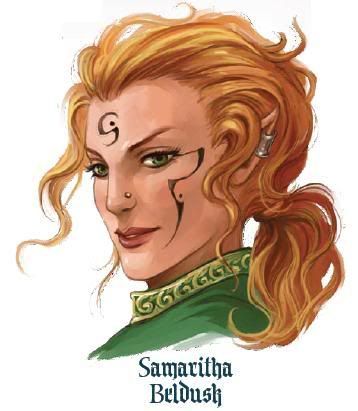
Then, the PCs wander around Riddleport and I take the opportunity to introduce various local NPCs.  Snake meets Samaritha Beldusk outside the Cypher Lodge and they hit it off.  Tommy and Ox go to the temple of Calistria (aka whorehouse); Tommy gets real friendly with the tiefling prostitute Lavender Lil, and Ox gets requested by Selene.  Faithful readers will remember Selene was the captain’s woman aboard their last ill-fated voyage; she was a hooker before meeting the Captain and so it’s back to the life of a working girl.  Sindawe goes to find an altar to his god Shimye-Magalla; he finds something that looks kinda similar (the Mwangi worship a janiform incarnation of the god of wind and wave Gozreh and goddess of dream Desna) and has a bad string of luck – a stirge discovers him, and when he tosses himself into Riddleport Harbor to get it off, a swamp barracuda takes notice.  It chased him to shore and then chased him onto shore; there was an entertaining chase scene with both of them only moving like 10 feet a round (uphill in mud for Sindawe, and swamp barracuda aren’t all that fast out of water).

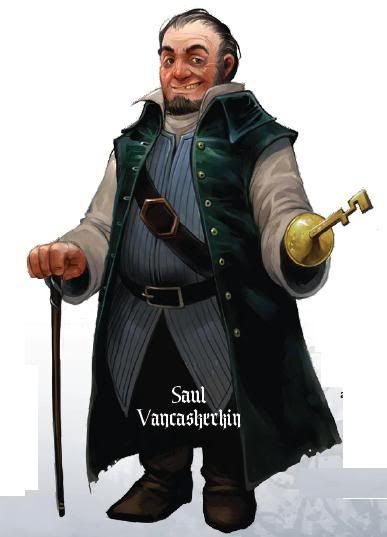
I open up “Shadow in the Sky,” the first installment of the Second Darkness Adventure Path, for the next part.  Tommy knows a local guy named Saul Vancaskerkin who owns a gambling hall; they go to his big devil-themed gambling festival “Cheat the Devil and Take His Gold” and end  up thwarting an armed robbery by two colorful miscreants and their gang of thugs.  I took Thuvalia’s opening line from the restaurant robbery in Pulp Fiction; our session scribe didn’t get it quite right in the summary but close enough.   I decided it would be fun to kinda base the two principals on Pumpkin and Honey Bunny from that fine film.  A more notable omission is that Sindawe used one of his Infamy Points to run across the heads and shoulders of a bunch of patrons to jump-kick Thuvalia and take her out before she escaped. Also, Wogan got to use his gun (and my firearm rules) for the first time – and the damage dice exploded; he shot Angvar right through the heart.  They end up being recruited by Saul to help run the Gold Goblin and, perhaps, some “side jobs” as well.

A lot of the session was spent getting introduced to Riddleport, the staff of the Goblin, et cetera, so not much action, but everyone had a good time role-playing!

Paizo Playtest of New Pathfinder Classes Starts Today

Paizo is working on an “Advanced Player’s Guide” for the Pathfinder RPG.  It will have six new character classes in it.  In their usual open and enlightened manner, they are going to be opening those classes up for playtest and comment by the gaming community before going to print.

Here’s the schedule – the Cavalier and Oracle should be up sometime right around now for you to check out!

  • Group 1 (11/13–11/29): Cavalier and Oracle
  • Group 2 (11/30–12/13): Summoner and Witch
  • Group 3 (12/14–12/27): Alchemist and Inquisitor

Enjoy!  Our group is loving the Pathfinder RPG, also known as “the real new edition of D&D,” and I’m looking forward to seeing what these have to offer.

Sanity Rules for Pathfinder from KQ

Kobold Quarterly has published some bonus material for their eleventh issue that has madness and sanity rules for Pathfinder/3.x!  Check them out.  [Edit: Part 2 is out too.]

I’ve used Sanity in D&D before.  I think these rules are OK, but there are three problems I have with them.

1.  A minor gripe – the Mind stat being the “best of Wis/Int/Cha.”  That’s a holdover from this being a conversion from a 4e article, you never do that “best of” stuff in 3.5.  I always used Wisdom exclusively.

2. They try to hew just a little too close to the Call of Cthulhu Sanity rules.  I like those rules, in fact when I do sanity I do it “largely” that way – 5xWIS.  But then they carry over some things I feel like don’t make sense in the average D&D game.  Penalizing starting WIS because of Knowledge skills is an example of “too much rules” and it’s even going overboard from Cthulhu- in CoC you only get this penalty for Mythos Knowledge, not just any occult knowledge.

3.  And then they put a lot of SAN loss – too much – for only mildly horrific creatures.  1d8 for dragons, outsiders, and undead and 1d12 for aberrations…  Even Mythos creatures generally did less. In CoC, undead are d4 to d8, byakees and Deep Ones are only d6…  It’s the Old Ones etc. themselves that have big SAN losses.  I think this approach makes it too much like “mental hit points” and doesn’t get the feel you get from CoC, where little stuff gets you a little, basically softening you up for the big horrid outer god.  I know it’s hard to do in an article but they need to vary it more, a musteval guardinal is going to hit you for way less SAN than some gnarly daemon thing.  The default SAN losses by creature type are way too high. Jesus, in d20 CoC the Dark Young of Shub-Niggurath are only d10, less than a carrion crawler apparently.

It’s not their fault, it’s just that the types are used too gratuitously in D&D.  There’s these Medium lobster critters in Golarion called reefclaws.  Dangerous, sure.  But they are aberrations instead of being magical beasts or whatnot.  Screws the rangers and now they are supposed to be super sanity blasting?  Maybe  if you don’t have any melted butter…

I do think the atrocity level of SAN loss is appropriate.  I’d like to see the list expanded; in my experience this is the best place from a storytelling point of view to deal with Sanity.  The list seems to “wuss out” and eliminate bad things characters can do.  Witnessing a murder or being tortured gets a SAN loss, but what about murdering or torturing?  One of the main points of using SAN is to show the consequences from being a big ass evil freak.

I Like Random Generators

As I prepare to unleash my PCs on a new city tomorrow, I am prepping up a storm.  I hate being caught short without NPC names and descriptions.  Luckily, there’s a lot of nice random generators out there that can provide you with an invaluable list of a dozen or so ready to go people.  Then, you just pull the one out of the top five or so that seems most applicable to the situation, whenever the PCs grab some random bar patron/messenger/guild thief/whatnot aside and you want them to be more than a stock nameless/faceless prop.

I’m using the Seventh Sanctum description generator and a Yet Another Fantasy Name Generator, freely mixing and matching for first and last names.  In short order, I have a list of potential NPCs like:

Angborn D’Evrona

This serious gentleman has large eyes the color of blue tropical waters. His luxurious, straight, brown hair is worn in a style that reminds you of a fluttering flag. He has a slender build. His skin is china-white. He has small hands. His wardrobe is sexy, and is completely gray.

Now, they do start sounding weirdly the same, so you have to finesse them in use, but it’s a great starting point that saves me thirty seconds of trying to remember some guy I ran into at the grocery yesterday to use as a good NPC description starting point (though that’s also a good exercise; over a week note down your first impressions of people you run across for later use…).

As a second pass, I use Chris Pound’s name generator to get some epithets to sprinkle in, and edit the descriptions to include styles it clearly doesn’t have (e.g. people have hair or are bald, but there’s no balding/thinning people, so I edit one of the bald guys to be partway…)  But what if a couple of these guys end up needing stats?  Well, Myth Weavers has a random NPC stat block generator.  I throw in a second level male rogue, and get:

Tahir, male human Rog2:  CR 2; Size M (5 ft., 10 in. tall);
HD 2d6+4; hp 16; Init +2; Spd 30 ft.; AC 12; Attack +2
melee, or +3 ranged; SV Fort +2, Ref +5, Will +2; AL LE; Str
12, Dex 15, Con 14, Int 10, Wis 15, Cha 8.

Languages Spoken:  Common.

Skills and feats:  Appraise +2, Decipher Script +3, Disable
Device +2, Disguise +4, Gather Information +4, Hide +6,
Intimidate +3, Knowledge (Local) +3, Listen +4, Move
Silently +7, Sense Motive +6, Spot +9, Use Magic Device +2;
Alertness, [Evasion], Weapon Finesse.

Possessions:  2,000 gp  in gear.

Primary motivation: Boredom. The character has no other
reason than their life is otherwise uninteresting.

Secondary motivation: A deep hatred of the Evil. The
character's hate runs deep, and dominates their personality.

Recent Past: The character has been visting a friend in
Verbobonc.

Helpful!  Obviously there are little bits to change.  But there are great bits too; sometimes random generation is awesomely wise.  This guy is LE but is motivated by a hatred of evil!  That’s a great character hook, an interesting “I’m not evil, I just use these harsh methods to combat true evil” thing.

I want the perfect Pathfinder random generator.  Pathfinder, and Golarion, are so new there’s not really good generators tuned for their ethnicities and suchlike – specifically Chelaxian names and descriptions, specifically Varisian, et al.  And all these generators do one thing and not the other – some do good names, some do good stats, some do good descriptions, some do good personalities – but none do more than 1-2 of those at a time.

My wish list:

  • Support Golarion (and other) ethnicity naming schemes.
  • Support Golarion (and other) ethnically tuned descriptions.
  • Support Golarion (and other) locations – for example, we know the general racial/ethnic makeup in Taldor, so let me roll a random Taldan!
  • Support Pathfinder (and other) stats
  • Do name (including epithets), stats, description, and personality.
  • Let me fix anything I want and then randomize anything I want.  If I don’t want to pick race, roll it for me.  If I just know I need a redhead, or a female rogue, or someone named “Bart,” pull the rest.
  • Let me do a little multiple choice – often a randomly generated NPC has bits of “bleah” in them.  Gen maybe 5 choices for each field into a popdown, and if I don’t like something I have a quick-pick to modify.

Reavers on the Seas of Fate – Third Session Summary

Our aspiring pirates get their first taste of honest ship-to-ship combat in the third installment of our Pathfinder campaign, Reavers on the Seas of Fate – “Water Stop.”

Third Session (12 page pdf) – The crew of the Albers goes foraging on an island to replenish their stores, and comes across some escaped slaves.  Of course, the Chelaxian naval frigate bearing their former owner arrives shortly thereafter.  Just as they discover a goblin pirate ship!  It’s hot three-way action in a naval boarding action.  And then it’s off to Riddleport!

This was a stretch session.  I had planned for them to get to Riddleport and get into that this session, but the character who has lived in Riddleport and has most of the hooks for them wasn’t going to be there.  So I figured I could expand the travel part enough to fill a session.

Leafing through some random supplements, I found a couple things that struck a chord.  In WotC’s Stormwrack, there is an adventure called “The Sable Drake,” basically an encounter with a goblin pirate ship.  I had thrown some canoes full of goblins at the PCs last time, supposing they came from a village on the nearby island.  By converting those to goblins on two ship’s boats from the Sable Drake, it was a lead-in.  Then in Atlas Games’ En Route II: By Land Or By Sea, there’s an encounter called “Water Stop” detailing some escaped slaves hiding on an island; the PCs meet them and then their old master shows up looking for them.  This was perfect; I wanted to start pulling in elements from PCs’ backgrounds, and most of them have a beef against the Chelaxians.  Ox had been the slave of Captain Marcellano, a Chelish seafarer.  Thus I mixed the two together.

It wasn’t too hard to convince them to go onto the island and poke around; they thought maybe the goblins came from there and they’d get to kick some more ass.  They came across the slaves and managed not to kill them (the way the encounter’s written is that the poorly armed commoner-type slaves surround the PCs and try to get them to surrender to figure out if they’re likely to rat them out; somewhat dangerous in that often PCs take any manner of threat as an invitation to maximum overkill).  The slaves tell them about a “weird black ship” in a hidden cove and then the Chelaxian Navy ship Raptor appears and approaches the Albers to see if they have seen some missing slaves.  Soon, they’re both going after the goblin ship, who the PCs finger as having drug off a bunch of escaped-slave looking people.

Really, the tough part about all this was that in Golarion, goblins are all total meatheads.  It was hard to believe they could pilot a ship, even with a wererat captain and a handful of adepts.  But hey, you work with what you’re given.  I changed them substantially from the “leet ship” in Stormwrack to a barely actionable converted fishing ship.

In the end, everything worked out for the PCs and the slaves.  The PCs hoped that the goblins would whittle down the Chelaxian marines enough that they could take them; they were quickly disabused of that – one of the things I wanted to get across before they took  up their future life of piracy is that the Chelaxian navy is no one to screw with. They were pretty sober as the goblin ship took three massive broadsides and sank to the bottom.

The noble was Marcello Marcellano, the son of the guy who owned Ox.  I expected him to go to greater lengths to try to kill him, but he played it cool.  A shame, I built a pretty good 4th level swashbuckler using the new class from Tome of Secrets (Adamant Entertainment) and the duelist feats etc. from Way of the Duel (Sinister Adventures).

They went back and started diving the goblin ship for loot…  It was funny, they encountered a reefclaw and after beating it all borked their Knowledge: Nature checks so that they were “sure those things live in large colonies!”  (They’re solitary).  They made the checks in the open and came up with the alternate interpretation themselves.

Selene, Vincenz, and Thalios Dondrel son of Mordekai are now at large in Riddleport as well, so I’ll have some good NPCs the PCs are very familiar with to use.  Next session’s based on Pulp Fiction!

Request for Comment: Hero Points

Or whatever you want to call them  – Action Points, Fate Points, Karma Points, Plot Points, et cetera.  For reference here’s a good but somewhat dated summary of a bunch of hero point mechanics by John H. Kim.

Here’s the deal.  I want to use something like this for my new Pathfinder campaign.  We’ve been pretty constantly using the Eberron “Action Point” mechanic (Eberron Campaign Setting, p.45) in all our group’s campaigns since we saw it.  You get 5 + 1/2 character levels of them, and they let you add 1d6 (or best of multiple d6 at high levels) to a roll before you know whether it’s successful or not.  They work pretty well.  But I’ve begun to be dissatisfied with them.

I noticed it some in Rise of the Runelords and even more in Curse of the Crimson Throne that we’d end a level with a lot of action points left over.  There were a couple reasons.

1.  You would hoard them “just in case.”  This was somewhat mitigated by them refreshing every level, but you didn’t know when you were going to level.

2.  They didn’t do all that much – you wouldn’t use them unless you were ultra desperate or thought you were within 3 points of the DC you needed.  As levels get higher and numbers range more widely, a lot of the time you knew there was no point in using the action point on a given miss.

3.  Because of the inconsistency of the core D&D mechanic in terms of what is a d20 roll you are making and what isn’t, you could use them to make a save but not to not get hit in combat, so their utility in saving your bacon was reduced.  Though you can use an action point to stabilize when at negative hit points, again as levels get high it’s rarer a shot lands you in that magic 10 point range; it’s more likely to overkill you by like 30 points when it comes.  D&D 3.5e number scaling past level 10 is a cruel mistress.

4.  The APs tried to give hero points of their own, like Crimson Throne had Harrow Points that gave bonuses to a different stat with each chapter.  This was frustrating in and of itself when the stat was a poor match – as a priest, fighter, and ranger was the party most of the time, I was the only one to use the Wis and Cha boosts.  But it also created a “too many different boost points” problem and they got totally forgotten most of the time.

5.  It was a buzzkill when you used one and still didn’t make the roll.

We’re also playing Alternity, which has Last Resort Points.  These points are better in some ways.  They’re worse in that you get from 0-2 of them and they don’t regenerate with level, you have to buy more with XP, which means they’re too scarce.  They’re much better in that they just flat turn a failure into a success (or boost a success to a higher level of success).

Also, some systems (like PDQ Sharp’s Style Dice) let you use such points to make actual narrative plot changes with points.  “A Chelish warship appears on the horizon!”  “Our old ally Vincenz shows up!”  “The dungeon passage collapses!”

So there’s a couple different axes that a hero point mechanic can work on.

  • How do you get them/how do they regenerate?  (Buy with XP, when you roll a crit, when you roll a fumble, when you do something cool, when you act according to some character trait, when you level, every game session, per adventure)
  • What can they do?  (Reroll, small fixed bonus to roll, small variable bonus to roll, large fixed or variable bonus, automatic success level upgrade, change plot/world, activate powerz, make a save/get missed/soak damage, get init or an extra action)
  • When can you use them?  (Before you roll, after you roll but before you determine the result, after you determine the result)
  • How many does someone get and how often can they use them (anytime, once per scene, once per session, something else)

Here’s what I’m thinking about doing.

First, I want the points to “do more” – ideally fully turn a miss into a hit or whatnot, not add on a small bonus.  Seems to me that the mechanic’s not worth having unless it does this much; otherwise it’s a lot of fiddliness (and worse, a breaking out of immersion) without enough punch to justify it.  So one option is that the points are fairly rare, but can:

  • Turn a miss into a hit
  • Turn a hit into a crit
  • Turn a hit into a miss (usually, if you’re the one getting hit)
  • Turn a crit into a hit (same)
  • Make a save
  • Make a target fail their save (maybe…  but maybe not.  With save-or-dies seems too powerful.  Maybe make a target reroll their save.)
  • Bypass SR
  • Override a bad condition (possessed, feared, paralyzed, etc.) for a round
  • Otherwise “save your damn life” somehow

However, one of our group has an interesting alternate proposal – that the points go up in efficacy as you use them.  First point you use is a +1 (or -1 on an opponent’s roll).  Second point, +2.  And so on.  This is a clever way to both ramp up effectiveness over time (I’m neutral there) and to discourage hoarding (I’m very on board with that).  It does mean that eventually the points become worth +20 or more, at worst that reduces to auto fail/success but in higher level 3.5e play it may still not be enough sometimes. It is a little more fiddly though, they have to be strongly paced at about two per level.

I’d also like them to be usable to make narrative changes, with DM oversight.  Any kind of hero point is already stepping outside the simulation for an explicitly narrative concern, so in for a penny, in for a pound, I figure.

In general you should give them for behavior you want to promote.  I don’t really like giving them for crits or whatnot, that seems too random and also generates undesirable interactions with crit feats.  I’m doing slow advancement in this campaign, so there’ll probably be a couple adventures per level.  I plan to call them “Infamy Points” to match the pirate theme.  Perhaps give one per level and one per adventure, to semi-reflect the character becoming more bad ass and feared and… infamous.  Maybe bonus points whenever anyone does something spectacular that could rightfully be said to raise their infamy level.

I’m also considering having the Infamy Point total be used as a bonus to certain Intimidate/Bluff/Diplomacy rolls as a kind of raw fame and deadliness bonus, though the problem is that if you get 2-3 per level that bonus gets out of control.  Maybe a bonus equal to unused Infamy Points?

What do all of you think?  Do you use any kind of hero point mechanic?  Do you like lots of them with wimpy bonuses, or fewer with more guaranteed results?  Have any clever ideas for me?

Reavers on the Seas of Fate – Second Session Summary

The second session of our new Pathfinder campaign, Reavers on the Seas of Fate, went off like gangbusters.  Hearken to “The Tale of the Sea Bear.”

Second Session (15 page pdf) – Insanity and chaos reigns as the crew of the Albers investigates the derelict Sea Bear.  Soon, they are turning their suspicions against each other.  And then, things get out of hand.
Later, the survivors struggle against the uncaring sea and the fury of random encounters!

This is the second part of the intro adventure I was running as a heavily modded combo of Maiden Voyage (3e, Atlas Games) and the new Mysteries of the Razor Sea (3.5e, Sinister Adventures).  In this episode, the PCs board a ghost ship that had its mainmast replaced with a native totem pole.  As you might expect, things started getting weird fast.  I was impressed with how much the players went with it – I started passing them notes about “You think person X is acting suspicious” and they just up and started stabbing one another.

Fun scene – Ellis went running down into the hold to stop Ox and Bull, and Ox failed a Perception check so he got “a figure suddenly looms behind you in the hold!”  He stuck his pike right through the poor sea dog’s chest.

The biggest DM dilemma I faced was when the PCs had the good idea of tossing the skeletons overboard.  The skeletons, incidentally, were the new Pathfinder “bloody skeletons” that have fast healing.  I had the totem pole raise them back to full unlife with two rounds of its drumming (it couldn’t attack with animated objects during those rounds).  So Chris, quite innovatively, dumped them overboard when killed.  The big question – can a skeleton swim?  I ruled yes just to keep the heat on, but await the rogues’ gallery’s dissection of the physics involved.

I’m really happy with how the NPCs are working out.  Thalios Dondrell and Vincenz especially are being treated like “real people.”  In find that by portraying NPCs as competent, but not infallible Mary Sues, PCs respect them – it’s just that most NPCs you meet in games are such one-dimensional chumps, they don’t get that.

After the ghost ship, a pretty large percentage of the crew was dead, including the navigator.  I am using a combination of the Stormwrack (WotC) and Broadsides! (Living Imagination) sea/shipfaring rules, so as they wandered the seas they exercised their skills trying to follow the charts and keep safe and on course as storms hit.  They weathered a big one, but got blown somewhat off course and got their rigging fairly jacked up.  They’ve come up on some islands they think delimit the Gulf of Varisia and stopped in a cove to refit, and had a more lighthearted combat with a dozen demented goblins.

I love the Paizo take on goblins; they are well and truly insane.  Dangerous in their way, but spend half their combat actions running around like butt monkeys instead of actually fighting.  One clambered up to the crow’s nest and was doing the Pantsless Goblin Victory Dance over the shrieking Old Pete when Ox finally got to it.

Seems like everyone enjoyed themselves!  Wogan was happy to get a wheellock pistol off the dead captain of the Sea Bear, Serpent was happy that his snake had the biggest kill count in the goblin fight, Ox liked being able to go nuts and kill allies, Sindawe liked the massive combat, and Blacktoes… liked fleeing a lot, I think.

As a final bonus – it turns our our group played Maiden Voyage once before!  I didn’t remember because I was a player then and GMing now, and it was like four years ago.  Here’s the session summary of our Eberron party going through Maiden Voyage! I think you’ll see some similarities and some differences…