Tag Archives: D&D

Fantastic Fest 2025 – Day Six

This morning in the first slot they were also running some D&D! How could I resist.
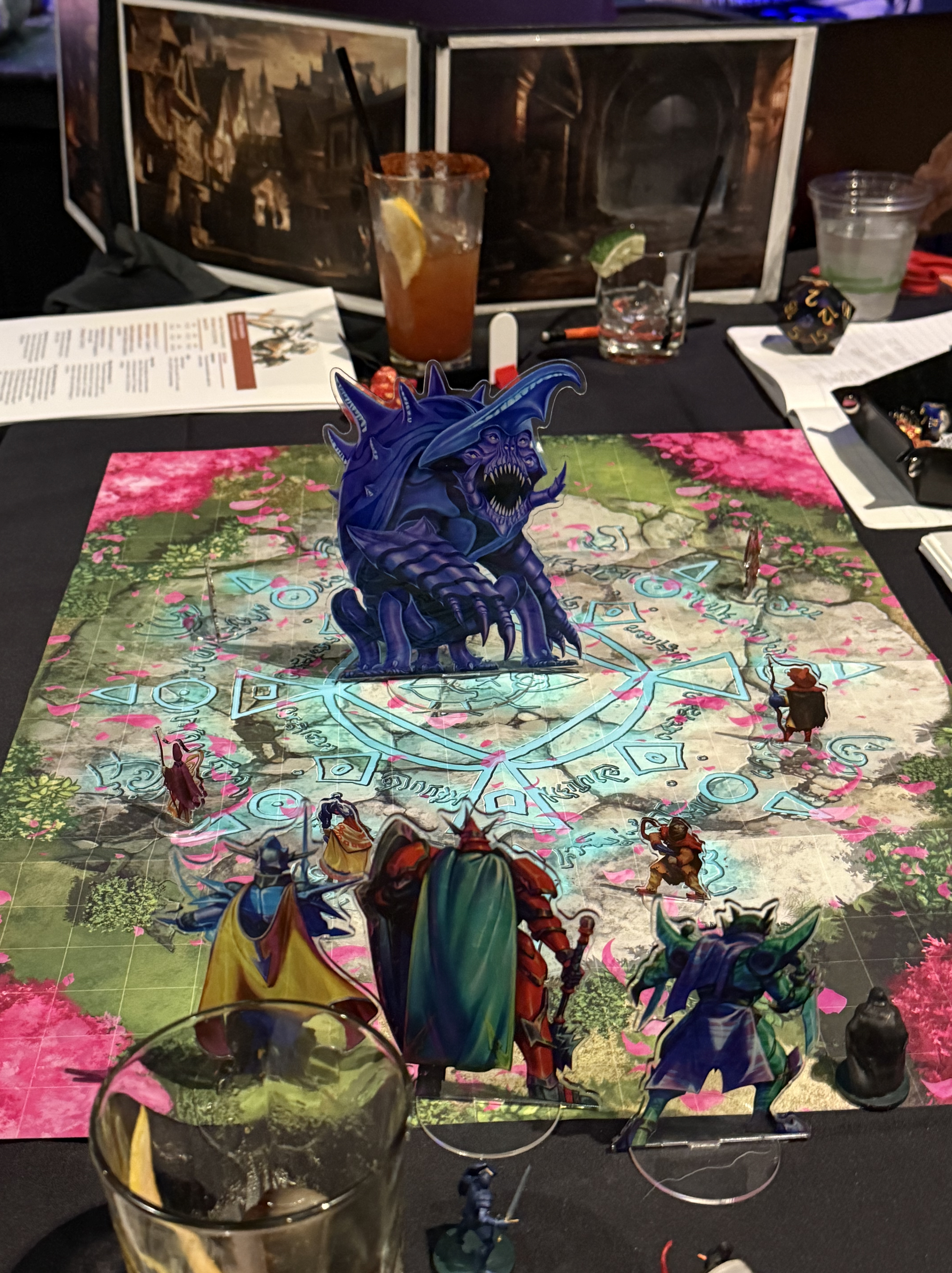
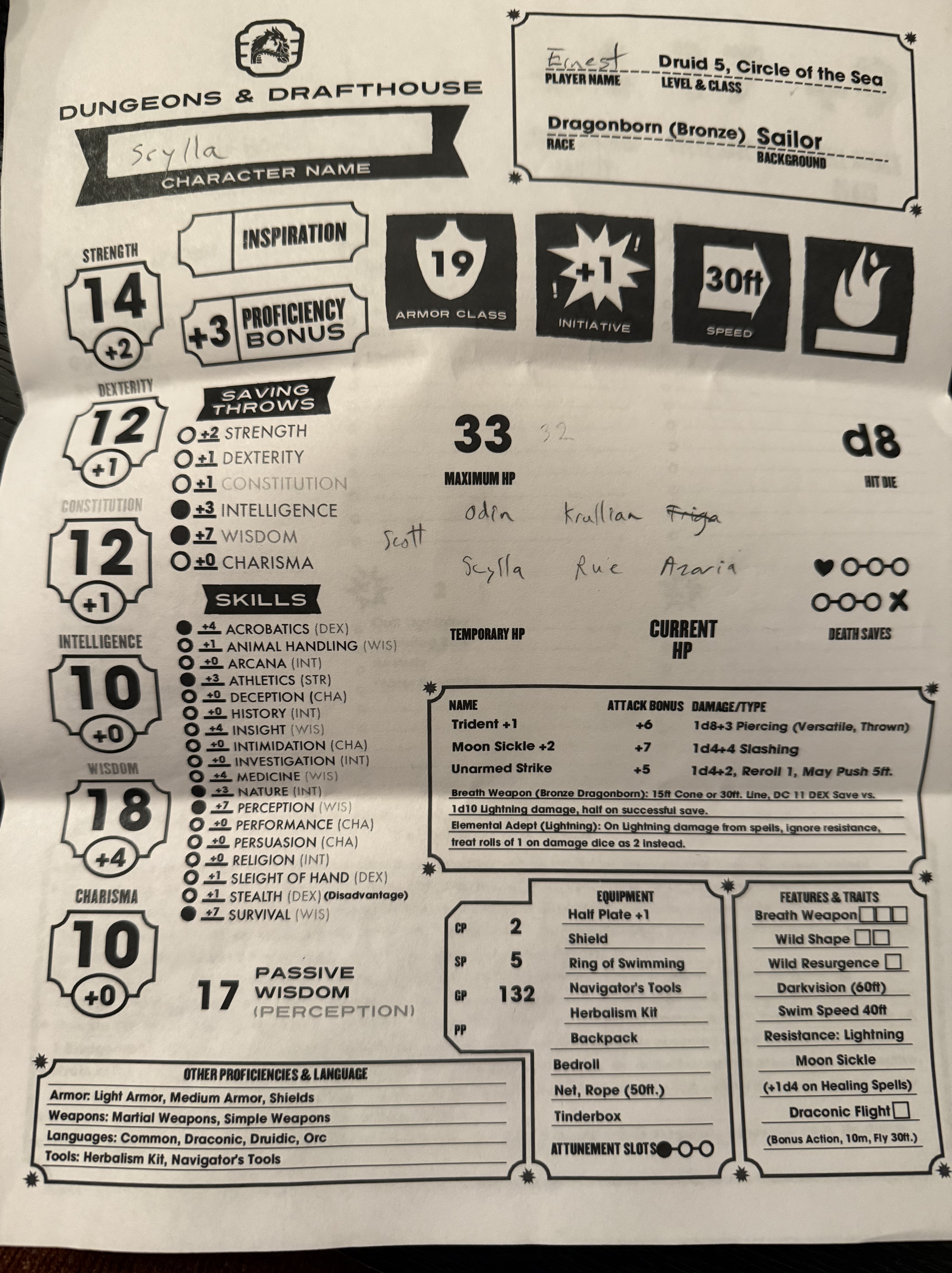
Courtesy of the nice folks at Tiny Minotaur, they ran a Dungeon in a Box adventure where we all ended up taking over mecha to fight a giant bug. I played Scylla the bronze dragonborn Circle of the Sea druid. I had a fun group, the other players were a guy and his dad both of who come to the fest, and two lovely ladies on their honeymoon. We rocked through the adventure with nary a hit point lost.

Theater is Dead A really fun movie about a college engineering major lured into acting in a local theater production! I won’t give away the twist but it’s like Buffy the Vampire Slayer meets Glee. A lot of the cast and crew had worked together on Juniper and self funded this, did like 3 jobs each, and filmed it in in 14 days.  Most “we did this on a shoestring” movies are “good, you know, considering that” but this looked perfectly big budget and well done! High energy, funny, tightly edited, and very engaging, the audience was really into it. This is the kind of “theater people making stuff for themselves” premise that has fueled many indifferent kinda-cringe horror movies but this was really skillfully executed and was a joy to watch. Sure, it had goofy bits but that was part of the point, they never let it lag. 4/5 stars.

Then the big evening showing was a secret screening. What could it be, everyone buzzed? And we were psyched to find out we were going to see One Battle After Another!

One Battle After Another by Paul Thomas Anderson, inspired by Thomas Pynchon’s novel Vineland. Leonardo DiCaprio and Regina Hall are revolutionaries, part of the French 75, who rob banks and free detainees from immigrant concentration camps. As so often happens, the feds get people to rat and it all falls apart and people go into hiding, and Leo and his daughter go to ground for decades while he bakes his brain on drugs and she grows up and hangs out with her high school friends. But the forces of law, mostly driven by racism and sex perversion, never let it go and then they’re on the run again – and that’s when they run across Benicio Del Toro, the daughter’s karate teacher, who is involved in a big immigrant underground railroad. It’s an interesting and lively take on resisting injustice, and the different approaches to that and the terrible cost of it. See it before Trump bans it! 5/5 stars.
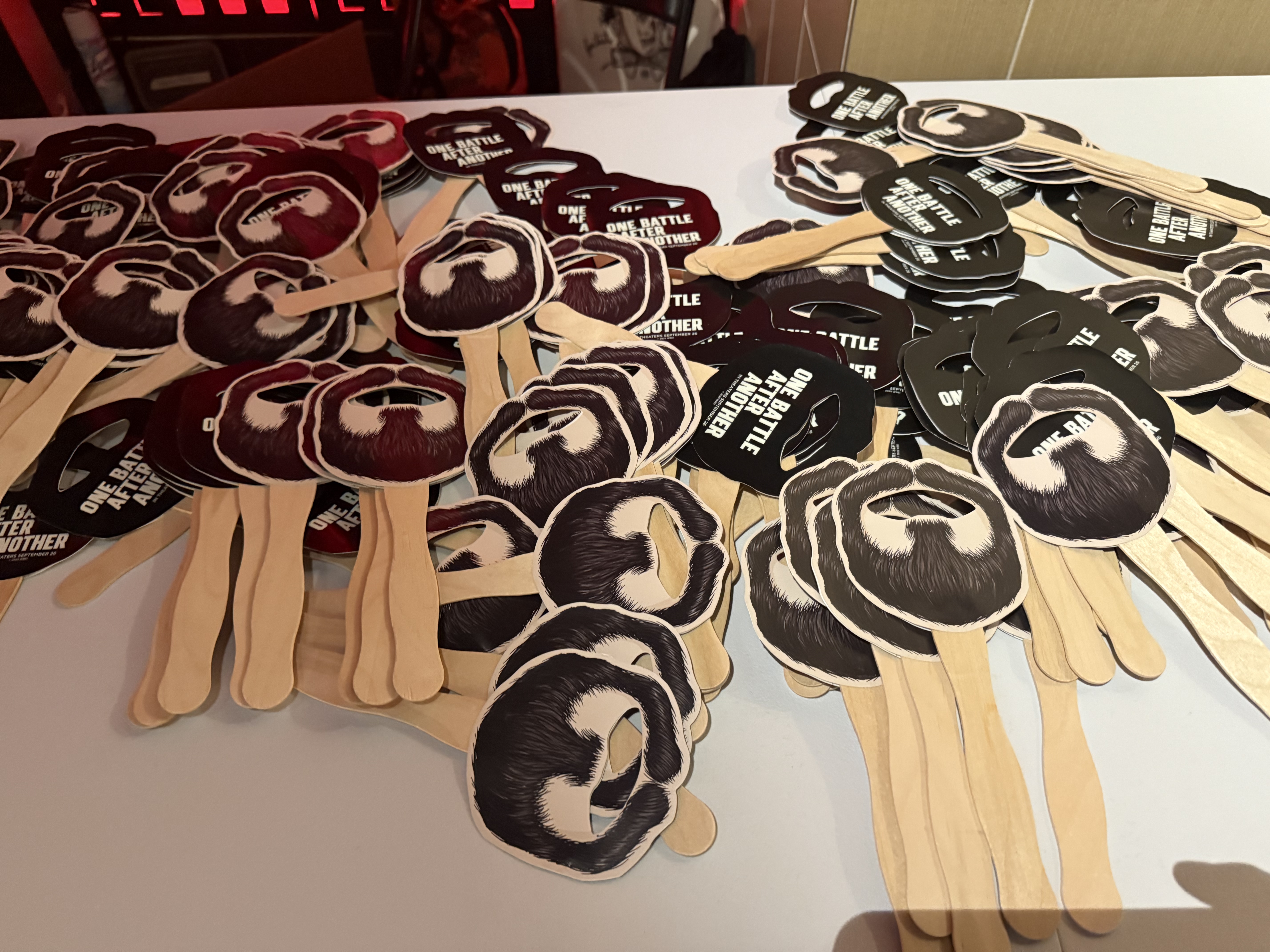
After, they gave out fake beard-thingys, which was fun. VIVA LA REVOLUCION!!!

Her Will Be Done a teenage girl lives on a mud-covered (modern day) cow farm in the hillbilly region of France.  Is she a lesbian, a witch, or just Polish? The locals don’t really like any of those options. Then slime molds start growing everywhere and cows start dying as the girl who offed her abusive boyfriend tries to sell her house, also garnering the ire of the locals. Very slow burn and suspenseful. It’s one of those “so was that supernatural horror – or not?” movies. There’s nudity and cows dying, so it would never play here in the US where we tolerate those things worse than mass murder in film.  Very well done! 3.5/5 stars.
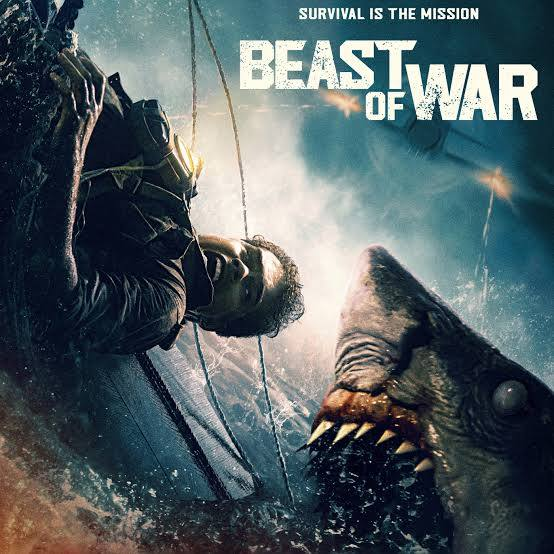
Beast of WarRemember the story Quint tells in Jaws about his naval vessel in WWII sinking and nearly everyone getting eaten by sharks?  This is that but Australian. Totally serviceable survivor horror shark movie. But is the real enemy the shark – or racism? Find out here. 3/5 stars.

Not much more to say. Shark! More tomorrow.

Fantastic Fest 2025 – Day Two

The first full day of the fest, which means five movies! The first slot is usually around 11 AM, then 2 PM, then 5 PM, then 8 PM, then 11 PM. Then you stagger home at 2 AM, sleep, be in front of the computer to reserve your next day’s tickets at 10 AM sharp, and jump in the car to come back and do it again!

My first film of the day was The Ice Tower, an artsy French film. My backup was Her Will Be Done which I got to see later.

The Ice Tower.  Modern (well, 1970s) tale based on the Snow Queen fable by Hans Christian Andersen. Think Black Swan meets Frozen, but ultra French and impressionist.  A village girl runs away to the big city and becomes part of a film about the Snow Queen, played by superstar Marion Cotillard. Psychodrama ensues as she is lured/injects herself into the production. Do some of the scenes happen in the real world or a dream? What happens at the end? I’m not sure, but it’s stylish! Very slow, spare of dialogue, but it builds dramatic tension across its length.  I enjoyed it a lot but be warned… it’s very French. 4/5 stars.

Here’s a more coherent review of The Ice Tower if you’re intrigued.

The next movie was a Hong Kong action movie, Road to Vendetta.

Road to VendettaHong Kong cinema wants its John Wick back, so a lad working for an assassin network with a food delivery motif goes to Japan and a hot little Japanese girl leads him to loggerheads with the organization, even though they have to communicate via smartphone translation half the time. He teaches her to murder too!  Decent but not great, weird pacing. And the real rough transitions in HK films between comedy, melodrama, and brutality were ok back in the Hard Boiled days in the 1990s but they’ve had 30 years to sand down the rough edges but don’t seem to have done it. An acceptable weekend afternoon action watch. 2.5/5 stars.

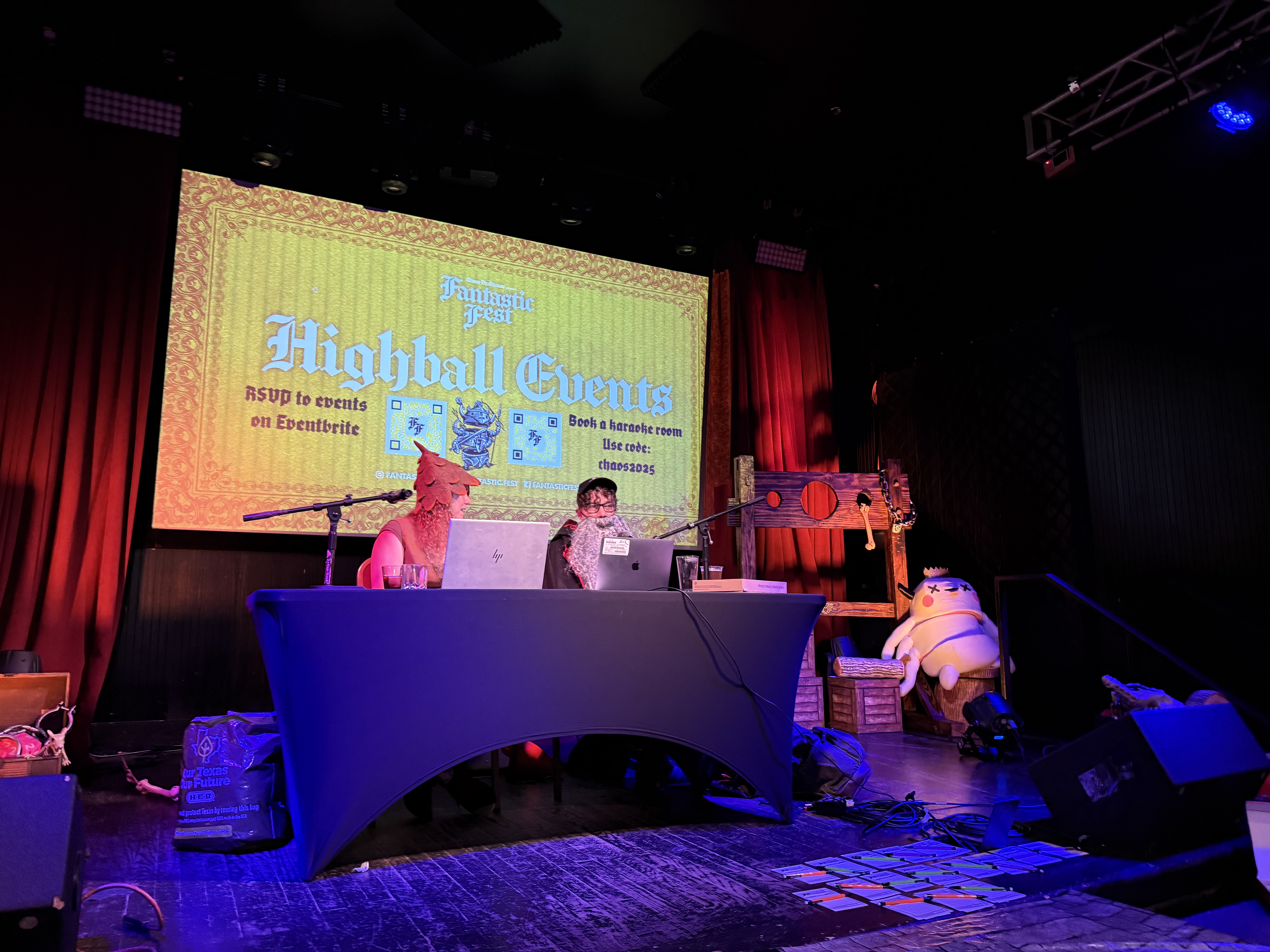
For the third slot I had tickets to Reflections in a Dead Diamond (a Bond-ripoff movie?) which was my second choice after not getting into Shelby Oaks, but I decided to skip and go do D&D Trivia at the Highball! It was run by some friendly folks from Tiny Minotaur, a local fantasy themed tavern/art space.

And as you would expect from us here at Geek Related, I led my team “Bad Haircut” to a sound victory over the other two teams, “Rainbow Sparkles” and “Melf’s Magnificent Cunts.”

Next slot, I was tempted to stay for “Dungeons & Drag,” but skipping two movies in a row was too much for me. Turns out I should have listened to my instincts, because…

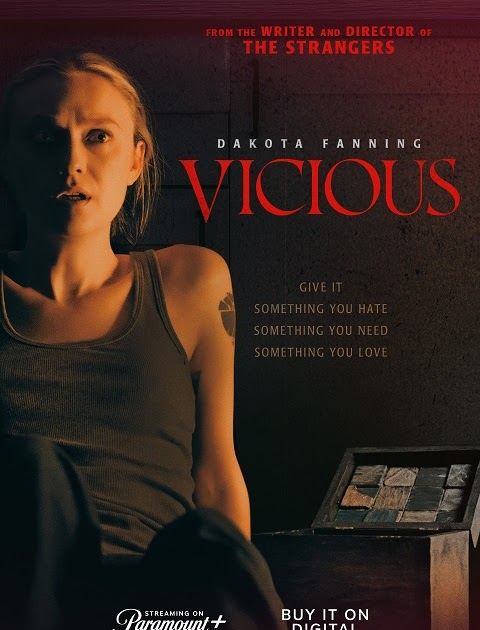
Vicious – the most generic modern supernatural horror movie ever made and that’s saying something. Creepy lady brings feckless young lady (Dakota Fanning) a box! The box demands “something you hate, something you love, and something you need!” Spoooooooky things happen with no justification or internal logic!  Random camera shots from film class with no thought to a consistent visual language are performed! “Scream when the phone rings a lot! Now cut one of your fingers off.  Now thrash and scream some more!  PHONE BUZZES!!! Movie done, budget diverted to cocaine!” Afterwards in the bathroom people were saying things like “something you hate, something you love, something that SUUUCKS!!!” True story. 2/5 stars.

The Ghost of Roger Ebert agrees with me on the merits of the film. It was so bad I just went home after instead of waiting nearly 2 hours for the midnight movie. I was supposed to see Silencio but I was demoralized and midnight movies are tough if you’re not in good shape.

But, it let me get off to a rested start for Day 3 and the start of the weekend at the fest!

Sinners Vampire Powers

I saw the hit movie Sinners last night and it was awesome! Like From Dusk Till Dawn but, frankly, better. The first musical sequence was one of the most successful “mix real world and dreamtime/spirit world” sequences ever made.

But this isn’t a movie review, it’s taking a hot new vampire power for your Pathfinder or Dungeons & Dragons game!

So the Irish vampire lord slash… demon? Remmick (expertly played by Jack O’Connell) had the ability to know everything his new vampire thralls knew in life. I’m not talking about that, though that’d be fine – but there seems to be a somewhat similar but way more limited effect on the newly made vampire spawn. They don’t appear to know everything the master does or have a hivemind, but they all appear to specifically inherit his Irish singing and dancing abilities. (Unless he just happened upon two crackers who were pro musicians to kill by pure chance.) In fact, you could perhaps frame it as the master is able to pass one of his skills down to his spawn.

I realized that this is the key to a lot of vampire group creation in D&D type games and is a brilliant idea. Because in general adventure creators always want to put together a bunch of similar vampires. A vampire band! A vampire ninja clan! A vampire monastery! A vampire Wall Street firm!

And currently adventure writers get that by:

  • In the lore, the vampire spends a super long time assessing candidates and only vamps ones with the desired skills. Very rare.
  • In the lore, the vampire came across an existing group of semi identical folks and vamped them. Fairly common.
  • Cheat and just say “whatever, all these vampires have Stealth +12 even though they were just random villagers because I need it for the plot, man.” Most common.

But, a small, thematic, and frankly just practical addition to the vampire’s Create Spawn power could just be “the master can bestow [one of his skills/his highest level skill] upon a spawn.”

In the world of super complicated PF2e type rulesets I’m sure that’s abusable, so you could add some level cap or something, “they become proficient in the skill and gain max ranks available at their character level.” Maybe the vampire has to just pick one skill forever, or maybe it’s locked to whatever their highest ranked skill was when they became a vampire. “Well, I guess we need Profession: stringed instrument based attack plans boys, that’s what I was good at in life!”

Create Spawn (Su)

A vampire can create spawn out of those it slays with blood drain or energy drain, provided that the slain creature is of the same creature type as the vampire’s base creature type. The victim rises from death as a vampire in 1d4 days. This vampire is under the command of the vampire that created it, and remains enslaved until its master’s destruction. A vampire may have enslaved spawn totaling no more than twice its own Hit Dice; any spawn it creates that would exceed this limit become free-willed undead. A vampire may free an enslaved spawn in order to enslave a new spawn, but once freed, a vampire or vampire spawn cannot be enslaved again.

A vampire created in this way inherits the master’s highest ranked skill, becoming proficient in it as a class skill and gaining ranks in the skill equal to its character level.

What do you think?

Heck you could add it as an option. Since his vampire spawn were getting up in minutes not days, clearly he had “Improved Create Spawn” where if you make spawn they are up in 1d4 minutes not 1d4 days and get one of your key skills.

You could make any of this work on vampires and not vampire spawn or vice versa (in Pathfinder these are different, vampire spawn aren’t a template they’re just like “ghouls” in other-vampire-fiction parlance, and a vampire can choose to make new full vampires or just vampire spawn).

In The Shadow of Giants

I ran across this blog post describing a campaign concept called “The Book of Giants”, of Nephilim and witch-wives and a world populated with dangerous giants. I like it; I once wrote a Living Greyhawk scenario called “Giants In The Earth” so I am familiar with the source myth.

I had actually been mulling over a new campaign with giants as the primary opponent and predominant/ruling populace. My concept has a little less angel witch sex but I think it still has legs. I like constraining campaigns to focus on a set of concepts – sure, PCs can’t play any crazy option they can think of, but they also have a much better idea of what’s going to come up so they can pick options that would have a guaranteed chance to shine. Let’s see what you think!

Campaign Concept

All civilized lands are ruled by the titans, who style themselves the gods that walk the earth. (They were the children of the gods, and rebelled against them and they are all now destroyed or hidden away or forgotten.) Their empires are inhabited by all sorts of giants as the primary populace. Humans are simply a slave race to the giants and are lesser beings that live in their shadow. They are used for labor, crafts, entertainment, and so on; not taken seriously as a threat. The tech level and society is most analogous to ancient Greece with the titans considering themselves the Olympians.

The first plot arc is to survive servitude and get free. Naturally the giants delegate down tasks like slave wrangling to the smaller giants, but even a hill giant for a group of first level humans is an intractable opponent. They have to build up arms caches, make plans, and take advantage of the giants’ complacency and hubris to make their escape.

Then the second plot arc is to go find places to hide and allies. There’s a couple major factions to join up with that lurk in places inaccessible to the giants. First, escapees living in the thick forests. There’s a cabal of mages here that consider themselves in charge, and of course a bunch of druids and rangers and fae. They focus on rediscovering ancient magic as the way to gain enough power to survive and thrive and try to teach as many people magic as possible. Second, underground caves with dwarves and artificers where there’s a lot of building golems and automatons to be able to fight for you. Most humans haven’t seen a dwarf up till now; they refuse to live as slaves and either fight or just sit down and die so they’re not seen in giant lands.

The third plot arc, of course, is to take the fight to the giants and free humanity – at first guerilla style and then as levels rise and armies assemble, direct action.

There’s no other humanoids – humans *are* the humanoids and giants are the humans, effectively. Every giant animal and insect in the books are the primary threat; they’re everywhere as the ecology is scaled to giant size. While there are umber hulks and some other aberrations underground the focus is really on giant animals/magical beasts, there’s no outsiders or undead (except for some run by a hag coven with three nightspawn that operate in the mountains). This allows PCs to not have to worry about a large number of opponent types to focus on the campaign thematic ones. It won’t get boring, there are 30+ types of true giants in Pathfinder and so, so many animals that are either giant or dire already or can be quickly made so. (This has the bonus of some real live zoology learning for everyone.)

Religion is banned by the giants, but a priestess has rediscovered a lost god of the humans, a couatl type deity, making PC worship effectively monotheistic. There’s no “churches,” it’s more of a hidden and evangelistic enterprise among the humans, focusing a bit on the liberation theology angle.

While you can make heavy armor in the later game, the nature of the world strongly prefers light, mobile, ranged, and hit-and-run type combat against an inevitably larger and stronger foe. While some folks can learn and steal wizard type magic from the giants, sorcerers are more common at lower levels, and then as levels increase people can learn magic from the wizard cabal or the fae.

Now, I’m torn as to whether this is enough – I also have the idea for a larger destabilizing force, an ethereal invasion of xill that is converting some of the landscape to wasteland. This would distract the giants with a larger threat to allow the alliance of human rebel groups to grow. Living plants and certain metals would be proof against ethereal travel so the humans could protect themselves to some degree, though once they venture forth, the terrifying sudden appearance of an ethereal murder machine would become a common threat. This would add a weirder layer to the campaign so it’s not just giants and animals and rebels.

Thoughts welcome – does it sound fun as a player? I know PCs don’t like being captives, but I am hoping that if starting as a slave is clearly part of the premise and getting free is the whole point, it could be a cool vibe people could get into…

The Monsters Know What They’re Doing

I ran across this cool blog that talks about various monsters and their tactics, in context of who and what they are. Monsters aren’t deliberately dumb (though based on their Int they may be more or less sophisticated) and “blindly charge PCs till dead”, while popular among too many DMs, isn’t a really interesting or realistic set of tactics. So check it out and consider how everything from a razorvine to cosmic horrors would react to a threat.

Geek Related Naval Combat Rules

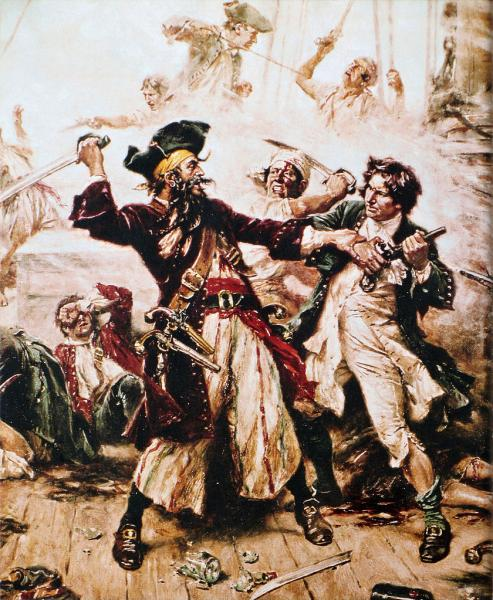
I’ve covered guns and cannon, chases, mass combat – but what would a pirate game be without ship-to-ship combat? Now on the Rules You Can Use page is:

Naval Combat Rules (14 page pdf)

A navy ship and a pirate ship engaging each other on the open seas

For Pathfinder 1e, but easily adaptable to many others I think. It works in concert with the Geek Related cannon and mass combat rules and adds ship design and combat at sea.

I wrote an early version of this for Frog God Games and it got partially incorporated into Razor Coast: Fire As She Bears! But that work turned out pretty long and complicated, though very good, and for our game my players wanted naval combat but weren’t going to put up with 96 pages worth of it. Do get Fire As She Bears, though, it’s quite good, especially if you want to invest more in the naval combat ruleset part of your game. If you like these rules, they are directionally similar; I’ve been evolving mine over the intervening 10 years as we’ve used them to maximize flavor of our base case – small numbers of ships chasing, fleeing, and fighting with small numbers of cannon and the usual Pathfinder magic-and-monsters thrown in.

Pathfinder published some ship combat rules eventually for their Skull & Shackles adventure path but they suffer from the core problem of ships having one pool of 1600-ish hit points, which makes it either pointless to do the ship-to-ship combat and everyone just boards or, once you get high level, you swing the barbarian over there on a rope and sink it in a round. They did this because their adventure path quickly becomes PCs running squadrons of ships, not the feel I was going for.

The solution (from my rules, and in Fire As She Bears) is to break larger craft up into 10x10x10 squares and have each of those have hit points, with the added benefit of you can correlate crewmen (and PCs) to those areas. I used much lower hit points than even Fire As She Bears did – 50 hp per hull section instead of 150. In my campaign this was better suited to fast naval combats. PCs get impatient and always want to fly to the other ship; this made the PCs focus on keeping their ship safe and manning repair crews instead of just saying “it’ll be fine, we can just go melee kill.” But it’s still enough hit points (and enough hull sections) that they don’t just get blasted to flinders in a round. (Unless they go bother a ship of the line.) I also have fewer cannon per ship because they are newer, rarer, and more expensive in Golarion – FasB lets you pack like 4 9-pounders into a single hull section so “28-gun” and “49-gun” ships exist – in my game it’s more like 4 cannon a side is a well armed craft. (And also not hours of dice rolling for a single round of combat).

Anyway, once you have your ship and cannon, you gain the weather gage, maneuver trying to get closer or farther away; conduct maneuvers while trying to line up cannon shot, and so on. These are similar to these other naval rulesets.

Part of the real magic, however, is the range bands and speed checks. This is what makes the battles feel naval and not like sitting slugfests. The Skull and Shackles rules just make this “2 out of 3 sailing checks and you catch ’em”. But I bring in some ideas from my chase rules that make the positioning important, and not just a preface to a static combat. Your ship’s speed turns into a bonus to a Profession: Sailor check and if you can beat the other ship by 5, you can close (or increase) the range by a band.

We’ve been using these rules a lot over years and it’s very dynamic. You pull a little closer – now you’re in Medium range and can bring those 12-pounders (and fireballs) to bear! Oh no, they pulled away to Long range, try to hit their sails with the long nine chase gun! It hits the magic ratio of 2/3 of the combat is naval before finally 1/3 devolves into normal Pathfinder combat, and a full on naval battle beween fully armed ships with similarly-leveled crew is a showcase event that can take most of a game session. And it’s not a completely abstract minigame; you’re throwing your usual spells and shooting your usual bow or musket at the other ships.

Enjoy, and let me know how you find them!

Rule Zero In Pathfinder 2e

One of the most popular evergreen posts here on Geek Related is Rule Zero Over The Years, which compares the positioning of the GM’s authority relevant to the game rules and to the players in the different editions of D&D including Pathfinder. Well, I just updated it to include Pathfinder 2e, so check it out!

The TL;DR (and it is indeed too long) is that Pathfinder 2e steps a little back from the Pathfinder 1e/D&D 5e flavor of kinder, gentler GM authority, where it’s “for everyone’s fun” not “to put those little peckerheads in their place” as Gygax would say in AD&D, but the GM can make rulings and house rules and cheat/fudge die rolls and use tricks. It still adheres to the 3e concept of “Rule Zero: The GM is the final rules authority”, and doesn’t fully go the D&D 4e/3.5e direction of “you will adhere to the rules young man, if you know what’s good for you,” but… it does a little bit. In PF1e they explicitly discussed GM fudging and illusion of choice and similar – all that is gone in 2e, the GM is in charge but much more by-the-book.

I find this interesting but not surprising, PF2e did ‘get a little 4e in it’ in my opinion, and it is such a huge beast of a ruleset they can’t help but say “maybe you should steer away from modding this.”

Anyway, more detailed analysis and textual support from the books added to the original post!

Geek Related Gunpowder Weapons of Golarion

A while back, I took an initial stab at some firearm rules for Pathfinder 1e. But over the 15 years of the Reavers campaign I’ve been continuing to use and refine them. So now on the Rules You Can Use page is:

Geek Related Gunpowder Weapons of Golarion (7 page pdf)

Now, since I created mine back in 2009, Paizo came out with official firearm rules and then also cannon rules. But I still use mine. Why?

Early Personal Firearms

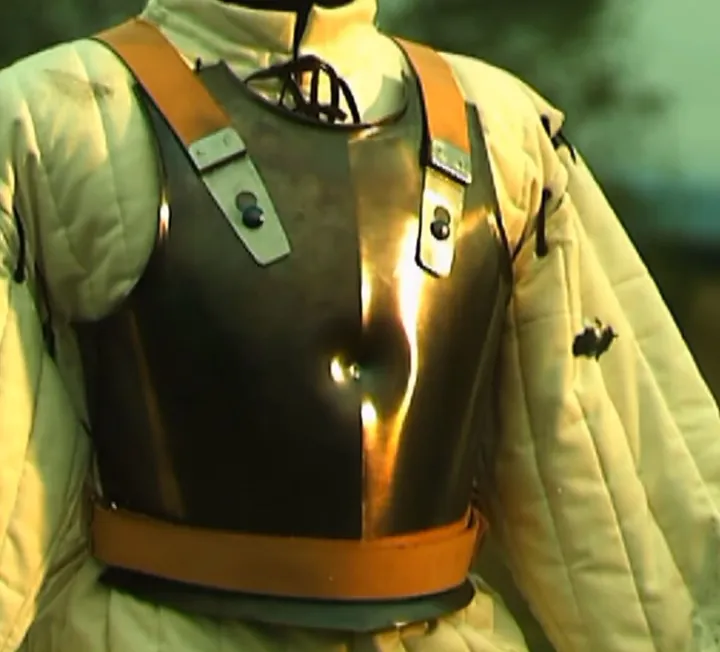
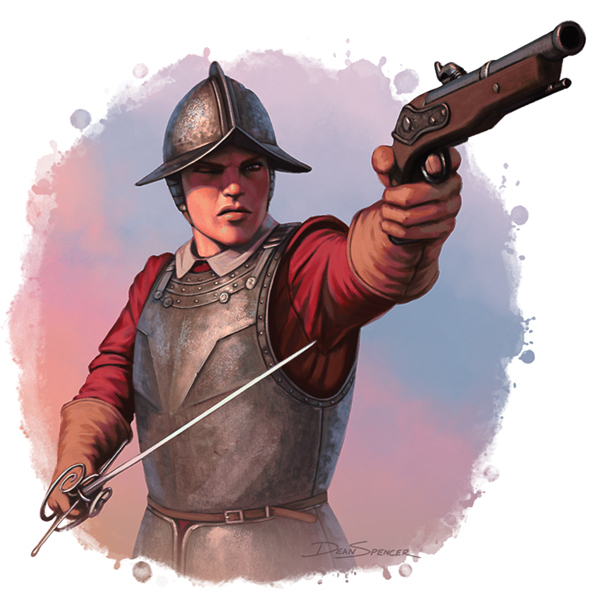
Well, the problem is that to make it easy to balance, Paizo made guns a lot like bows, especially damage wise. Bang, 1d8 damage! People want “consistent damage output” so they made them easy to reload quickly and/or have multiple barrels so you can get your multiple shots in a round. The main thing they added to power them up was to make them hit touch AC within the first range increment. But that’s a problem IMO – so magic plate armor, dragons, etc. are trivial to hit. Sure, “eventually firearms made armor obsolete” but an early flintlock bullet will deflect off a breastplate just fine.

I wanted to approach the topic with two equally important goals.

One, historical realism – at least a nod to it. One of the things I have loved about D&D in the 40 years I’ve played it is the exposure to history, technology, real stuff. This means slower reloads, misfires, high crits (the Paizo rules do have misfires and high crits, credit where credit is due), and so on. And related to this, fantasy trope fidelity – firing a pistol while laying about with a sword is a staple of some historical but certainly much fantasy fiction, and if a gun is just a bow then you will only have specialists. And while I do want early firearms in my game, I don’t want someone spewing out 4 shots a round, that’s for a modern game. I don’t really like the feel of a “gunslinger,” maybe a “musketeer” at maximum in a late middle ages/early Renaissance type setting.

Two, make them feel different than other weapon types. If having a gun is just a bow with a special effect, I’ll play Apocalypse World, thanks. If they’re not different texturally, why add them? Just for the fictional impact I guess, but – bah. To me the impact firearms should have is that you can’t fire historical firearms quickly – but if they hit you they will fuck you up. PCs above level 1 treat “a guy with a bow” with impunity unless he is also leveled. “Oh no, I might take about 4.5 points of damage!”

This is easily done – just use a slower reload and put more punch into each hit. Instead of “reload a pistol as a standard action, or move action with a feat, or just all the time if you’re a gunslinger, and then shoot for 1d8 damage” I went with “reloading a pistol takes 2 full rounds, or 1 with a feat, and then shoot for 2d6 damage.”

Suddenly there’s a lot more reason for a melee person to carry a pistol to shoot as they close, or pull and shoot at someone strategic in battle that they can’t get to. And a reason for a gun-wielder to carry a brace of pistols (like, you know, real people did). With these rules combats feel more like fictional early firearm battles (The Patriot… Van Helsing/Solomon Kane era stuff…). It also makes a massed squad of musketeers, for example, something to give PCs pause.

Early Cannon

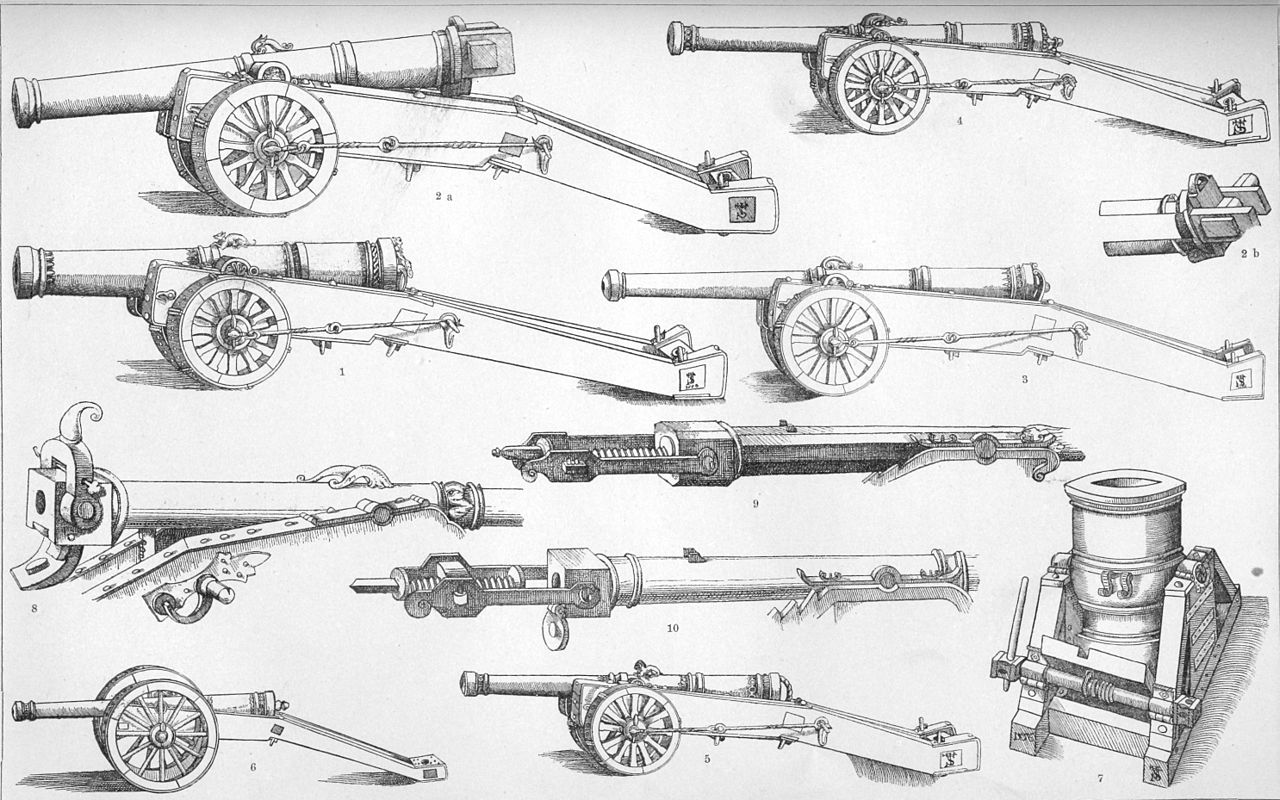
Same with cannon. Slow but super dangerous – though mostly to ships and buildings and not people, unless loaded with grapeshot.

I get some people “don’t want gunpowder in their D&D.” I don’t get that, I just want “historically appropriate for the late medieval era” in my D&D. And Europe had cannon as early as the 1300s (and earlier, in other places), and by the usual late-1400s kind of representative “hybrid medieval/Renaissance” D&D era that most general published settings, including Golarion, trade in, they were definitely in use on the battlefield and on ships. But they are slow and ridiculously expensive.

The Pathfinder cannon rules are actually reasonably similar to what I had come up with, with slow reload and crewing requirements. But they were both way too inexpensive (especially for a world that tries to say “oh they’re only really available in Alkenstar and you know maybe a little in other places”) and don’t pack enough of a punch. “Oh no, I got shot by a cannon and took 6d6 damage.” That’s 21 points of damage, also known as “a melee attack routine from a low level PC” or “the shitty low level fireballs that are why people say playing an evocation mage is a trap.” And their ranges are crazy short (100 ft. range increment).

What I wanted from cannon was to be long range and devastating, but rare due to expense and slow to fire and mostly for structures but still a threat to individuals. So my basic 12-pounder cannon does 7d10 damage every 4 rounds vs 6d6 every 4 rounds for the Paizo version. (Again, they balance it with the touch attack mechanic). It’s actually less expensive than its Paizo equivalent – my 12-pounder is 4000 gp and 120 gp of black powder to fire vs Paizo’s is 6000 gp and 100 gp of black powder to fire, maybe I should adjust that. (A wand of fireballs is 11,250 gp, for comparison.)

And my range increment is 500 feet. I know, all Pathfinder/D&D weapons have pathetic range compared to real life. But the role of cannon should be a super-ranged threat. Can you even get into fireball range before taking a volley? How many shots can your ship take as you close to board? It provides a different strategic element, not just a new skin on an existing strategic element.

Magic and Alchemical Firearms

Now, the other thing I do is to make enhancements to firearms very rare. They are brand new. You can find ancient enchanted swords from wizards over the last millenia but firearms and cannons are from the now, and tech and magic are somewhat opposed (both because wizards like niche protection but also somewhat fundamentally, in my view, built over decades of D&D lore that support that view). I think the “Paizo answer” to firearms and cannon is that you just boost the otherwise sad damage with magic, or with explosive shot and stuff that are, frankly, later tech level.

Conclusion

Now, the Paizo rules aren’t bad – they do most of what I want out of firearm and cannon rules, actually. I just think that it is way more interesting for the role of early firearms to be a slow loading big punch and the role of cannon to be a slow loading big punch at very long ranges. So, feel free and use these if you agree!

Let me know how you use guns and cannon – and especially what the feel of the rules you use adds to your game.

Geek Related Mass Combat Rules

I’ve just done a pretty big update to the Rules You Can Use page with a variety of revised rules for Pathfinder 1e (but easily adaptable to other adjacent D&D-ish rulesets). In this case, check out:

Geek Related Mass Combat Rules (6 page pdf)

I originally published them as a janky blog post but since we’ve been using them for years now (like… 15!) I put together a more polished version.

Mass combat? Oh, boo! you say? Well, I get it. Most mass combat rules are not great. Usually they’re not synergestic with the PCs and their abilities. The official Pathfinder Mass Combat ruleset originates with Kingmaker, and while it’s fine, it’s a minigame abstracted almost completely away from adventuring. The same goes for more thoughtful approaches like this one on Erin Palette’s blog and the one it links to by Sarah Wilson. Which is fine for its use case, but in my experience the problem that comes up much more frequently is small unit combat, when the PCs have gathered groups of people that are just big enough to be unwieldy but not large enough that “just have the PCs make some kind of Command” checks is remotely appropriate.

This came up very early in our Reavers pirate campaign. The PCs started to gather a crew on their pirate ship. A crew composed of clumps of similar folks – a couple fistfuls of War3s from when they took out an opposing ship in one adventure, a bunch of Fighter 2/Thief 1’s from another… And they are not faceless hordes; the PCs know each one’s name. But now how to run a combat with 4 PCs and 30+ pirates against some other ship or force that has some named commanders but also “30 sailors (see NPC Codex)” or similar? You either spend an hour between PC actions rolling infinite dice or “just abstract it out.” And just abstracting it out doesn’t respect PC investments in their own abilities or their NPCs’. If they buy all their pirates a masterwork weapon – should that not affect outcomes in a way they would expect? Should you “just have the PCs fight the bosses and let the mooks slug it out?” Well, one of the joys of being a PC is not always fighting “level appropriate” foes (You are level 60! Now the map is full of demon boars! That’s World of Warcraft shit.) – it’s fun to mow down mooks.

Another challenge is that the level system is a little wonky in that it makes, say, 20 L3 pirates basically no threat in any way to a L7 character. It turns into rolling 20d20 (or 8d20 if it’s melee and they can surround the PC) and hoping for 20s, and then doing a little damage. Therefore you want to be able to put those mooks into wads, to use a concept and terminology from the Feng Shui RPG, and make them some kind of a credible threat when massed. In my rules, when you make a unit, it gets +1/2 to attack and +1 to damage for every unit member, so for example 10 pirates that would normally have “cutlass +3, 1d6+3 damage” as a unit have one attack that is “cutlass +8, 1d6+13 damage.” Not overwhelming, but suddenly not nothing for a PC a couple levels above them.

Paizo did come out with troop rules (a solid 8 years after mine, ahem) that somewhat addresses this – turns a group of NPCs into something like a swarm – but has the fatal flaw of being only for crowds of faceless unknowns, not a group of people you know, and depend on special abilities that have nothing to do with actual individual level class special abilities, feats, etc.

Hence these mass combat rules. You can form like groups of NPCs into units, they get boosted attack/damage as a unit, have a combined pool of hit points broken into single-individual chunks, but otherwise use their normal Pathfinder 1e rules. If the members of the unit have Point Blank Shot and masterwork crossbows, then guess what, the unit has Point Blank Shot and has masterwork crossbows, easy peasy. And they attack and are attacked by PCs, NPCs, monsters, and other units normally using all the customary Pathfinder rules. As they take damage, a member of the unit goes down for each chunk of hit point damage they take. For example, 10 pirates with 22 hp each – the unit has 220 hp but someone falls for each 22 it is damaged. A PC that does 40-ish points of damage with a full attack routine can chew through a couple members of an opposing unit a round.

And as members of the troop start to fall, you can easily figure out who it is with a quick e.g. d10 roll. “Oh no, Billy Breadbasket went down! He’s our cook!”

The result – exciting, personal larger group combats that don’t bog down and the PCs feel an integral part of. Tactical enough that you get the feel of battlefield command without dragging you into an external minigame.

A core design tenet that people don’t seem to understand is that minigames that are sufficiently divorced from the PCs and their primary governing ruleset harm character immersion. I was forced to make these rules because I have never come across anything that maintains the identity of participants and supports the core ruleset that they normally operate under.

So give them a try, I hope you like them! I’d love to hear feedback – these do rely on frequent rulings to operate in the thick sludge of PF rules, and I generally trust DMs to set things up well so I don’t have guidance on e.g. “only make units of a size equal to the PCs’ level plus something” or the like. And I could see some of the more detailed factors in some of the other mass combat rulesets being usefully ported over (Morale, most specifically, I haven’t found a morale system I’m totally happy with yet.)

Infamy Points

One of the key rules we use in the Reavers on the Seas of Fate campaign is Infamy Points, colloquially called “gold coins” because I hand out actual replica pirate coins to represent them.

I asked for feedback on hero point mechanics prior to the campaign starting, and then I had posted them quietly on one of the Reavers pages but never really talked about them. Recently, Paizo has started to unveil their “new take” on Mythic rules in Pathfinder 2e and it seems like a step in the right direction, but still a little fiddlier than it should be.

Infamy Points (2 page pdf) in my piracy-oriented Pathfinder game are gained rarely, by performing significant acts of derring-do that get the populace’s attention. They don’t have to be “evil”, but do have to be “dangerous and badass” (a paladin who killed an apartment building full of criminals is as scary as someone who just mass murdered; no one wants to hang out with Judge Dredd). You get one a level, and one each time you do something super notorious – not every game session, not tied to “completing an adventure”, you have to do something really badass. Maybe that’s once every 4 sessions, maybe less if you don’t have a local populace to impress.

I have a list of things they can be used for but over time it’s basically boiled down to “anything.” Spend a coin, tell me what you want to happen. This is a big level up from the usual “Inspiration” type mechanics you see in D&D and D&D clones. “Oh you can add a couple points to your roll!” “Oh, you can reroll it, but before you know the result!” A bunch of fiddly crap if you ask me – kinda OK if you get a fistful per game session but if you only get it once in a while (like 5e inspiration) – why are you so afraid of making it powerful?

Get out of death? Sure. (Proactively you get off scot free, if you do it reactively after you already took the death blow I give some kind of drawback – like Sindawe lost an eye after being critted through the head with a rapier). Save someone else from death? Sure. (It’s a pirate campaign so this is a great source of people needing peglegs, hooks, and eyepatches.) Just take out some goon? Sure. I don’t let them take out a major villain with it but “they cackle and run off” or something is fine. Change the narrative somehow? Super! Oh the guy that runs this bar is your old buddy? Why not.

This is a place where I feel like D&D/Pathfinder has been too conservative – there are plenty of games out there that let you use actual narrative control but here everyone argues about “oh but if you can decide to roll inspiration afterwards it’s so powerful“…

Because, you see, here’s the secret. It’s not a tool for the players, it’s a tool for the GM. Whoops, you unleashed something too hard on the PCs and their ship is about to get eaten by a shoggoth? Well, they spend an infamy point and look there’s another nearby ship they can speed by and have the shoggoth eat them instead. The PCs are finding a plot thread boring? They short-circuit it. In Reavers, Sindawe had set up in his background a whole thing about his family so later I have his long-lost brother show up to fight him in a shark cult temple – “I kill him. Here’s an Infamy Point.” Uh, OK – I was surprised, I thought that was something he wanted, but this gave him a way to say “nope” that has his character come out well in the fiction, so fine!

Also, getting them is based on interacting with society ™, and it’s always good to promote that. Heck, my PCs use these rare and valuable things on saving their favorite NPCs fairly commonly!

So don’t be afraid of letting your PCs thwart death and accomplish things. A limited powerful narrative currency is IMO much better than fiddly ass shit like action points (add a 1d6 to a roll if you declare it before you roll! You get 1d8 of them a level! Please.)

Reavers on the Seas of Fate – Season Four, Twenty-second Session


Twenty-second Session
 (11 page pdf) – “A Narrow Escape” – The pirates finally get back to Nisroch and their ship; the Araska and the Dagger had a successful voyage. They are gathering up their crew when White Estrid’s fleet of longships hits. A bloodbath ensues, shattering the usual silence of Nisroch.

white estrid

White Estrid

The PCs return to Nisroch, having escaped death at the hands of plague, froghemoths, and the local law enforcement.  (I actually did a lot of work to figure out how likely it was the local constabulary would track the two murdered shadowcallers back to them. See the Paizo forum post.)

I did my usual thing – whenever the PCs leave their ship for a while and let the NPCs roam loose, I roll d20 for each NPC and they have a time according to that roll. Sometimes it’s a 1 and they die, sometimes it’s a 2 and they have something else bad happen.  Sometimes it’s a 20 and they really score.

So they get back, catch up, talk to Captain Clap, go to the Witch Markets… Seems like a calm “between adventures” session.  I was proud of my pacing on this one.  Thartane’s homunculus shows up to say “thanks for the froghemoth” and give them a manifest of shipping activity as requested.  Sindawe scans down it… “26 Ulfen longships?!?  Shit!!! Is that cannon fire from the harbor? RUN YOU DOGS!”

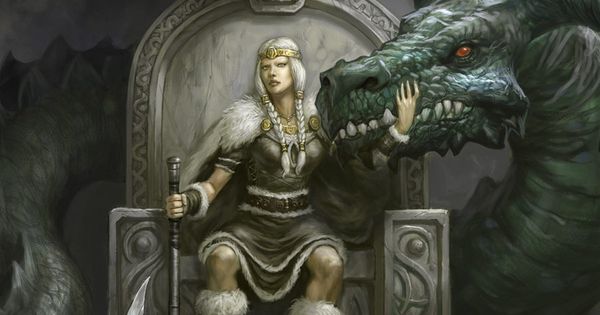
Sure enough, White Estrid’s fleet is pulling into Nisroch for the second time!  The only female Linnorm King made her bones sacking Nisroch and shooting the Arch of Aroden once before – and she’s pushing her luck by doing it again. They’ve known she was coming but kept pushing their luck time-wise. The PCs are way across town and run their asses off to get to their ships and get them underway as the Ulfen attack.

They get the Teeth of Araska underway but a bunch of the creepy mute monk Nidalese enforcers get on board. Then a longship rams them and Vikings board!  Meanwhile a linnorm flies in and a Nidalese tower disintegrates to let loose an ancient shadow dragon. Shit gets real, go read the deets.

Reavers on the Seas of Fate – Season Four, Twenty-first Session

froghemoth

Froghemoth

Twenty-first Session (9 page pdf) – “Lions and Tigers and Froghemoths, Oh My!” – The group tracks down their promised froghemoth and set up a blind to lie in wait for it. Of course, it’s already lying in wait for them.

It’s finally time to pay the piper – the monster they promised to Thartane the Necromancer for his aid in their safe passage through Nidal. I loved how they ended up suggesting it in the first place. Now, a very very concerned party tries to figure out how they’re going to get one.

The session gets off to a very “City Slickers” start while they stay at a ranch, then hire a trapper to guide them to the froghemoth grounds. As usual they spend most of their time not trusting a random hireling instead of the much, much more suspicious characters they tend to meet.  “He is taking money for services!  Keep an eye on him!”

They get out there and lay in wait… But though they are stealthy, the froghemoth is wily. The plan goes out the door fast; Samaritha pours electricity into the creature to stop it from getting its like 6 attack full attack every round. It’s super tough, but Serpent rolls a super lucky crit (we use the Paizo crit deck) and does INT damage to it – which is of course a froghemoth’s Achilles heel.

Everyone freezes briefly at this stroke of good luck, then leaps into action… there is no telling how quickly the aberration might recover. Wogan urinates on the monster. Sindawe and Serpent pull out the teleport spikes and start hammering them into the monster’s flesh. Samaritha corrects them, “No, the spikes go into the earth around it.” “I knew that!” insists her husband as he pulls them free of the beast. The spikes work – the creature and a perfect circle of scooped out of earth disappear.

But read on, because the doppleganger reveals itself!