Category Archives: talk

The Hammer Comes Down On West End Games

Boy, that’s two chronic deadbeat game companies going down in one week.  West End Games, which has been under painful mismanagement by a guy named Eric Gibson for a loooong time now, is finally coming apart and he’s selling off the properties – Septimus goes back to the originator, d6 goes fully open, and Torg is being sold and then he plans to close the doors.

The one good thing he’s doing is making d6 open and community-owned.  This guy isn’t a criminal embezzler like the Catalyst Games guys, but he’s a sad sack mis-manager who’s been squeezing WEG through one trauma after another – took pre-orders for Septimus then cancelled it and couldn’t repay customers, freaked out on forums, generally always had a long list of whiny “too much information” personal life excuses about everything going wrong…  In over his head, which wasn’t his fault, but refusing to make the situation better by getting out, which was.  He finally paid everyone off after a long time but hasn’t really done much since.  So he’s not as bad as these other guys, but he’s on the “never do business with” list the RPG industry has generated, along with the Catalyst guys and many others.

This may or may not be the last word, though – he gave up and announced WEG was done before, but then reneged (see the WEG wikipedia entry for more).  But, westendgames.com is down and has been for months now and he’s been MIA for as long.  So whether he really sells bits or not – it’s dead.

So who will complete the trifecta?  I’m hoping Outlaw Games.  That guy’s (James Shipman) an  honest-to-God criminal.

The Hammer Comes Down On Catalyst Games

Catalyst Games (Shadowrun, Battletech), which has been dealing poorly with its big internal embezzlement scandal, just got served!  Not in the urban dance contest sense, but in the legal sense.

WildFire, the people who write CthulhuTech and were trying to use Catalyst as a publisher/distributor, and some other folks (two freelancers, we think), have apparently gotten sick of getting stiffed and have filed a Chapter 7 request with the US Bankruptcy Court against InMediaRes (aka Catalyst aka Holostreets aka BattleCorps).  This is a new one on me – it’s basically filing bankruptcy on someone else’s behalf and saying “give me my damn money, or you’ll get declared bankrupt and your organs will be sold to pay me!”

See the filing docs – DOC 1 DOC 2

Various lawyery speculation says that as Chapter 7 requests are pretty easily defeated by anyone with a pulse, it’s unusual to do this unless you have a real strong case and/or you think they’re going down the drain and you want to get in line first to get your money before they shuffle it off to random personal slush funds.

Catalyst has responded with the predictable “What!  Baseless!  All will be well!

Standard posturing.  The sad thing is that when it all is settled, probably despite Catalyst collapsing, the primary culprit will still be living large in the big ol’ house paid for with his ill-gotten gains.  Hooray, deregulation!

Catalyst Games, Defiant Criminals

Well, since their well-spun tale of “someone stole some of our money but it’s all OK now, we’re all OK here now, how are you?”  Catalyst Game Labs (CGL), the company putting out Shadowrun and Battletech, appears to be sliding into a morass of slime and (semi-?)criminal activity.

Besides the owners stealing an assload of money (check the detailed data/graphs on the RPGSite!, originally from RPG.net, and originating with a Catalyst co-owner named Phil DeLuca) They asked freelancers to lie about financials (see them give details at Dumpshock), aren’t paying freelancers despite selling their wares (and more at Fear the Boot)…  And haven’t been paying royalties, this has resulted in Cthulhutech (WildFire) and Eclipse Phase (Posthuman) being yanked from them (CGL was publishing those games too).  A number of people (writers mostly) have quit Catalyst due to the organization’s behavior.

Summary: Loren Coleman and his wife appear to have stolen about a million dollars, Randall Bills was trying to cover it up, and loads of folks were and appear to still be involved in all sorts of probably-illegal shenanigans.  However, of course Coleman hasn’t even been fired let alone had the cops sicced on him.  Note their names down and add them to the list of other scumbags that freely prey upon people in the RPG industry – it’s a long list, sadly.

As usual there’s folks still involved with the company (including Jason Hardy, Shadowrun Line Developer) making excuses and saying “If you were all to just continue to buy our stuff, then surely one day we’d pay these freelancers and whatnot…”  And fans saying “Well but why shouldn’t I keep buying stuff from them…  Coleman shouldn’t go to jail, why that would cause people to lose their jobs!”  And the most deluded, some freelancers saying “Well they just hired me and I’m sure they’ll pay *me* for my work…”  Oh and of course the standard smear campaign against the freelancers and others who are coming forward with all these details (same thing the sleazebag who inspires us all, Jim Shipman of Outlaw Press, did during his own scandal – they must be reading his playbook).  Apparently very few people have meaningful ethics any more, sadly.

More info as it develops – the best source used to be Dumpshock but they banned Frank Trollman, who has the best info, so probably now it’s theRPGSite – proud to be the place where all the people banned from the snooty forums go to die!

Pathfinder Modern Pledge Drive Leaves Me Ambivalent

Super Genius Games is taking patronage money to fund a Pathfinder-ized version of d20 Modern.  They’re only at $8k of their $70k goal with a month to go.

Am I signing up?  No.  I would probably buy such a thing if it came out, depending.  I love Pathfinder but was ambivalent about d20 Modern.  If it was a better version, sure!  But I don’t get how people are insisting on these patronage models.  In this case, I worry…

1.  What if the game is just bad?  There’s good names behind it but there’s always a chance.

2.  What if the game is never delivered?  Or is colossally late?  I am still a sad pre-buyer of Sinister Adventures’ Razor Coast, and if it wasn’t for Lou Agresta and unpaid volunteers chipping in, it would never see the light of day.  The RPG landscape is littered with collapsed projects.  My general policy is to NEVER preorder stuff unless it’s something like a major book from WotC or Paizo and I KNOW it’ll ship within about a month of when it’s supposed to.  I let my Logue-mania from his Paizo work get me carried away for Razor Coast; I won’t do that again, I’ve been reminded.

I do subscribe to some of the Paizo lines, just because they have an unbroken track record of delivering quality on time.  But no one else has that going for them.

In general, who pays for things sight unseen, before the thing is even developed?  No one.  It seems like a bit of an unrealistic business plan.  It’s one thing to just take some pre-orders with “if you order real early you get to playtest or give input or whatever” – sure, you get the $$ early and give some access, that’s fine.  But making it contingent – bad plan.

I know Open Design has been doing this – but I haven’t bought into any of those, either.  In fact, there’s a couple of them I’d like to buy now (like Kingdom of Ghouls) but I can’t because of their closed patronage model – that’s throwing money away, and generally makes me grumpy and unwilling to buy in to such schemes on a personal level.

I’m glad people are innovating business models and all, and if they are working for people (or if they think they are) more power to them…  But this is one consumer who’s not into it.

Story and Setting

Hmm, I was reading Trollsmyth’s post today, and it led back to a storygames thread that is handwringing over  “can setting be good in a storygame?”  I would have thought “duh, yes,” as in other genres a well realized fictional world is a powerful tool in creating an interesting story, but apparently opinons are mixed.  People are worried about the need to have an encyclopedic knowledge of the setting, and of contravening “canon.”

A couple thoughts on that.  First thought is David Mamet’s rant from yesterday about  HOW you present story information in a way people care about – via the drama, not via infodump.

Some folks in the thread mention doing helpful setting summaries; I recently saw a cool one in PowerPoint for Paizo’s Golarion.

But I have a more fundamental observation.  You don’t NEED to give them all those loads of info.

a) What does a local yokel (the prospective first level character one is to depict) in a semi-medieval land know about history 100 years ago, let alone detailed ancient history?  Nothing.  Tell them about their hovel and the immediate political concerns it has.  Most people know this.

b) Canon is crap.  It is non-binding.  If the PCs haven’t experienced it in game, it doesn’t exist.  If they go into a hex and you tell them it’s farmland and later you read a supplement and there’s a lizardman camp there instead – who cares?  Are the RPG police going to bust in through your windows and tell you “you did it wrong?”  This may be a PARTIALLY legitimate concern with a game world based on well known IP like Star Wars, but really, get over it.  Even in that case, you just tell the players at game start “look, this is MY instance of the Star Wars world – things may differ from canon and your actions may alter official history.  P.S. There’s no Ewoks.  Yay!”

c) Don’t info dump.  Go read Mamet again.  Players don’t listen and don’t remember.  Show, don’t tell, and make the showing part of the drama.

Here’s an example.  In my Reavers game recently, the PCs came to a new island, town, and noble manor house they were casing out and infiltrating.  It was from a scenario (Green Ronin’s Mansion of Shadows) that had all kinds of setting detail.  Did I just up and tell it to the PCs?  No.  They discovered what they discovered as part of their actions.  It was very helpful to me to have the detail there, so that I wasn’t having to make stuff up all the time when they decided to go bust down a random door, but I was neither tied to it nor did I need to tell them about anything they didn’t personally see, fight, screw, or pee on.

And that works.  During the climactic battle, the PCs remembered a minor setting detail – one of the noble women had a key that let them in through a small door in the inner defensive wall, allowing them to flank the defenders.  Why did they remember that?   Because one of the PCs was snuck through that door by the noble woman so they could go bang.

There was a town, with all kinds of location descriptions.  I didn’t give them a map or explanations of locations they didn’t go to.    Places they went and interacted with, they went back and interacted with again and formed relationships, plots, etc.  It works in a dungeon, in a town, in a country, in a world.

  1. Show, don’t tell.
  2. Don’t just show, involve in the drama.

There is also a lot of concern about “players that know more about the setting than another.”  My response: so?

Do people that know more about history in the real world have some kind of advantage over other people besides a vaguely smug feeling of superiority?  No.  In a group of adventurers, so what if one guy knows all about thirty gods and the other one doesn’t?  Either he’s a helpful information resource (good), or a know-it-all twerp that introduces dramatic conflict (also good).   I guess sometimes other players get some kind of inferiority complex if someone else knows more?  Well, handle it just like the real world – have your character beat theirs up.  That’s a bit tongue in cheek but maybe I’m just not relating well to the concerns of the “there should be no GM, just the players making the world up as they go” crowd.

Anyway, JDCorley has a lot of good posts in the storygames thread, check ’em out.

Writing Tips From David Mamet

Coincidentally, Louis Porter blogged about this just as I was watching my fourth episode of The Unit in a row!

It’s an awesome memo from David Mamet to the other writers of the excellent but cancelled TV show “The Unit,” which is about a batch of Army SpecOps operators and the crazy bitches they married. (Still showing on the Sleuth channel about 12 times a week!)

It (the memo, but come to think of it so does The Unit) has some good takeaways for the DM who’s planning out scenes of their own in their campaign.

Now, there’s always the debate between a “story driven” game and a “sandbox” game or whatever your pet terms are.  But the upshot is that whatever you’re doing, there needs to be drama in every scene.  (Melee combat is not in and of itself drama).

He talks about a problem they were having, which was execs wanting them to put in more “explainy” information in the scenes instead of drama.

How many of us have had the problem where they, as a DM, are too much in love with conveying information about our game world or whatnot?  And the PCs don’t care and forget it?  Well, here’s the reason.

Similarly, one might ask writers of adventure scenarios to look at this.  Don’t subject people to expositional scenes.  That’s how story driven gaming got much of its bad name.

That’s also one of the reasons wandering monsters aren’t as prevalent any more – they risk being a scene with no real drama.

Here’s the kernel of his point:

START, EVERY TIME, WITH THIS INVIOLABLE RULE: THE *SCENE MUST BE DRAMATIC*. it must start because the hero HAS A PROBLEM, AND IT MUST CULMINATE WITH THE HERO FINDING HIM OR HERSELF EITHER THWARTED OR EDUCATED THAT ANOTHER WAY EXISTS.

Basically, if a scene is not dramatic – drop it.

But is this only “dramatist, storygamer” advice?  I would argue not.  Even in sandbox gaming, you are placing scenes.  You’re just not dictating their order.  It’s a false dichotomy, drama vs sandbox, in many ways.  If the PCs wander across something and have a scene, and that scene has no innate drama, it’s kinda a waste of time.

Discuss!

Quickie Mass Combat Rules

I came up with some streamlined mass combat rules to handle a battle in my Reavers campaign with 30+ participants on each side.  It worked pretty well, so I thought I’d share it.  I didn’t want a huge system, but I wanted something that would work smoothly, that would incorporate the PCs organically without turning into some weird “minigame” or requiring them to be commanders.

Quick Mass Combat Rules

Army Builder ™

Break each side up into units of n creatures, where n=5, 10, or whatever makes sense for the scale of the conflict.  Units should be mostly homogeneous.

Unit Initiative = Median initiative of the creatures in the unit.

Unit HD = Total HD of the creatures in the unit.

Unit hp = Total hp of the creatures – break them up into n boxes of equal hp, one box per creature.

Unit AC = AC of each creature.

Unit Move = Slowest move of the individual creatures.  Loosely track units on the battlefield so it’s clear who they’re in contact with.

Unit Attack = Normal attack bonus of the creatures + ½ times the number of creatures in the unit.  (10 creatures = +5 attack bonus.)

Unit Damage= normal damage + the number of creatures in the unit.  (10 creatures = +10 damage.)

Saves = save of each creature.

Targeted spells can only take out the appropriate number of individuals.

Area effect spells, apply as unit damage.  Might not be “fair” to the fireballers, but whatever.

Named NPCs and PCs can engage specific targets in the unit, and get engaged by them separately from the unit attacks.

Combat!

Units roll once to attack other units using their unit attack versus the other unit’s AC.  If they hit, they roll damage, duh.  As a unit takes damage, you cross off boxes for each creature-sized increment of damage they take.  You can “half cross” off a box for leftover damage that’s about half a creature’s  hit points.  As armies take damage and boxes get crossed off, their attack and damage bonuses based on the number of creatures in the unit go down commensurately.

After that, it’s rulings not rules baby!

Playtest Example

A pirate attack on a Chelish manor house!  There are 30 attacking pirates, and they have a wagon-mounted swivel gun.  Each pirate is a War2 with Toughness – they have 20 hp each, but only attack at +3, do 1d6+1 damage each and have an AC of 13.  The PCs are their “men on the inside”.

The keep is defended by 30 human guards (War1) with only 5 hp, but AC 17 and damage of 1d8+1 (longsword +3).  It is also defended by 10 orc soldiers (was 15 before the PCs got their hands on them) that are War1s but have an effective hp of 22 because of their orcish ferocity, AC 15, and attack with a greatsword at +5 for 2d6+4 points of damage.

Continue reading

This Is Why We Can’t Have Nice Things

You recall my recent post about the “D&D With Porn Stars” blog?  Even WotC covered it!  Well, apparently there’s some OSR group called “TARGA” out there.  One of their weekly link roundups linked to the blog.  Apparently this twisted the nipples of two guys mainly, this guy (who apparently was also sad his latest brilliant blog posts weren’t included in the links) and this guy.

This had a lot of fallout, including Chgowiz pulling his blog down off the Internet totally in a fit of pique.  And the guy who was doing the link roundups left the organization.  And primary complainy guy left the organization.  And lo did Joesky speak out upon the subject.

My point isn’t that some of those involved are douchey.  It’s that organizations like this are inevitably douchey.

Some of the worst times of my gaming life have been as a result of my involvement with nonprofit gaming organizations.  I was involved with the RPGA as a Living Greyhawk Triad – that sucked.  I started a Memphis gaming group (the FORGE – still going strong!  No, I hadn’t heard of the Ron Edwards thing at the time.).  That was horrific in its early stages, when my roommate and I had endless conflicts with the demented wife of an RPGA staffer; she even raised her hand to hit my roommate once during one of her psychotic rants.  (Once we said “screw you guys” and got it going on our own it worked out fine.)  I was a officer of the Christian Gamers Guild, until the neverending power plays and schizophrenic threats drove me away.

Politics are never so vicious as when the spoils are pathetic.  It’s why bosses at nonprofits are about 25% more sleazy and awful on average (a made up but completely true statistic).   Organizations like that (and to a similar extent, the cabals “in charge” of things like RPG forum sites) inevitably devolve into a self-serving nest of narcissists and empowering cowards.

I refuse to participate in such “organizations” (a strong word for random mailing lists with self-proclaimed “Boards” of 5 or so random people that decide to waste hundreds of man-hours of time working out policies that can only alienate and never help anyone) anymore.  And I’m a lot happier.

Heck, even the RPG Blogger Network went through some of that.  Let me tell you what you need in terms of detailed power structure, unless there’s real money changing hands.

1.  One moderator/owner guy, who will be very tolerant, and generally tell everyone to just calm down and ignore it if someone’s twisting their knickers, but in extreme cases warn or ban people who are being total asshats on the forum, mailing list, or whatever.

2.  One person per real initiative (like an e-zine or whatever) who organizes/runs the initiative and includes submissions based on their sole prerogative.  Other people can step up to do another “whatever” if they disagree with that person’s vision.

That’s it.  You don’t need a “constitution.”  You don’t need a “board.”  Every single one of those you’re doing is a bunch of jacking off that will look pretty stupid to you in ten years when you’re wondering where your youth went.

On a similar note, if someone says something on a blog or mailing list or forum you don’t like – do feel free to ignore it.  Some people act like every post is a missive solely directed at them.  Unless it begins with “Dear X, you are a loser” it is not, and you can safely ignore it, let it go by, and life will go on.

This has been a public service message.  Wise up.

Steve Jackson Games State Of The Union

Steve Jackson,the company that publishes GURPS and Muchkin (if that’s news to you the rest of this is going to be helleboring), has just released their “Report to the Stakeholders: 2010” that gives an overall look at how they’re doing.

The good news: They’re doing well.  28 staff, profitable, $3M gross revenue.

The bad news: All their goals revolve around “sell more Munchkin.”  They only released one print GURPS release in 2009, mostly they’re going PDF.  Kinda sucks – 80% of their revenue is from Munchkin and 20% is from GURPS but there’s no GURPS goal…

The RPG company list on my blogroll keeps getting smaller as these companies eschew RPGs for board games.  Ah well.  I hear White Wolf might be giving it up as well and sunsetting RPGs for other stuff.

Props for the transparency though – did you know SJG openly lists how many units they sell on their e23 PDF sales site?

D&D With Porn Stars Goes Video (ok, not that surprising considering)

The newest hotness in the blogosphere is the “D&D With Porn Stars” blog – it’s not a gimmick, it’s really a group of D&D players who are also (mostly) porn stars.  The blog is actually quite good and full of thoughtful articles written by DM Zak Sabbath!

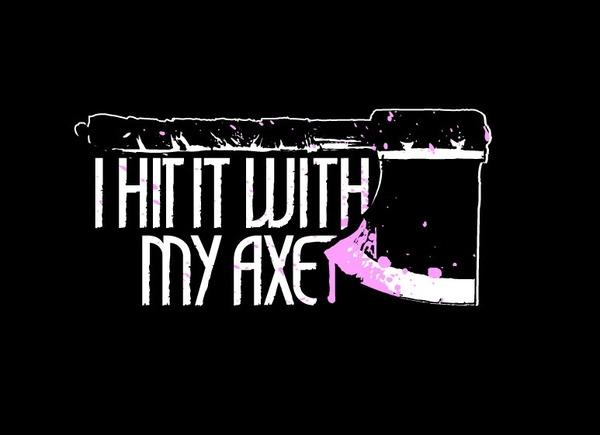
Anyway, he does some session summaries, but they’re going one step further and filming their play sessions and airing them as a series called “I Hit It With My Axe” on The Escapist.  No, there’s no hardcore action (yet, at least), but you get to see…   Well, an only slightly more chaotic than normal gaming group, really.

Insights so far from the first episode:

  • Hot girls like to play elves and tieflings.  That should not be news.
  • Porn stars have geek hobbies.  Also should not be news; I remember fondly the long discussion I had with that stripper about her WoW priest.

Zak says it should liven up more in future episodes!  It’s getting loads of press: io9 interviewed Satine Phoenix about it, even my favorite geek site Topless Robot reported on it.

I totally want a big version of their logo to use as my background…

Shadowrun Problems; Great PR Though

News broke on Tuesday that Catalyst Game Labs, publisher of Shadowrun, Eclipse Phase, Cthulhutech, and Battletech, is in severe trouble to the tune of $850,000 being embezzled from their corporate coffers.  You can read the initial detailed report of the issue here.

On the one hand, eek.  On the other hand, embezzlement has practically become a tradition in the RPG industry, so it’s not all that surprising.

What I want to point out, though, is the press release Catalyst put out on Wednesday, the very next day after the news broke.

For Immediate Release

Catalyst Game Labs recently completed a detailed financial review of the company. We learned that over the past several years the company has achieved dramatic growth in terms of demand, increased total revenues and strong sales with an increasing market share in the gaming industry, despite a lackluster economy. We are thrilled by that news and are eager to move forward with our upcoming original game Leviathans, along with our other new casual games. We also remain committed to plans for our beloved licensed games: Shadowrun, BattleTech, Eclipse Phase, and CthuluTech.

While we wish the review had only uncovered positive news, we also discovered our accounting procedures had not been updated as the company continued to grow. The result was that business funds had been co-mingled with the personal funds of one of the owners. We believe the missing funds were the result of bad habits that began alongside the creation of the company, which was initially a small hobby group. Upon further investigation, in which the owner has willingly participated, the owner in question now owes the company a significant balance and is working to help rectify the situation.

The current group of owners was presented with this information on Monday. Administrative organization for the company is under review, and accounting procedures have been restructured, to correct the situation and provide more stringent oversight. We feel the management team at Catalyst did the responsible thing by seeking this financial review and we will continue to restructure as needed. We are in discussions with our partners and freelancers to remedy any back payments that may also be due as a result of this review.

We are embarrassed that this situation did occur but we hope our eagerness to make these changes, along with our reputation for making great games, will encourage you to stand by us. We understand that for a few employees the news was too stressful and we wish them all the best in their new endeavors. However, the majority of the team remains and will continue to bring great entertainment to you all. We appreciate the support our friends, freelancers, and fans have provided us in the past and look forward to a successful future.

Now, I’m not saying any of that is true or it isn’t, but I do want to say this is the best example of game company PR I’ve seen in a long time.  If you need to do damage control, this is how you do it.

  • It’s prompt – put out less than 24 hours after the news hit.
  • It’s upbeat – explains sales are great, the game will be fine, the guy just made a mistake, and it’s all on the path to resolution.
  • It’s detailed – not too much detail, but enough that you can kinda trust you’re being told a decent part of the story.
  • None of it is obvious lies – it’s sad that that’s worthy of note but look at the competition.

When confronted with similar issues, other game companies instead tend to:

  • Disappear, and not address the issue for months (WEG)
  • Spin a tale of woe about personal finances, health, psychological problems, betrayal, and dark magic (Palladium, WEG)
  • Make a declaration that is either a transparent lie or gives no detail and tells you it’s none of your business (WotC)

I like this press release so much that I find myself hoping it’s true and that they can recover from this in a meaningful way!  I hear that the Eclipse Phase guys have already said they won’t work with Catalyst any more, they’ve shed a couple employees, and some other freelancers are turning their backs on them – those are bad signs.  But, who knows.

Aside: The public somehow thinks that it’s mostly the big companies like AIG or Lehman Brothers that are full of illegal shenanigans – but having worked for small companies, I am willing to bet the percentage is just about equal.  Human nature’s the same in small and large scale.

New d20 Modern Patronage Project

Last month I wrote about the state of modern d20 gaming and mentioned there might be a project in the works to update it for Pathfinder.  Well, the project is up and taking donations!  It’s being done as a patronage project by Super Genius Games, which consists of Owen K.C. Stephens, Stan!, and R. Hyrum Savage.  They’re calling it “P20 Modern.”

Follow along and see how it goes!  I liked d20 Modern OK and think it could be done a lot better, and it’s a great time to take it on.