Tag Archives: Pathfinder

Reavers on the Seas of Fate – Season Three, Eleventh Session

Eleventh Session (17 page pdf) – “Rana Mor” – Though they pretend to look down on vampire strippers, the crew still does what this one bids them. They penetrate to the heart of the temple and kill the ancient undead high priest. Now they shall claim their just reward.

Saeng Ki

Saeng Ki

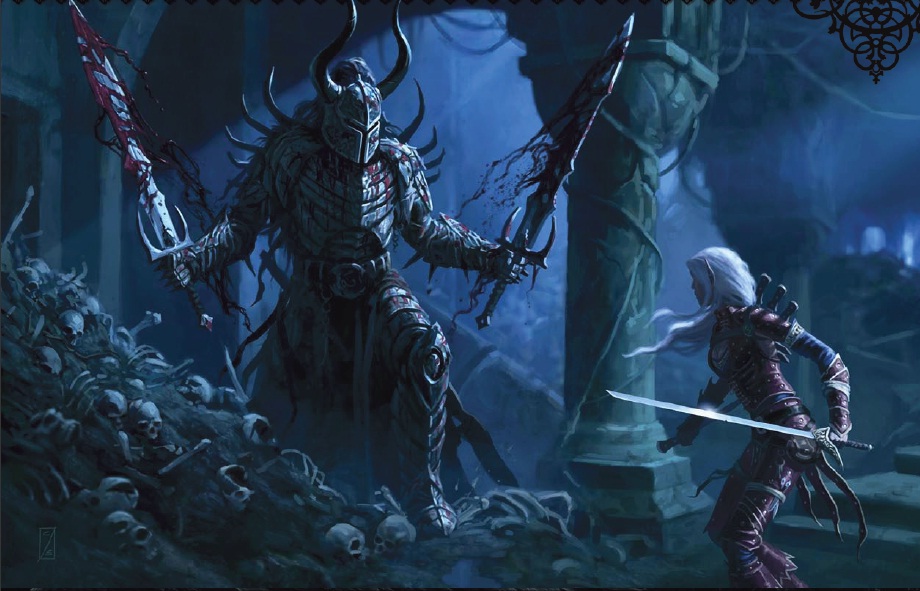
I’m afraid the art for Saeng Ki (this is from the actual adventure in Dungeon) backfired a little in this case.  Normally, “hot chick” can be somewhat inspiring to our all-guy group. But in this case, it was a little too over the top, and they immediately dubbed her “a vampire stripper” and refused to take her seriously on the grounds that both vampires and strippers are Chaotic Evil and that she’d betray them in ways few men have been betrayed by a woman.

So even though she’s offering them a pretty good deal, there’s endless back and forth bickering and negotiation and all for the first part of the session.

Finally they move off at her behest and wander the dungeon.  I put in some Azlanti chariot beetles; I went through all the Pathfinder stuff I had and pulled everything vaguely Azlanti to use on this whole trip.  Then there’s a lively fight in a room full of dart traps with undead monks in a silence zone.  It culminates with a long knock-down-drag-out with the main huecuva priest and his mummies; the PCs retreat initially and lead the mummies into some traps and then retreat more till Saeng Ki herself is helping them… Death or glory!

Carrion Crown Chapter 5, Ashes at Dawn, Session 4

Fourth Session (14 page pdf) – We kill vampire witches and blood knights, and then almost get killed by angry plant life. Then, it’s off to Renchurch!

bknight

We find a corrupted vampire paladin and get intel from him. This allows us to bust in on the vampire witch and blood knight from the side instead of the front. Xurak dispels her solid fog, Nigel hits her with hold person (he’s a dirge bard so it works on undeads), and I power-slide over and stake her! We sic a hasted zombie octopus on the blood knight and it’s like Tokyo Gore Police up in this bitch.

That was easy! We go back to Caliphas and drink. Then it’s off to the Church of All Renfields – where a bunch of hangman trees just about murder us. It’s always the nuisance encounters that cause us to wipe in these games.

After I leave, the group decides to tease an irate linnorm, and end up teleporting away to avoid becoming linnorm droppings.


Reavers on the Seas of Fate – Season Three, Tenth Session

Tenth Session (12 page pdf) – “Graveyard of the Masters” – Below the Azlanti graveyard lies a hidden temple to Zura. The crew fights their way through undead clerics around the blood moat until they meet – a skull-faced stripper?

For this set of sessions I reskinned the Rich Baker adventure “Rana Mor” from Dungeon #86, originally set in an Indian jungle, as the Zuran temple. Zura, the Vampire Queen, was an Azlanti deity of vampires and blood and cannibalism and related themes. I wanted a place that was exotic and undeady, so I used this and just added a layer of blood and stuff over the existing symbology. The PCs were fascinated with the moat of blood; they took samples and wondered if they’d get powers from drinking it (“Yeah, probably just the power of hepatitis,” they decided in the end.)

They explore the place and fight a bunch of lively undead guardians, including cleric types that summon things, and it’s some heavy action for a while there in a running battle through the ruined halls.

Finally they meet the priestess Saeng Ki.

Saeng Ki

Carrion Crown Chapter 5, Ashes at Dawn, Session 3

Third Session (12 page pdf) – Off to the Monastery of Saint Lemiran, where all the witches are strong, all the vampires are good looking, and all the loot drops are above average.

We semi-quietly infiltrate the Monastery of St. Lemiran with our pet charmed vampire, clear some guards, and hit one of the two witches that run the place.  As usual, I drop her with a slumber hex but she gets woken up by others before she can get coup de graced, alas.

hetna

We finish off with a demonic stablehand, and prepare to clear the next level in a fortnight!


Reavers on the Seas of Fate – Season Three, Ninth Session

Ninth Session (9 page pdf) – “Torches In The Night” – The crew hangs out with a friendly member of the Sun Temple Colony, but their head priest decides to just burn them all out. Then it’s time to mess with Azlanti quicksilver grave/study aids.

Xiola Chelman

Xiola Chelman

Well, the PCs befriend Xiola Chelman, leader of the Fertile Families from the Sun Temple Colony, and she takes them back there. In usual fashion they don’t exactly make a good first impression…

The old man replies, “The believers and those without sin have nothing to fear. If you behave the night I will put in a good word with the priest.”
Sindawe asks him, “Are there any common rules that we should know about? Or things that we shouldn’t do?”
Serpent adds, “Are there any specific places we shouldn’t pee?” Everyone looks at Serpent with concern.
Wogan helpfully interjects, “Perhaps a complete list is unreasonable.”


This is one of those weird cases where the party had a good idea – asking about local rules – but then somehow rather than shutting up and listening for an answer they started explaining and elaborating and getting wrapped around their own axle. This led to a semi-in-character, semi-not discussion about the feasibility of asking about “places not to pee.”

Anyway, they get boarded up in a house and burned to death.  Or at least, that’s the plan, but they break out, taking the drunken Xiola and the flame-goo-possessed Lefty. Once the head priest summons a salamander they skedaddle for the forest. When they were trying to wake up the drunken Xiola and she muttered “Lemme along or I’m gonna kill ya,” that’s an Easter egg quote from a well-known tale of mine having to do with strippers and Jamaica.

They find out that Lefty has indeed been a plant for the cultists, but content themselves with winging him when he tries to flee and tying him up. Then they use a weird Azlanti graveyard/computer thing (actually from Shore to Sea but they never interacted with it there so I moved it here) and discovered that there’s an underground temple to the vampire goddess Zura underneath – and it turns out that Sindawe’s treasure map leads to it, as a Mwangi trail marker he finds that his father left indicates!

Carrion Crown Chapter 5, Ashes at Dawn, Session 2

Second Session (6 page pdf) – We intervene in vampire on vampire violence with some good old fashioned human on vampire violence – in a tailor shop?

Basically this is one big fight.  Xurak charms the main vamp, but we fight the others till we manage to lock them in a bathroom and tear the roof off to poof them. Then there’s some ghouls and demons. I turn a demon into a slug with baleful polymorph, learning my lesson from last time (when I turned a monster into a little crab and it killed Icobus anyway) to give them no possible attack form.

She turns it into a slug with baleful polymorph – an evil, demonic slug with a boatload of hit points. The slug falls to the ground and oozes away, to one day scare the piss out of a local paladin.

Then it’s all over except for the looting and plot points.

Reavers on the Seas of Fate – Season Three, Eighth Session

Eighth Session (14 page pdf) – “Cultists, Guns, and Money” – The line between friend and foe grows ever more slim and tenuous as the crew trades with a hermit and his killbot, fights some Sun Colonists and saves others, and are maybe betrayed by yet another…

OK, sorry, I’ve gotten like 2 years behind on blog posts for this campaign – we are still hacking away at it every other week like clockwork though! It’s going for epic length. Let’s see if I can get you all caught up.

When we last left our friendly pirate crew they had ventured out into the Arcadian Ocean to seek treasure in the spires of lost Azlant, as well as bring wanted pirate Morgan Baumann of the Black Bunyip back to Riddleport. They found the long-lost Sun Temple Colony (described in Lost Cities of Golarion, and I’m riffing off it) and have begun to explore and befriend (and/or slay) the natives. They discovered that the main group on the island has some kind of weird sun god and controls a Floating Azlanti Death Lens that does an ant-meets-magnifying-glass routine on anyone trying to come or go from the island. They have a buddy from the other group of ex-colonists, a one-handed lad named Lefty, who is guiding them as they explore the isle further.

First they get cornered by mutated gibbering dudes that set things on fire by touch. They escape them and meet a crazed hermit with a “killbot” who also pounds on them until they manage to engage him in conversation.  He reminds several people in the group of their crazy old Fox News-watching grandparents and so the discussion tends towards the evils of immigrants and the perils of fluoride in the water; they end up trading him stuff for cool bits of lost Azlanti tech.

Then they have a run-in with the Sun Temple Colonists, which is quite violent and during which they find out that they have some kind of fire-blobs in them and are immune to fire. They start to get suspicious of Lefty, which leads to my favorite exchange of the session:

Wogan turns on Lefty, slaps him and says, “Did you signal those guys from the tower? Are you working with the cultists?” Wogan slaps him again for good measure.

Lefty reddens and begins to tear up. He manages, “No…”

Wogan says, “I don’t believe you! What are you up to?” More slapping and yelling follows until Lefty cries out, “I’m changing! I can’t stay with my people much longer; I’ll have to join the cultists.”

Serpent says, “Puberty?”

Wogan asks, “Fish peoplism?”

Lefty replies, “I can’t tell you! My people consider it evil!”

Sindawe says, “Look, you can always join my crew. We don’t care what you’re changing into, because we can always use an extra set of hands.” Then considering the possibilities, he adds, “Are you turning into one of those touch burning mutants? Because that would be a lower rate of pay than ‘cultist’.”

Wogan whispers, “‘Bullet to the head’ sort of wages.” Serpent nods.

Then, based on their experience from Shore to Sea, they decide to talk to the Watchers, aka Azlanti Streetlamps, aka will-o-the-wisps.  That goes a little rocky, but they save a lady named Xiola from the colony!

Carrion Crown Chapter 5, Ashes at Dawn, Session 1

First Session (16 page pdf) – The group bypasses a headless horseman on the way to Caliphas, where vampire murders are investigated.

horseman

My friend Scott from Memphis was in town, and guest starred as Vampire Hunter D.

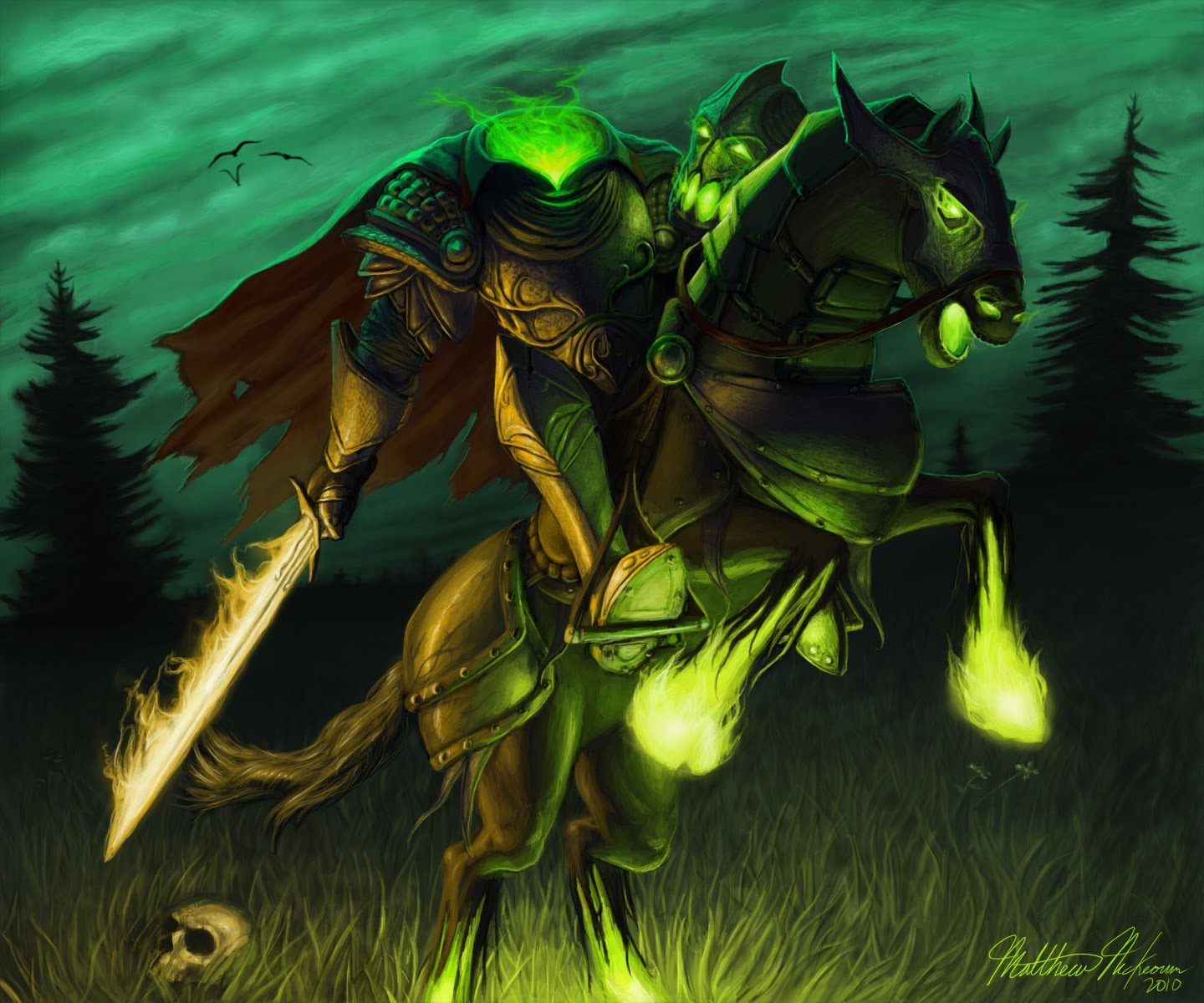
Xurak charms the horseman as we fight off hellhounds.  Unfortunately, the intelligent nightmare he’s riding will have none of it…

Then we investigate murders.  Vampire murders.  Vampire murders of vampires.  The racist among us simply consider this “a job well done” but the plot has other ideas. We investigate, gather intel, and banter. Eventually a tailor shop is targeted for a home invasion.

Upkeep and Lifestyle

The Downtime rules in Pathfinder from Ultimate Campaign kinda whiffed on the Upkeep section of the rules, which basically say “uh, nothing needs upkeep, move along.” But wouldn’t it be more interesting if it did?  “No!,” the people shout, no one likes being taxed. But what if there were options and possible advantages to be had?

Let’s talk about PCs who want to live high on the hog, as opposed to paying their bare minimum for food while in town. There’s nothing in Pathfinder RAW about this. However, in D&D 3.5 there were optional rules on Upkeep (DMG p.130) with costs per month for various levels of lifestyle. We used a variant of these rules in Living Greyhawk:

The GP required to support PCs between adventures is called upkeep.

For 12 GP per TU* your PC gets adventurer’s standard upkeep. This pays for common room and board, replenishes rations, mends clothing and equipment, refills healing and disguise kits, restocks up to twenty normal steel arrows and bolts, and heals hit point and temporary ability damage between adventures.

You may also pay more GP to live better than the average adventurer. For 50 GP per TU, rich upkeep gives the same 5 benefits as standard upkeep and a +2 Circumstance bonus on Bluff, Diplomacy, Gather Information, Intimidate, Perform, Profession, and Sense Motive checks when your GM determines that your increased social status would grant you a benefit. For 100 GP per TU, luxury upkeep increases this bonus to +4.

You may choose not to pay for your PC’s upkeep for an adventure. If you do so, the PC retains any damage into the next adventure and does not gain any of the benefits of standard upkeep. The PC may gain other penalties or benefits at the discretion of your GM. At the beginning of the adventure, if your PC possesses at least five ranks in Survival and succeed on a DC 20 Survival check, he gains the benefits for standard upkeep. He may still gain penalties or benefits at the discretion of your GM. If you fail this check, you may not then choose to pay for upkeep for that adventure.

Time Unit: Abstraction of time spent not adventuring, about 1 week.

To incorporate something similar into the Downtime rules, it’s easy – determine the relevant cost tiers and benefits, then tie it into the Capital system as usual.  Let’s say you decide on monthly levels of 5 gp (Subsistence, has penalties), 20 gp (Basic, default), 50 gp (Nice), 100 gp (Rich), and 200 gp (Wealthy) is the maximum ultra luxurious lifestyle. The higher levels get you social bonuses, faster recovery, maybe faction points or other bennies from other rulesets you’re using…  Then it can be paid for using the currencies in the system, with some flavor as to whether it’s goods, influence, labor, or magic fueling your super-luxe life. You can pay for it in all of the usual ways, from money found adventuring to working for a living… Someone unskilled only makes 3 gp/month, so they get the Middle Ages Mostly Starving lifestyle unless they moonlight. Any Craft or Profession skill would let you afford Basic with a little spending money left over. A super skilled artisan with a +20 Profession check is only making 15 gp/week, so could pull Nice, but it’s not enough even for a 100 gp/month lifestyle – but that’s why those folks are the 1% (as Chris Rock would say, it’s the difference between being rich and having wealth!).

Carrion Crown Chapter 4, Wake of the Watcher, Session 5

Fifth Session (13 page pdf) – The black goat of the woods with a thousand young approaches!  Ia!  Ia!

shub-niggurath

Just out of pure coincidence, everyone decided to bring a huge helping of donuts or other baked goods for the group this session, so we went into the finale in a carb-fueled frenzy.

First we fight more mi-go, who have a lovely cold projector gun that I get and eventually learn how to use! They also have a large body-mulching machine, which we forgo learning how to use. Then there’s more tentacle-heads. We wipe them while singing the Billy and the Boingers song “Love Rhino.”

And then it’s go time!  We fight a Dark Young of Shub-Niggurath while the Black Goat of the Woods with a Thousand Young herself starts to enter Golarion!  It’s hard fought, details are in the session summary, but we persevere!

We escape the flooding base, go back to town, install the mayor’s brain as ruler pro tempore, and pull the heck out. We take the one sane person we met with us, Laurel Sills the innkeeper. We took such a liking to her that we agreed to stake her to a bar in Caliphas, the vampire town.  (Get it? Stake?  Ha ha ha haaaa!)

On the way there, we meet a Renfield with a wagon containing a vampiress! Somehow, we manage to parley instead of just go on a murder spree, even though I had to leave early…

Theater of the Mind

With D&D Next coming out soon, I’ve seen some questions from newer gamers who only have experience with 4e and maybe 3.5e about how to make combat work without using a tactical map or grid and miniatures, sometimes referred to as “Theater of the Mind” combat because all the description and positioning is happening in the participants’ imagination and not on a game board.  So I thought I’d take a moment to explain Theater of the Mind combat and how to make it a successful technique.

 I run theater of the mind combat preferentially. I can’t always get away with it in 3.5/Pathfinder, but in Basic and 2e days I did this exclusively, and most other RPGs assume it as the default and only option. We are even doing this more in Pathfinder nowadays as we grow increasingly bored with tactical tabletop combat and how long it takes. D&D Next/5e is fairly similar to 2e in metaphor so I believe most of these techniques will port well.

Theater of the mind provides quicker and, frankly, more interesting combat scenes – but the primary risk that comes with it is players feeling hosed, that too much of the power is in the GM’s hands, and that they keep getting told “No” arbitrarily when they want to reach someone in combat or whatever. This is why D&D had been moving more and more to minis and defined rules in the name of “player empowerment.” And of course with more feats and powers that have ranges on them, it’s unclear how to adjudicate flanking, range, etc. without a tactical map to rely on. Here’s how to do theater of the mind combat without reducing player agency.

Put information in your players’ hands.

Be clear with your descriptions. For this to work, you have to be clear and the players have to pay attention, or else you get a lot of “Well I wouldn’t have charged if I had heard there was a chasm between us and then…” Describe the most important elements (obstacles, opponents, how those opponents are armed) and don’t be afraid to reiterate it each round. Similarly, players should be detailed and repeat themselves – “And then I use my move action to move 30′ away from the rest of the group so that if they decide to area effect us I’m farther away, right, you heard me right GM?”

Even if not using a tactical map, putting a quickie room sketch on a whiteboard or whatever can help a lot – in our Pathfinder games nowadays, “mapping” is just the GM continuing to draw the map on the whiteboard, and rather than use a tactical map we just refer to that and say “I run over near that altar thing…” If pressed we add some X’s and O’s, football play board style, to show relative force dispositions.

In general, give the players the benefit of the doubt. Be generous in your interpretations; they are badass adventurers and you can fairly assume they’re making badass decisions. You’ll want to be fair and have a clear “take-back” policy for the table in case of mishearing – but it’s OK to not be too generous there, as it will encourage people to pay attention.

Put decisions in your players’ hands.

Firstly, let the players have some discretionary input into the narration. I learned my lesson on this playing Feng Shui, where I learned if the PCs are fighting in a pizza parlor and someone wants to pick up a pizza cutter and slash someone, getting out of the way of that as the GM and letting them declare there’s a pizza cutter nearby and use it without getting all up in their business has a lot of upsides – players who add to the environment are invested in the environment. After playing Feng Shui I was so much better as a D&D DM. Let them riff off the environment, only vetoing clear abuse.

You also want to encourage players to explain both what they want to do and “why” – their intent and stakes. “I want to move 15 feet” tells no one anything. “I want to get into flanking around the orc leader with Jethro, and I’m willing to risk an AoO to get there,” for example. Similarly, you as the GM want to state options and stakes to them – “You can do that, but there’s a chance that you’ll fall in that pit.” Some quick negotiation and being very specific help here. “I want to swing on the chandelier, and I’m willing to risk a fall,” says the player, envisioning a max of 2d6 damage based on the room description they heard, but the GM is thinking 10d6… If you wait till after the slip and fall to have that discussion the player gets irate; if you set the stakes up front everyone’s on the same page.

Put outcomes in your players’ hands.

Put the outcome in the PC’s hands, ideally via a die roll from some attribute of their character. So if they want to know how many creatures they can catch in their Burning Hands spell, you could respond “Two, but you can roll Spellcraft (or Int, or whatever) to try to get three, with the downside that if you fumble you’ll burn one of your buddies in melee with them.” I use this in naval combat in our current Pathfinder game – when a PC fireballs the other ship, how the heck do I know where every one of the 30 enemy crewmen are? I say “Roll Spellcraft,” and based on the result is how many pirates got fried. We have generalized the assist mechanic to be “success at 10, and then +1 for every 5 above that,” and it’s easy to quickly map effects onto success margins in that manner.

Same thing with movement. I have all my players convert their movement into an actual “Move bonus”, +2 per 5′ of movement, so a 30′ move is a +12, for example. (Side rant, the conception of movement as fixed when everything else in the system is a variable is one of the greatest missed opportunities in D&D design and all the other games that blindly inherit their metaphor from it.) “I want to get around that orc and flank him with Billy!” “OK, roll Move. You’re not even inside the door yet and there’s a bunch of other orcs, so I’ll call that DC 20, fail means you get to melee but not in flank, fail by 5 means someone AoOs you on the way.”

I also used a house ruled Luck stat in 2e to help determine other elements like “Who’s standing on the trapdoor?” Because if a player is rolling for it and/or making risk/reward decisions, then they feel that the outcome is in their hands and not yours.

One last thought – make character options that a PC has paid for worth it. Some options are hard to quantify if not on a battlemat (like the Lunge feat from Pathfinder). As the GM, you basically want to keep stuff like that in mind and give them a benefit for it from time to time. If, for example, you’re telling people they can’t reach opponents a good bit in battle, and someone has the Lunge feat, turn it into “you reached them!” automatically once every combat when they plead “but… Lunge!” Basically whatever the option is allegedly for, let it do that.

Carrion Crown Chapter 4, Wake of the Watcher, Session 4

Fourth Session (13 page pdf) – We fight deep ones, mi-go, gugs, dimensional shamblers, and all the other alien inhabitants of your usual Arkham House short story collection.

Hey, where are the human women at?

Where the human women at?

Besides the fact that Chris and I had just watched Spring Breakers and were besotted with it, such that when we found evidence of ongoing fish-man on human forced breeding programs our main response was to sleazily mutter “Spring… Break…,” this was just hacking our way through the Lovecraft Bestiary 101.  We did appreciate finding all the brain jars and trying to talk to the Mayor’s brain, though.