Tag Archives: RPGs

Vote Now in the 2015 ENnies!

It’s that time again, vote for your favorite products in this year’s ENnie RPG awards!

Reavers on the Seas of Fate – Season Four, Eighth Session

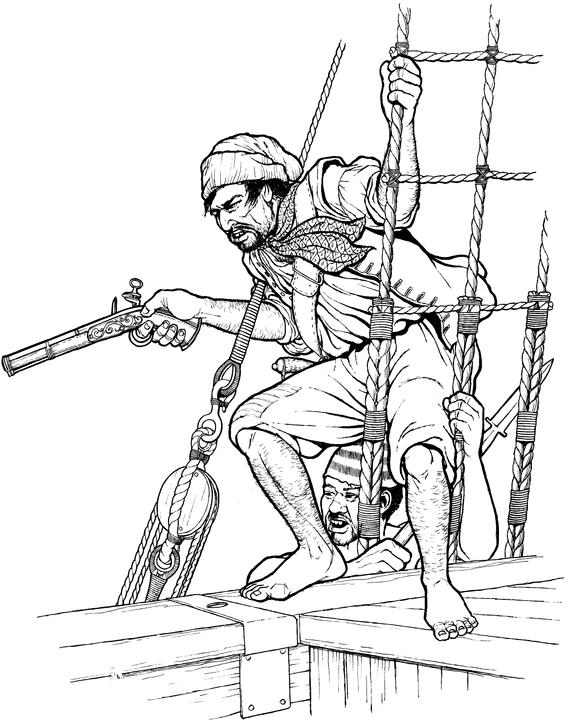
hl-mutiny-bountyEighth Session (13 page pdf) – “Treachery Island” – One of their new recruits suckers the Teeth of Araska into a nasty ambush! After a bumper crop of burials at sea, they go make friends with a Nisrochi necromancer in order to get traveling papers in-country.

Well, the island cove ex-Captain Sempronia lures the ship to as “a good place to repair” has an “interesting magical obelisk” on it! This calls for a landing party, which is promptly attacked by Sempronia as her men, who have been laid up here on the island, board and try to take the Araska. She doesn’t want to be an ex-Captain any longer and wants their ship!

Sindawe knocks her out with a flurry of blows.
Serpent asks, “What do we do with her?”
Sindawe says, “Kill her.”
Wogan pulls off her helmet, presses a pistol to her temple and shoots (34pts).
Sindawe snatches up her glaive and runs for the ship, followed closely by Hatshepsut.
Wogan tells Serpent, “We should have hired that other guy over her.”
Serpent replies, “What other guy?”

I LOL’ed. Apparently the whole big scuffle with Duke Ron that Serpent took so poorly was promptly forgotten. Luckily with this party we can just chalk it up to the booze (in-character, naturally).

Bonus Game Content: Character sheets for Sempronia, her privateers, and Duke Ron and Kitty the Cantankerous, since they were in the same Hero Lab portfolio!

The privateers had a plant on board the Araska, who did some careful door-jamming prior to the action so as they board they swiftly overpower the crew.  The ToA crew rallies a bit and holds them back till the PCs manage to fly/run/dimension door back to the ship from the island and then the murder level escalates.

Once they repel the boarders the butcher’s bill is high – 23 dead or wounded; rapid clerical help takes that to 5 dead. That’s the most losses they’ve ever taken at once, and it’s quite sobering. A little time under the lash has the couple surviving prisoners reveal that Cannonball Jack and Kent the Rusty Butter Cutter (he had claimed no nickname at his interview) were from their crew, and secured a bunch of hatches to make the takeover easy.  Kent died in the fight and his corpse is hung from the yardarm but they decide to give Jack a pass because Samaritha dominated him and claimed he didn’t take part in the mutiny.  True, or is she going soft? We’ll see.

NidalThen they reach the borders of shadow-haunted Nidal.  If you’re not familiar with it – it’s a whole dark magic Hellraiser-infested shithole of a country.

Luckily they know a necromancer from Nidal – they had previously fought an angry whale while at sea, then later faced that same whale as an angry undead whale, and then had been visited by the necromancer’s homunculus with a market research survey asking about how terrifying the resulting creature was on a scale from one to ten. Ever ones to make friends, they got his deets to look him up if they ever came this way.

They deal with Thartane the necromancer, who has a keen sense of necro-style. He briefs them and can get them some travel papers (Nisroch is all super “let me see your papers” Nazi style). But he wants something to experiment on.  Here’s how that conversation went, which pleased me no end.

As a research oriented necromancer, he polls the PCs to come up with his target lifeform…

“So now for my part. Each of you, describe to me the most disturbing part of the worst creatures you’ve encountered. What is truly horrifying? I want to take something that fits that description and turn it undead to see if it’s even more effective.”
“Tentacles! I hate tentacles. They drag me down, down…” says Sindawe, with a far-away look. “And being ripped apart by undead tigers.”
Wogan shudders. “Those slimy, three-eyed aboleths, I can’t stand their eyes.”
“Being raped into having chlamydia. And secretions.” Serpent shrugs off the concerned glances of his crewmates.
Thartane muses over his market research. “Something slimy, with three eyes, tentacles, and rapes you into having chlamydia while it tears you apart. Hmm. I can take care of the undead part myself of course…”
“Sounds like a froghemoth,” says Serpent idly.
“A froghemoth!” Thartane brightens. “Brilliant! Yes, bring me one of those. I think some can be found in the northern swamps of Nidal. I need it alive, of course.”
The command staff’s feet grow cold quickly. “Can’t we bring you a baby one? How about an otyugh, they’re kind of like that…” Everyone hems and haws about the difficulty of the task.
“Oh nonsense, you’ll do fine.”

I was laughing my balls off, it was very much like the Stay-Puft Marshmallow Man scene from Ghostbusters with Serpent as Dan Aykroyd.

With an accord reached, they head to the capital of Nidal…

“To Nisroch!” declares Captain Sindawe.
“Those are reasonably common last words, just for your information,” notes Mase Venjum.

Reavers on the Seas of Fate – Season Four, Seventh Session

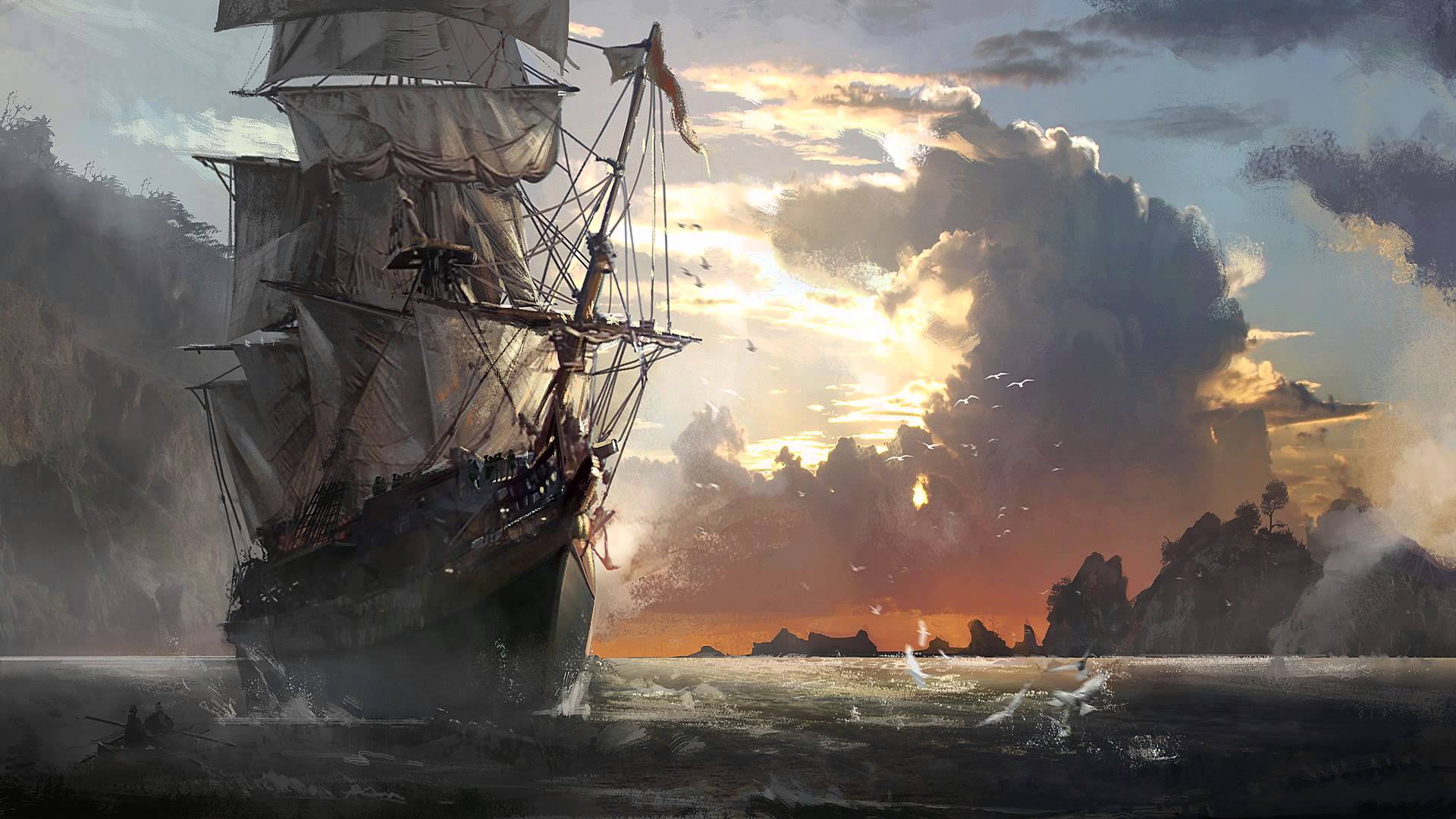
pirateshipatseaSeventh Session (11 page pdf) – “Nip and Tuck” – The Teeth of Araska limps away from port and tangles violently with both privateers and venereal disease. Each takes its own toll.

If you’re familiar with historical seamanship, returning to sea after shore leave means one thing – bad cases of VD. Wogan has his hands full with diseases sexual and normal – the crewwoman Zita nearly dies despite a bunch of healing magic!

They love wavecrawling, and some things they investigate and some things they don’t. They take a merchant ship, the Sharon’s Grotto, and get a bunch of mint, mustard, nuts, and coffee, which they regret after the ship’s cooks have gotten their hands on that combination for a while.

  • Ship doing target practice? Avoid.
  • Electric eel following along? Ignore.
  • Floating poorbox with 12 cp in it? Loot it and wonder.

Then they tangle with some privateers in the Broadsword. As they are taken over they send a messenger falcon (oh I wonder where these guys are from) but this panics the pirates so much that Serpent spends a precious Infamy Point to burn the message off its leg.  The ship’s mage flies away with some more success, but a much shorter range. They send threatening message spells after him.

Bonus Game Content: Crewman stats of the Broadsword (captain, mage, and three classes of crewman, all elite Grey Corsair types)

And that’s a wrap! Taking two ships takes a while. The Teeth of Araska is banged up so they head for a secret cove Sempronia knows of to repair…

Reavers on the Seas of Fate – Season Four, Sixth Session

Sixth Session (9 page pdf) – “Dark Wings Over Riddleport” – The celebration grows toward “Project X” levels but is interrupted by a sinister old guy with a “message” from an old enemy. And raven swarms, don’t forget the raven swarms.

The pirates are partying, and voodoo loa Mama Watanna shows up and possesses a bar maid for some Sindawe ravishing. But part way through, everyone’s cypher glyphs burn…

In a very anime-style turn, a cloaked old guy at the head of the dock turns out to be a crazed shadow raven supernatural killer (special CR11 advanced vrock named “The Messenger” from Green Ronin’s “Dark Wings Over Freeport”). The party erupts into chaos as partially incapacitated members of many potentially  hostile power groups leap to arms amidst darkness and confusion and raven swarms (“unkindnesses,” technically).  Ah, I love being a GM.

messenger

He keeps generating swarms of ravens, which threaten all the partygoers. Pirates with swivel-guns and Sindawe with a potion of fiery breath are some of the few things that hurt them (swarms, the ultimate threat in all 3e-derived games).  After a big fight they kill him, though Serpent gets his staff all shadow-infected (a little “thank you” from K’Stallo, aka “The Serpent Man Formerly Known As Elias Tammerhawk”). In fact, Clegg Zincher and Akron Erix are the ones that really did most of the killing of the Messenger himself, which really enhances their local rep! And their status with the PCs – they’ve been ambivalent about whether Zincher is “a stand up guy” or “that guy we really want to kill.”

So – return to party!

Finally, having blown out Riddleport as much as one can blow it out, they return to the sea to seek Piracy, Wogan’s sister, the head of Elias Tammerhawk, the rape-murder of the Stormdaughter, and whatever’s messing with Sindawe’s people.  What’s the chance all those plot threads are related?  This is D&D, so 100%!

Reavers on the Seas of Fate – Season Four, Fifth Session

Welcome back!  We’ve still been playing Reavers and writing up session summaries, but I am sadly delinquent in posting them as blog posts.  This summer, I intend to catch you all up!  Follow along and read the adventures of the most dastardly batch of pirates to ever bedevil Golarion!
Salvadora Beckett Fifth Session (21 page pdf) – “Patching In” – More business on the streets of Riddleport; beating up locals, recruiting new pirates, plotting and scheming… And it is capped off with a pirate party to end all pirate parties!

First they interrogate an anti-Cyphermage agitator and realize his organization is backed by the Zincher crime syndicate, who since the tsunami have become a lot more of the “patriotic community association, that will still break your kneecaps” type.

Then Wogan starts to get concerned about his sister, who has moved to Nidal and married some local.  A visit may be in the offing!  And Serpent and his wife Samaritha go shopping for an egg-case (lest you forget, she is a serpentfolk who disguises herself as a half-elf).

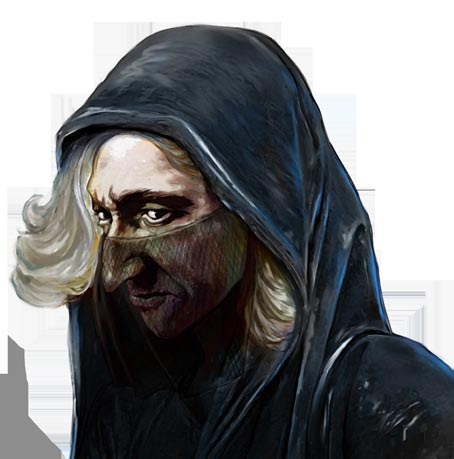
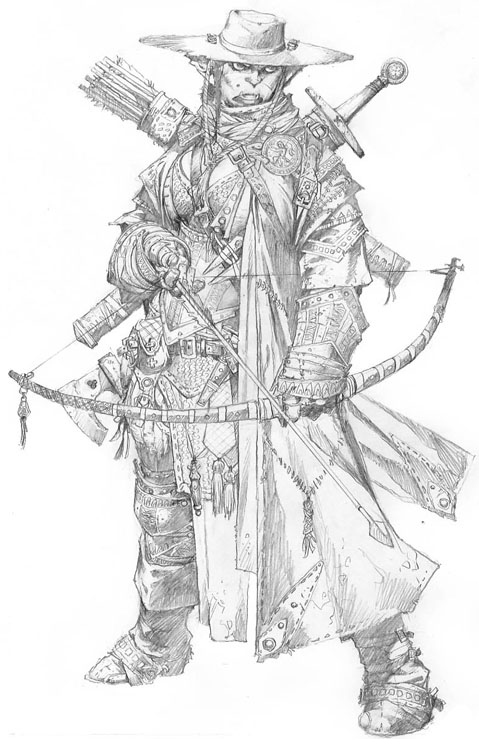
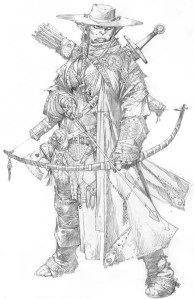
They also follow up with Salvadora Beckett of the God Squad, an undercover branch of the gendarmerie that investigates evil cults and keeps there from being too much religious influence in the city. This is something I imported from the Freeport setting into Riddleport.  Keep in mind as you read the following that I use the picture of butch iconic half-orc inquisitor Imrijka as her character portrait (above).

Sindawe changes the subject, “We are having a patching in ceremony and party tomorrow night. The Overlord and other bigwigs will be there. You’re invited, of course.”
Salvadora replies, “I am a law officer. My presence would put a real dampener on your party. Besides, I’m already running too high of a profile for my line of work.”
Sindawe says, “You could wear a disguise.”
Serpent blurts out, “You could always come as a stripper… uh.”
Salvadora’s eyes slide over to Serpent, who shuts up.
Sindawe laughs at his friend’s mistake, then jokingly tells Salvadora, “You could fake your own death, just like those famous detectives do in the bardic songs. Then you can investigate without having to answer to your boss or the rules. You can bring the villains to justice.”
Salvadora consider this then replies, “I do have a hanging harness.” She clomps off.
Wogan tells Sindawe, “I think she was hitting on you.” Sindawe thinks about that possibility.

Also, they are rewarded for giving over the remaining Yellowjackets (Calistrian assassins) to the law by a raise dead scroll for the murdered Little Mike. Then they recruit some new pirates.

This is always a fun time, and something I have to prepare a lot for.  I have to come up with a list of pirates for them to interview, some high level, some low level, all with various personality disorders, some actively traitorous and some just passively traitorous. You never know what they’ll like or not like.

Duke Ron (based on Kurt Russell’s “Captain Ron” character) was meant to be all lively and piratey but they hated him.

Cannonball Jack, Nemo, Kent, “Ragged” Pete Morgan, George Peters, “Long” Bonifacio Copper, and Kitty the Cantankerous are all welcomed aboard, despite some of them kinda obviously sucking. And Melella, a half-elf druid they met during their investigation of Little Mike’s murder who took a liking to them.

Then they meet Captain Sempronia, who has open enmity with Duke Ron.  They go with Sempronia, which will be revealed as a terrible mistake later.

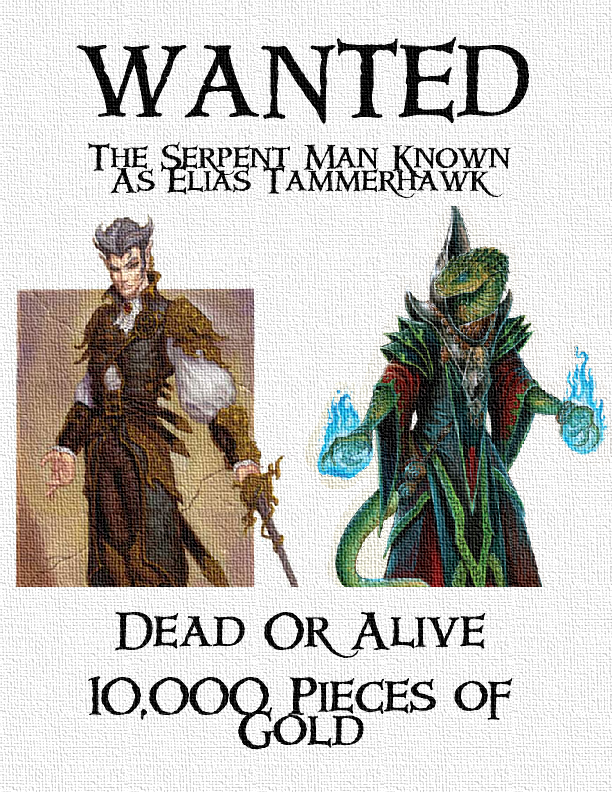
Then it’s time for the after-party.  The huge, Sons of Anarchy style dock party with loads of rented hookers and VIPs and crime lords and disguised succubi and Cyphermages and demon assassins.  But before the demon assassins, Sindawe came up with a whole motorcycle gang vest and patching plan. Check out the summary for the details. And the Overlord gives them a warrant for the serpent man known as Elias Tammerhawk – 10,000 gold, dead or alive. They like this, they hate that guy (lest you forget, he blew up the Riddleport Light and caused a tsunami to hit Riddleport and got glyph-shards embedded in the PCs and all kindsa stuff like that).

wanted

The PCs really enjoy their party, and I generate all kinds of interesting “party fouls” for them to watch or participate in or whatnot.  I enjoyed Wogan maintaining his priest-of-Gozreh chastity despite a succubus grinding on him.

We leave off in the middle of the party…

D&D 5e PHB Readthrough, Chapter 8: Adventuring

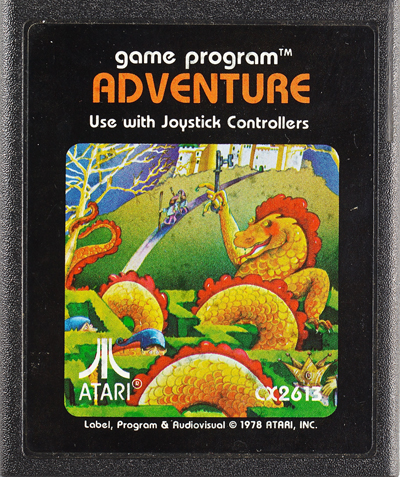
adventureAnd now we get to the Adventure!  Welcome to this installment in my D&D Fifth Edition PHB readthrough and review. This time, Chapter 8: Adventuring.

First they reiterate the D&D Decision Loop (DDDL) from earlier:

  1. The DM describes the environment
  2. The players describe what they want to do
  3. The DM narrates the result of their actions

Firmly establishing the trad playstyle.  I’m actually a little ambivalent about this, I like some player participation in limited environment narration and especially action narration but I can see they’re setting the baseline here.

Then we get the usual sections that have been in every PHB since time immemorial. Time, Movement, Vision and Light… It’s all pretty straightforward.  6 second rounds like the kids use nowadays. Crawling and swimming and stuff are simplified to just use 2 feet of movement to go 1 foot. Skill checks are described as being binary – you might make Strength (Athletics) checks to be able to climb or swim, but then the speed is invariant.

I like the “Interacting with Objects” section, instead of a big chart of substance hardness and hit points like in 3e it just says “DM will decide, and if he says you can’t cut a rope with a club, then that’s the way it is.”  I could see a DM advice book with things like the 3e hardness chart as “Here’s some guidance, if you don’t happen to personally know where bone fits vis-a-vis wood and stone in the hardness follies” but I like it being kept out of the core rules for simplicity.

But wait… Then a section on Social Interaction and Roleplaying?  What’s the world coming to? Isn’t D&D just torches and swords and orcs and Cheetos? They describe third person (“Descriptive”) roleplaying and first person (“Active”) roleplaying, and correctly note the second is more immersive. Affecting NPCs is a mix of roleplaying with the possibility of Charisma checks.  This is great, like a lot of things it moves the dial back to Basic/1e/2e times before affecting NPC attitudes was a completely rules exercise where “Diplomancers” could min-max happily enslaving anyone they could talk to with their +50 Diplomacy skills.

Next resting. Like 4e there is a “short rest” (1 hour, and you can roll up to your level in Hit Dice to heal) and a “long rest” (8 hours, and you regain all your hit points and 1/2 your Hit Dice).  This is the primary healing mechanic, which is pretty – perhaps overly – generous (on average, you can heal 2x your entire hit points in the first day). So don’t expect much in the way of lingering wounds.

Then there’s a between adventures section involving lifestyle expenses (from Chapter 5) and downtime.  This is very similar to the Pathfinder downtime system – options include making money from crafting or professions or doing research or training or recuperating from diseases or other effects.

This chapter’s a bit of a laundry list but it is a necessary laundry list of how you do what you do when you’re not murdering.

D&D 5e PHB Readthrough, Chapter 7: Using Ability Scores

beholderWelcome to this installment in my D&D Fifth Edition PHB readthrough and review. We are entering “Part 2: Playing the Game” with a chapter on using ability scores.

First they reprint the Ability Scores and Modifiers section from earlier, in penance for their questionable organizational skills. They explain advantage and disadvantage, one of the big new mechanics in 5e – in many cases, instead of an additional bonus or penalty to a d20 roll,  you roll twice and take the best or worst die result instead. Advantage and disadvantage cancel each other. Simpler and elegant, though they’ve retained enough bonuses/penalties and other stuff to track that it doesn’t hugely simplify the system.

Finally they kinda explain skills.  They try to keep skills on the down-low in this version, basically you generally use ability checks but you can add your proficiency bonus to skills you have. Since proficiency bonuses really only range from +2 to +6 that means that, barring other abilities, there’s not a huge difference between having a skill and not having it.

They also describe passive checks, which is just taking 10 on the die, done when you’re doing it repeatedly or the GM wants to do it in secret (different from 3e’s taking 10 and 20). And working together, which provides advantage.

Group checks have an interesting mechanic – everyone makes the check and if half or more succeed, the group succeeds.  This removes the shitty “everyone makes a roll and one person is going to fail/succeed because probability” problem in earlier editions, very elegant.

Next they just go into what you use Strength, Dexterity, etc. for.  None of this is all that new and surprising, except DEX gives you bonuses to both attack and damage with ranged and finesse weapons, 4e-style. A sidebar on hiding sweeps away hundreds of pages of rules lawyering from previous editions, just saying “you can’t hide if someone can see you – but if you’re hidden you can sneak up on someone if they’re distracted, at the DM’s discretion.” You know, like all sane people have done it. (Google “The Rules Of Hidden Club” if you want to see how pathetically insane rules lawyers have gotten on this topic.)

And then saving throws are just ability checks (plus proficiency if applicable).

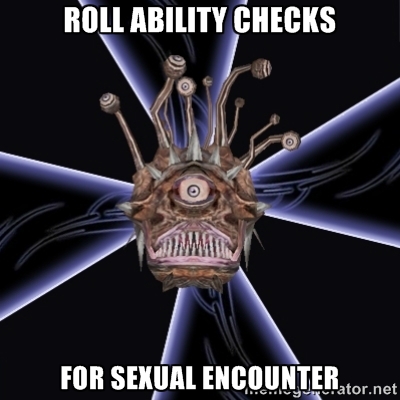
So the general message is… Ability checks! Roll them!

D&D 5e PHB Readthrough, Chapter 6: Customization Options

customWelcome to this installment in my D&D Fifth Edition PHB readthrough and review. We’ve reached the end of the Character Creation section.  Now it’s time to customize.

By customize, I guess we really mean “some more spare rules.”  We start with multiclassing. It works like 3e where you can add levels ad hoc in whatever classes.  It has the additional twist of having ability score minimums, which is an interesting and IMO satisfying middle ground between the 1e “you need this much ability to be this class” and 3e-style “minmax however you want.”

Then there are feats. Feats are optional in 5e, you take them in place of an ability score advance (every fourth level). Since you have fewer of them than in 3e, each one is pretty buff.  In fact, oddly, some give you one point of ability advance anyway. Even the “skill” ones are good – let’s take “Actor,” which would be +2 to 2 skills in 3e (yawn).  Here, it gives you +1 Charisma, advantage on deception and performance checks, and an ability to mimic someone’s speech. Many are of course combat focused, like Dual Wielder gives you +1 AC and the ability to 2-handed fight with non-light weapons, and the ability to draw or stow 2 weapons at once.  I like how many of them add those little details (like the draw/stow) that show they’ve thought through the little details. A couple are boring (Skilled – Gain proficiency in 3 skills!) but that’s the minority, and they’re designed to help you push in some character direction you can’t get by class min-maxing in the new regime. And, they’re not strictly better than the +2 to a stat (though since the limit is 20, if you put a high number in your primary stat, a couple advances probably cap you out and you are looking to diversify anyway).

There’s only 42 feats, but each one is meaty, and you’re only going to get a fistful with any character, and I’m sure more will come (whenever they decide to publish anything else…).

And we’re done with character generation!  Solid all in all. Streamlined and not as fiddly as 3e, but more consistent and customizable than 2e. And a real role-playing game and not a pure tactical boardgame like… Uh… Some editions.

Track Your Treasure

Ah, killing people and taking their stuff.  It’s great fun, but in this era of Christmas Tree Syndrome it’s hard to keep up with all that loot!

The GM tells you about some stuff when you loot your dead opponents – and a lot of details are held till later (magic, street value). Sometimes no one writes it down, and that item is lost forever.  Sometimes multiple people write it down and you have a conflict later on. Sometimes when you go back and ask the GM “OK so was that morningstar magic?” he responds “what morningstar? You mean two or three sessions ago? I have no idea.”

For our Pathfinder games, I developed a solution.  (It’ll work for any game though.) It’s an easy to use Excel spreadsheet that you use to log treasure, distribute treasure, and handle selloffs and money splitting. So I’m sharing it with you! (cc-attribution-sharealike).

The Geek Related Treasure Distribution Spreadsheet

It has an instructions tab, but here’s how it works.  When you get loot you log it on the Party Treasure tab with who you got it from and when thus:

partytreasure

Then any time someone claims an item, you cut and paste it to the Distributed Treasure tab and add who got it and when thus:

distributedtreasure


And you never have to worry again! It makes organizing distributions easy, and selling off unwanted loot and splitting the profits. Money is handled slightly differently on the Coinage tab thus:

coinage

It has a couple formulas but it’s not fancy, mainly it’s just a well thought out format that is a) really fast to enter when you’re in the middle of a game and b) efficient to do distributions and sell-offs. Now the GM has some context to help him remember that maybe-magic morningstar (Oh, the dead cultists right after the temple to Torag, right…), you know who got a piece of loot, and most importantly no valuable treasure just goes missing. We often do a big selloff at the end of a session when someone’s had to hurry off – now they can just go look and see how much money they got out of it.

And it’s entertaining to review late in a campaign. It’s like a historical record of things that happened.  (We gave two snake corpses to a mole-man?  Oh yeah, I remember that…).  It’s amazing how big the spreadsheet gets, when we get finished with an Adventure Path we look back and there’s four-hundred-odd entries… Add extra tabs for other stuff you need to track (like I added a tab to track army food and stores for Wrath of the Righteous, or caravan food and stores for Jade Regent). Your party will love you for it! Once we started doing this we got hooked and now every single campaign has a big ol’ treasure spreadsheet at the end of it.

It works best if you put it in a Dropbox so everyone in the group can view/edit it from their computers and phones and stuff. Enjoy!  Feel free and ask questions about its use after you’ve given it a look.


Why Paizo Still Has An Edge Over WotC

Dungeons & Dragons Fifth Edition is out – and it’s pretty good!  I hated Fourth Edition and, like many folks, defected to Paizo’s 3e-derived branch called Pathfinder and Paizo rose to the top of the sales charts for a long period. But now with a viable product, good community engagement, and the nostalgia factor (Drizzle the elf! Space hamsters!) WotC is back in the game.  Will Paizo just fade away, only beloved by a fringe of the old guard?  No, and here’s why.

Let me preface this by saying these are “big boy” reasons, not game system details – how many hit points a bard gets is very meaningful to some ultrageeks but is not relevant to market position. If you wanted to hear something about 5e gnomes vs Pathfinder gnomes, please go play and let the grownups talk for a minute. With that preamble, here are the three major edges Paizo has over WotC and why those will help them maintain their market position.

1. The subscription model. Paizo’s subscription model of selling is like printing money. You’ve heard how comics subscriptions are basically the single largest factor in keeping comics and comic stores afloat right? Well, same effect applies with Pathfinder subscriptions.  The convenience wrenches the money right out of me and many other customers automatically without requiring us to re-make purchasing decisions each month (and to be at the mercy of stores just happening to stock products we want). It’s the same reason why WoW always made huge bank and that model became very compelling to video game producers. Paizo keeps quiet about how much of a big deal this is, probably deliberately so folks like WotC don’t get the memo. But from a business point of view, this is probably the single biggest innovation and leverage point they have from a revenue model perspective. And it’s a big one. I work in software, where we desperately try to get people into subscription models – maintenance, SaaS, etc. because it’s so financially productive.

2. The iconics. With their iconic characters – an idea enhanced from 3e D&D – Paizo doesn’t just have a game system, they have intellectual property. They have then used those iconics to fuel their comics, audio dramas, card games, mini-figs – and I wouldn’t be surprised to see movies or TV in the future. I thought it would be a no-brainer for WotC to have a strong stable of iconic characters in 5e but they completely didn’t for reasons that elude me. Sure, they have some older recognizable characters from their campaign settings – Elminster, Drizz’t, the Dragonlance characters – but they’re not capitalizing on them. One big reason why the D&D movies sucked was that both the good guys and the bad guys were just new made-up generic folks.  “I have purple lips and am evil!” Screw you. Call me when you make Strahd or  Bargle or Vecna or someone the bad guy. Hasbro is supposed to be “branding” geniuses, but even Paizo’s unique visual take on goblins generates stuffed animals and cute comic spinoffs and miniatures while with the 5e launch WotC’s critter of choice, kobolds, has pretty much zero sizzle and visual styling. [Normal] People relate to characters way more than setting way more than rules. Companies work very hard to get good commonalities to use to push customers across product boundaries inside brands, and that’s a great way to do it that WotC doesn’t seem to have an answer for, making it much harder to really capitalize on cross-media opportunities.

3. The adventures. “It’s the adventures, stupid.” Why do people have such nostalgia-love for the old days of Basic D&D/1e AD&D? Do they go back and talk about their love for weapon speed factors and to-hit tables? No, they talk about THE ADVENTURES. Temple of Elemental Evil, Ravenloft, Scourge of the Slavelords, Isle of Dread… These were the shared experiences people had and what they find compelling about the hobby.  Adventuring is the entire point of all the rules and setting content, it’s the actual activity of the game. WotC gets this enough to keep revisiting those classic adventures every edition (Now – Return to the Return to the Keep of the Elemental Hill Giants!) but not enough to actually put out frequent and compelling adventure content themselves except for a smattering of mostly indifferent products. In 3e, the Open Gaming License covered this gap and new adventures are what propelled third party companies like Green Ronin and Atlas Games into the larger businesses they are today. In 4e, they kicked off with a couple and then slid into nowhere and now with 5e, they managed to get two out – but frankly, they’re not all that good, and again, it’s a matter of amount.  Paizo gets out an Adventure Path chapter per month, every 6 months it’s a new one, there’s previous ones where if you want to do gothic horror or Arabian Nights or whatever there’s something to scratch that itch – WotC’s just planning to retread the same old properties, at a plodding pace. And as they are still farting around on licensing, third parties aren’t filling that gap as avidly as they could be. That is leaving player engagement on the table and providing fewer shared experiences to build the nostalgia that’d drive their sales in the future, especially in other media.

So though 5e is a fine game – I’m not sure that as part of the overall package, Paizo has a lot to worry about.  Sure, Hasbro can pump in marketing dollars and get things into bookstores, but a) do they care enough about a small line to do so, as opposed to making more Iron Man doodads, and b) can they really successfully capitalize on multiple product lines and the D&D IP? You’d think that’s where they would be Vikings, but so far early results don’t show a lot of spark there. Anyone that’s listened to Paizo employees talk about behind-the-scenes stuff at Gen Con/PaizoCon seminars (all available on various podcasts) know that they are very smart, squared away professionals who tightly manage their own work, freelancers, licensed products, everything. They’re a well-tuned machine producing huge amounts of product across various channels and product types – Hasbro/WotC could probably do the same – but they don’t seem to be. So sure, brand recognition and deep pockets and being a decent game product will help push 5e into the limelight, but their execution isn’t crisp enough to push Paizo out, is my prediction.

Wrath of the Righteous Chapter One, The Worldwound Incursion – Fifth Session

Areelu Vorlesh

Areelu Vorlesh

Fifth Session (14 page pdf) – We thwart the Forces of Evil ™ and destroy their captive wardstone bit, hurling the demonic forces back – for a time.  And we all experience THE QUICKENING!!!

We continue to sweep and clear the Gray Garrison. Many tieflings and cultists meet their end.  “It is thus that the fields of Justice are nourished with the blood of our enemies!” claims the session scribe.

We do get to fight a peryton, which is cool. And a goat-demon.  We hear from prisoners that there’s a minotaur around, leading to the following fun quotes:

“Minotaurs are bad news too,” shares Antonius. “I read a comic back in camp that says they’re more than a little… rapey.” Everyone shuffles uncomfortably at that thought.

Then a bit later,

From up above the minotaur howls.
Trystan tells Rogoff [his mongrelman henchman], “You go first!”
Rogoff looks dubious. “For what it’s worth, boss, I read the same comic book  about minotaurs that Antonius did. And you guys normally go in first – I’m not sure I feel  comfortable about this arrangement.”

For some reason the baddie, Jeslyn, spread all her defenders out into conveniently small packages leading to her, so we kill each group easily and then attack her solo.  Solo casters – why do they even try?  I run over and put her in a grapple and then convert it to the figure four leg lock and then it’s all over. It’s what I do with all solo casters – they just can’t do anything about it.

And then the shit really hits the fan.  Irabeth destroys the last fragment of Kenabres’ Wardstone with a rod of cancellation.  It explodes, it kills every demon in the zip code, we hallucinate for a while. Areelu Vorlesh gates in and sics six babau demons on us.  But we are powered-up with all kinds of special abilities and also she gets blown back through the gate. The baubaus attack and start gating in more babaus. This is quite a fight and we emerge victorious!  I club-dance and we gain… a Mythic Tier!

For those not familiar with it, Mythic Adventures is a cool new Paizo system that, instead of adding levels like Epic, adds a layer of being a kinda demigod type on top of our normal levels. So now we get weird superpowers!  (Go see our character sheets by level on the campaign page for more.)

Wrath of the Righteous Chapter One, The Worldwound Incursion – Fourth Session

Fantasy Janitors At Work

Fantasy Janitors At Work

Fourth Session (16 page pdf) – We continue to hit demon cultist hardpoints in the ruins of Kenabres with the help of mongrelmen and lesbian paladins.

This session is mainly fight after fight with tieflings, dretches, and various other evil varmints of various description. That part wasn’t all that exciting. (Ironically fights in Pathfinder, while supposed to be scenes of high action like in a movie, are sometimes boring… Like Peter Jackson and Michael Bay are managing to do with their big action scenes.) The interesting things that came up were:

Mongrelman rangers! We got a squad of mongrelman helpers and they were very helpful. We named them, and everyone ran one. Antonius had some soul-searching to do though – the faith of Irori advocates physical and mental perfection but mongrelmen are the ultimate in mutated – it just kinda bothered him.

Janitorial work!  So we find a ruined shrine to Iomedae in the Grey Garrison and it’s pretty clear we “should” clean it up. Will all the monsters just go into stasis for a couple hours while we do so? Well sure, no problem. This will come up again, by the way. We are told we get a “devotion point” for that, a fact that Chris and I try to erase from our brains – we’ve had about enough of Pathfinder APs giving us something-or-other points and driving our party-mates into fits of bizarre behavior (like gift-buying in Jade Regent) because they see a new rules system than needs manipulation.  If we’re going to start getting Divine Janitor Points for clearing poo from every shrine we enter I’d rather the mechanics be obscured from me.

But, we level and get some phat lewt.