Tag Archives: RPGs

The Status Of Things

Hey all, sorry it’s been quiet here on the blog.  I hope to start posting more regularly again soon – we’ve been doing so much gaming that I haven’t had time to blog! I’ve been running more Reavers; our friendly pirates have set sail for adventure in the big blue and thus I’ve been doing a lot of adventure design work.  We finished up our Alternity campaign in an epic finale, saving the Verge from the alien menace! And now we’re getting set to start the Jade Regent Adventure Path, where I’ll play a samurai archer. That, work, and moderating RPG Stack Exchange have been keeping me busy. But don’t worry, I have many thoughts on these topics and other stuff (like the direction of 5e) that you’re dying to hear… So stay tuned!

Murderous Cretins, Part 2

Some time ago, I posed a question about the casual nature of violence in many RPGs on RPG Stack Exchange.  I also posted a longer version here on the blog, Your PCs Are Murderous Cretins, that got a lot of good discussion.

For whatever odd internet reason, the somewhat old question has gotten a big spate of activity lately, but sadly not answers I’m finding useful, but two varying contentions.

1. It’s not true! RPGs do not have high levels of casual violence!

Oddly, this mainly seems to be coming from RPG notable Frank Mentzer. I think he thinks I’m a member of BADD or something and is jus targuing against me because he figures I’m “anti” RPGs or D&D in general (but the only game I am “anti-” is 4e, as far as I know, and the question is specifically tagged as system agnostic). But is this really even debatable? I mean, you can say “well but it doesn’t warp your fragile little mind” or “Violence – I like it!” but I think it is fair to say every single player of every RPG ever has killed more sentient beings in the game than outside it. (Oh please let me not meet an exception…)

While mulling this over, I saw an interesting post on Lamentations of the Flame Princess bringing in a Forge discussion where there is a fairly quotable bit:

D&D does not easily lend itself to moralistic horror stories.  The rules of the game directly reward getting rich and, if necessary, killing whoever gets in your way.  As an emergent property it encourages operating from a position of overwhelming tactical advantage.  These are shitty moral values if taken seriously: in the real world, they would be the values of a psychopath.  Therefore Vance’s sense of irony as a method of detachment.

I mean, I’m not a Forgie, but this is pretty much true, right?  I play D&D, I like D&D, but true is true…

2. The only way to promote or retard casual violence in your game is via game mechanics.

So I totally understand the argument that you CAN try to influence your game’s murder level by providing either strict game mechanics (like in Pendragon) or mechanical negatives (like Vampire or Unknown Armies) or removing mechanical encouragements (like the D&D murder-for-XP system) – but a lot of the newer answers say that this is the ONLY way to do it.

I agree that to a degree, “System Does Matter.” But I think that can be overstated; it would seem that in a simulationist game, you actively do NOT want any specific mechanics bearing on this.  Sim games model the real world. In the real world, besides the cops getting you, there are no “mechanical disadvantages” to killing someone.  They are all psychological and social and moral. Many games leave that to the player, not the rules. So for those games, you really can’t influence the killiness (and other behavior) in your game except by grafting on more rules? I think this is trivially incorrect; I ran a 2e game with stock “XP for kills” rules and via setting crafting had it be a realistic, personal game where killing people wasn’t job 1…

Both of these claims attempt to invalidate the frame of my question, but they don’t seem to hold water to me.  What do y’all think?

Alternity “The Lighthouse” Session Summary 55

Fifty-fifth Session – We investigate a huge ass dungeon Stoneburner ruin looking for an alien artifact to de-possess our crewmates. It turns out to be a Gygax Special, sigh.  At least we get some cool magical loot.

So we get to this ruin and start going through it – and it’s huge.  Level upon level. And what’s more – teleportation traps.  Yes, you heard it here first.  There appears to be some trick to going through these portals but we mainly come out in random locations.  It’s a little obnoxious, but there have been some up-sides, like the floating snack bowls and everfull Guinness mug I found.  It’s just like Tomb of Horrors, except more obviously built by stoners. I call it “Tomb of Stoners.”

No, really, the aliens (they were some kind of crab/mollusk thing) grow some kind of herb, and harvest it, and dry it, and mix it, and smoke it, and lounge around to see alternate dimensions through heightened consciousness. The entire place is like a big drug den. The mollusk aliens had Snuggies for God’s sake. And magical drug-smoking pipes. And this was all written after Gygax’s big coke snorting phase!

Markus had some good times. He found some cattle prod thing that really makes the dimensional horrors run off. They were some kind of Stoneburner pet and it’s the equivalent of a squirt bottle. And then at the end, we were getting kind of punchy, and I had found some scepter thing and we went into the nautilus king throne room and I was all like “WORSHIP ME” and I’ll be damned if the other party members didn’t worship me (those that failed WIL checks that is). We had to fight an invisible robot tiger thing but every time some party member started to give me lip I would just boom “WORSHIP ME” and they’d fling themselves on their faces. I about peed myself laughing.

It’s clear we have at least one more full session of old school dungeon antics ahead of us. That is a little unfortunate but as long as the pseudomagical gizmos keep flowing, we can entertain ourselves at least!

Alternity “The Lighthouse” Session Summary 54

Fifty-fourth Session – We send all our I’krl possessed crewmen to some weird alien living on Bluefall to see if he can fix them. Needless to say, he can’t but sends us on an interstellar fetch quest. And then our favorite space vampire, Krl’Zenoth Nurhan, teleports onto the Red Queen with his shock troops for a stint of ass-kicking.

A fifteen page session summary!  You know some stuff happened. First, Bruce’s second mechalus character showed up. After Taveer, we were justifiably gun-shy.Then an evrem (space Jews, apparently) gives us a bunch of interstellar backstory that as usual doesn’t really help us tactically.

Let’s see, the most entertaining parts of the session… Well, there was how we are having to handle our possessed crewmates.  There’s a lot of interrogating them with Marines with stutter rifles arrayed around them, to stun everyone involved into a coma whenever anyone sneezes.  And storing them in C4-laden sarcophagi. They are so dangerous, it really would be much more prudent to just kill them (and man, this side quest is really taking a lot of time) but, we’re the good guys.

My idea that Joe’s Crab Shack had grown into a small stellar nation (kinda like “all restaurants are Taco Bell” in Demolition Man) entertained everyone.

And then as we take our sarcophagi to Yellowsky to try to cure them – an I’krl strike force shows up and the teleport aboard the Red Queen for some freeform killing, led by our old foe the space vampire himself. They really want the possessed guys; it would provide them a direct link to their space god. The B Team and our Concord Marine support staff fire a lot of weaponry. Markus is hell on wheels with his chainsword; I finally got to tear that space vampire SOB a new asshole with it! Woot!

But that wasn’t the end; we got to Yellowsky and headed out into the wilderness to look for some ruins, and got to fight the local flora.

Enjoy the summary, lots happened, some of it pretty funny.

Making Wilderness Travel Matter

I wrote up such a long answer to this question on RPG Stack Exchange I figured I’d repurpose it into a proper blog post about how I use overland travel through the wilderness in my D&D games!

Wilderness Travel Is Awesome!

Focus on the journey, not the destination. Joy is found not in finishing an activity but in doing it. ~Don Williams, Jr.

Far from being something to “skip over,” wilderness travel is an interesting part of a story and forms a large part of many narratives, from Lord of the Rings to Star Trek to many Cormac McCarthy novels. Hell, about 70% of the Song of Ice and Fire series falls into the category of overland travel/wilderness survival. People who contend travel is not “interesting” or “heroic” need to read a fricking book.

From the 1e Wilderness Survival Guide to the more specialized 3e books like Stormwrack and Sandstorm, there is a lot of material to draw on in order to make wilderness travel more arduous and interesting.

For inspiration, I like reading historical travel narratives – ones that go through the jungles of Africa are especially juicy when it comes to ideas of how the landscape can terrorize the unwary traveler. Just this year I’ve read the Horatio Hornblower series (sea travel, fictional but good), some Thor Heyerdahl, Lost City of Z, Into Africa, and various other travel writing.

So what do I put into wilderness travel to serve both realism (wilderness travel is an arduous enterprise) and the game (serve the story and characters)?

Weather

The rain falls upon the just/And also on the unjust fellas/But mostly it falls upon the just/Cause the unjust have the just’s umbrellas ~Cormac McCarthy

It’s simple, but get a random weather table and generate weather each day. (Obvious corollary – have seasons!) Climate holds more than enough perils for most wilderness travellers in the real world! In my current piracy-based Reavers on the Seas of Fate campaign, there’s a lot of sea travel.  Wind strength and direction can speed them on their way or stop them in their tracks; storms can provide vigorous skill challenges to a ship’s crew! Getting wet, getting cold, getting overheated, getting fatigued all contribute to the wilderness travel feel, and give real bonuses and penalties the PCs can’t ignore in combat. Have a combat in high wind or a rainstorm and apply the rules for it; it’s quite a change of pace! And besides that, it is probably the single biggest addition to the sense of realism, to have variation going on independent of the PCs’ actions and desires. Makes the world seem bigger than you are.

Two tricks here: one, crib random tables (I mash up some from Stormwrack and various 3pp naval supplements); two, use an almanac!  An almanac has day by day weather historically.  Pick a place that you think is representative, choose a random year, and lo and behold… If in your campaign world it’s Fantasy August 5th, and you’re in a place on say a mid northern sea coat, then today the weather is… Quite pleasant, 70’s, no rain, gentle breeze. And for those PCs trying to use their skills to predict the weather, tomorrow’s much the same but with increased winds, perhaps cloudier (visibility goes down).

Survival

My time in the Boy Scouts taught me that Nature has but one goal – to kill you. ~Me

To get along in the wilderness, you need food, water, and gear.  If you’re not familiar with the land, you will end up having to backtrack around (or walk into if you’re really dense) rivers, ravines, animal/monster lairs…  More esoteric threats like quicksand also dot the landscape. Disease is always a threat as well. Insects plague people (and bring more disease) in many different terrains and seasons.

This is a great opportunity for those Survival and relevant skills to come into use.  I prepare lists of “random encounters” that are more mundane than monster stuff and make them (and monster encounters) dependent on Survival checks. Skilled woodsmen don’t walk into an owlbear’s territory or drink too much from water in a cave. Rather than use flat “8% chance of random encounter,” I use a table with mundane and animal and monster stuff and use the PCs’ wilderness survival abilities to see how much they run afoul of it.

Often on long journeys I’ll mix the two – maybe there’s a 1 in 20 chance something bad will happen to a given character per day, but they can bypass it with a relevant check – often Survival, sometimes something else (e.g. one guy rolls a 1, off a list I roll or select “step in gopher hole and wrench leg, 5 foot penalty to movement, Survival DC 10 avoids”).

Getting Lost

Not all those who wander are lost.  ~J.R.R. Tolkien

You also need maps or guides – besides avoiding trouble spots, it’s really quite difficult to find your way across trackless wilderness.  Plenty of people get lost on reasonably well blazed hiking trails in the modern day, and having a map (and a compass, and other stuff) in no way guarantees you can’t get lost. Time for Survival again!

In my pirate campaign, I require a whole lot of navigation rolls to find things, even when on a chart. It’s very not simple. And when you get lost, you run into other stuff, you take more time to get there, you get more wear and tear, you use more provisions (and potentially run out)…

Fatigue

Travel is glamorous only in retrospect. ~Paul Theroux

Wilderness travel is tiring and wearing, and not just to the people, but to gear as well. If they spend a lot of time out in the elements (and especially if they ignore rain, bogs, etc.) then their gear will degrade.

But mainly people get tired.  Some of it is from the elements and disease, above (note that in 3e, a lot of the heat and cold stuff ends up imposing the fatigued condition). I’d consider giving nonlethal damage or even ability score damage from some of the natural threats from the “Survival” section above. “Stinging gnats – Survival DC 15 or 1 point of CHA damage.”

Then, finding safe places to hole up and rest can provide mini-adventures of their own.

Inhabitants

Travelers never think that they are the foreigners.  ~Mason Cooley

Depending on the region, someone or something lives there.  If it’s free of people, it’s probably large herds of animals of various sorts that definitely provide obstacles and threats. But usually it’s people.  Many of these people don’t like visitors and may attack, or demand tribute to pass.  Or they do like them, and insist they come, eat, interact, get hit up for various stuff (and if rejected, get hostile). And you’re a lot more likely to come across inhabitants than just as “wandering monsters” – the more-hospitable points of the terrain you’ll want to travel through, camp in, get fresh water from, etc. will be hot spots for the locals too. And word spreads; if you slaughter/give syphilis to/give loads of money to any given village, the ones nearby will find out quick. Local culture is as much part of the landscape of a trip as the real terrain features, and should be memorable.

I fondly remember the Night Below game I ran where the PCs stayed the night with some friendly gnomes in their burrow. Their elder told them a chilling story about the legendary dark elves, and mentioned that their caverns once extended to below *this very burrow*…  When a dark form broke through the dirt wall of their room that night, the wizard freaked out and Color Sprayed the party fighter into a coma. Of course it was just a puppet on the end of a broomstick being pushed through by giggling gnomes in the next room. I’m pretty sure that the players as well as the characters still have the emotional scars from that session.

Roleplaying

I have found out that there ain’t no surer way to find out whether you like people or hate them than to travel with them.  ~Mark Twain

I still remember the 2e game where the PCs holed up in a rural inn for two days waiting for a big rainstorm to let up; as the stir craziness set in they got up to shenanigans more interesting and memorable than the adventure at hand. Not quite the Donner Party, but getting there.

Travel is often an opportunity to slow the pace and have PCs interact with each other (assuming you’re one of those weirdos that does such things instead of just slaying monsters). Once you hit cities it’s intrigue central; once you hit the dungeon it’s hardcore killing action. It’s during the journey that you can get PCs to take the time to develop themselves by talking with others.

And it’s just gold if there are regular NPCs with the party – this is the time for their personalities to develop, for drama and seduction and all that Real World/Survivor/Insert Your Favorite Reality Show Here kind of stuff.

Combat

Unless you know the mountains and forests, the defiles and impasses, and the lay of the marshes and swamps, you cannot maneuver with an armed force. unless you use local guides, you cannot get the advantage of the land. ~Sun Tzu

If a fight happens, don’t let them forget where they are. In the wilderness, nice level stable footing is the exception not the rule. Maybe it’s raining, maybe they’re on a riverbank, maybe it’s 8 PM and it’s twilight, maybe they’re in a marsh, maybe there’s hanging vines everywhere.  Once it goes all combat encounter, you should under no circumstances have everything morph into a featureless battlemat. If you do not weave the description of the surroundings into your GM descriptions at least once per round, you’re not doing it right.

And keep in mind the locals know the terrain and will use it to their advantage whenever possible when engaging the PCs! There are probably a lot of rules in your relevant core rulebook about terrain that you ignore 99% of the time unless some specially constructed combat uses them – use them routinely.

RPG Movie Review: The Wild Hunt

I was bored and looking through Netflix for something to watch, and it recommended to me The Wild Hunt – an independent movie where Canadian LARPers go a little mental. It had won a couple film festival awards, so I figured what the heck.

The setup is that Erik, an Icelander in Canada, heads out to a big ol’ LARP weekend in the woods to try to get his worthless girlfriend back. He’s not a LARPer but his brother is really big into it; Viking heritage, Norse sagas, the whole bit. The whole batch of LARPers are very, very, very serious about it – it almost converts over into cool, actually. You have other movies like Role Models where the people are into LARP but it’s still very cheesy and you’re like “whatever, diversity yay, ponce around all you want,’there’s nothing wrong with that’, but eek.” But here they are all so into it and put a lot of work into it – if you can make LARP seem cool, this movie comes closest to doing it.

It’s a pretty interesting  movie. It starts out weak mainly because of the unsympathetic main characters – Erik is a certifiable wuss, his girlfriend is a bitchy whore, and the initial crop of LARPers you meet are reasonably insane – but evens out its keel once you get to know more of the (better, and more interesting, frankly) secondary characters and they quicken the pace. It’s a low budget thriller set in an isolated setting where romantic hassles etc. end up cascading into Lord of the Flies. The ending is a lot more dark and brutal than I would have expected from the first act. About a third of the way through, I wasn’t sold and wondered if I should bail, but after seeing the whole thing I’d give it a 5/10, decent.

Of course some roleplayers are worried that this will “demonize the hobby.”  To that I say bah, many of the movies/TV shows with killers, they are doctors and lawyers and cops and moviemakers and other such. It should just be a rush to see your own niche thing breeding killers for a change. And it’s not like anyone will actually be afraid of this happening for real; they’re Canadians for God’s sake.  Everyone knows Canadians can’t kill anyone; they don’t have the constitution for it. (Not that there’s anything wrong with that.)

Campaign Planning

Game prep is the single largest task of the Game Master in any RPG.  If you want, you can write your own adventures and create your own campaign settings and all that, but regardless of what you construct yourself vs. use from another source, everyone has to prep game sessions.

I thought I’d give some insight into how I plan my campaigns, for those interested in running multi-year kinds of stories.  I try to balance in the sweet spot of “sandbox enough that PCs feel like they can go anywhere and do anything” with “story enough that there is something actually interesting and compelling to go do.”

The overall trick is drawn from the project management world, it’s called horizon planning. Basically, you make rough plans for far in the future so you have a target, and have more specific preparations for more proximate activities.

I tend to separate the timeframes out into campaign, plot arc, adventure, and session.

The Campaign

For the campaign level, at start I decide what I’m interested in and survey the players and come up with a rough idea of what the campaign will look like, and run that by the players to get buy-in.  In our Reavers on the Seas of Fate campaign, I pitched a pirate adventure/horror campaign with anime influence that would start out urban as a mix of Riddleport from Second Darkness and Freeport, move on to open seas pirate action, and then to the jungles of the Mwangi and other esoteric locations. The PCs signed off on that and submitted their ideas for cool stuff they’d like to see included, and I know things I’d like to put in. For campaign prep, I basically have all those ideas in a sheaf to draw from.

The Arcs

The three aforementioned legs formed my three potential major campaign arcs or “seasons.” I have a Word doc where I block out an arc and list potential published adventures and other things to include.  It’s high level enough that it doesn’t change much but is very amenable to change when new stuff comes my way either through new content or player action.

The arc I’m in, I plan out the sequence of adventures more. In the first arc, the urban arc, I planned out that I’d use the first Second Darkness adventure, interleaving it with the Freeport Trilogy of adventures, and other stuff. I roughly blocked out, again in Word, what a likely sequencing would be. Some parts are more mandatory, like the culmination of the Freeport trilogy was intended as a significant plot point. Some are completely optional – “if they agree to go with Captain Clap and raid the island, use Mansion of Darkness.”

For example, my season one prep information for Reavers consisted of NPC writeups, handouts, and a list of probable adventures in rough order, like:

  • Water Stop – while the PCs are sailing to Riddleport, they come across some escaped slaves on an island (use Water Stop from En Route II) and a goblin pirate ship (use the Sable Drake from Stormwrack).
  • Cheat the Devil and Steal His Gold – the PCs get to Riddleport and visit the Gold Goblin when a robbery breaks out; use the adventure from Second Darkness “Shadow In The Sky.” Try to get them to join up with Saul.

Of course they may never use one or more of these, or react to them in a way that obviates the adventure – “Escaped slaves? We murder them all and sail off quickly!”

As the game progresses, I more frequently revisit this based on PC action, inserting, deleting, and reordering. “They want to go back to the island from Arm-Ripper? OK, plan that out…” This relies on a little give and take from the PCs.  I don’t want to nail them down, but I like them to tell me what they’re thinking about doing as opposed to them just setting sail and making me guess where they’re heading.  “We turn left and NOW WE’RE AT THE ISLAND AGAIN!  Ha ha ha you’re not prepared.” My players are more than mature enough that doesn’t happen, though of course there’s always the chance when in town or whatnot that they decide to go stir up a major hornet’s nest I don’t have much on.

Handling The Unexpected

This is actually where a lot of the bulk my advance prep takes place. It’s easy to prep for a session you expect, but harder to prep for one you don’t.  I make sure and have a raft of content around. For an urban setting, for example, I might go “light random generation and wing it” like with Vornheim: The Complete City Kit, or have Freeport: The City of Adventure (both versions) around to pull from.  I actually do both, to use depending on my mood.

I have major NPCs pre-statted with contingencies – the main risk is that the PCs will say “that crime lord a-hole has been dogging us long enough, let’s go kick down his door and go all home invasion on him.”

Along those lines – I keep notes from old sessions and keep them around, and expand on them as needed. PCs are unlikely to go toss themselves through the window of a random bar, but they are very likely to do so with a bar they have been in before. I pay attention to throwaway stuff the PCs react well to – like recently, the PCs were trying to sell off some loot and the party halfling made good rolls to find them some perfect buyers. So they went into this little private bar to sell some cold iron weapons and found some very serious looking people with an obvious grudge against all things fae. I just made it up as an explanation for a high rate of return on selling cold iron weapons, but the PCs were intrigued. “We should go look up those racists again! They were cool!” Note to self, write it up and keep it on hand.

The Adventure

A given adventure may span one or less sessions, but more commonly it spans 2-4 sessions depending on its complexity and the PCs. Here, I may use a published adventure or not. I’m not going to say too much about prepping an adventure – if it’s published, I read through it, decide what I want to add, remove, or change, and consider how my PCs will likely react. If coming up with an adventure, you may need as much prepped as you’re comfortable with – if you are a super on the fly guy and you like coming up with whole dungeon complexes off the cuff with nothing but a random monster table, fine – if you need as much detail as a published adventure, write it down. Suffice it to say that you usually have a lot less control as to what part of the adventure the PCs will be doing in a given session, they may go anywhere, so you need near session level detail on the adventure. I tend to use little chunks from published things, write some myself, and fill in the gaps with random generation and improvisation.

The Session

I spend as much time prepping a session as the session takes to play.  Our sessions are usually ~6 hours. Some adventures have more of a timeline and I can prep just the early part as a session; others (like a location-based dungeon) need several sessions worth of prep  up front.

I keep a separate Word doc for each session, which also serves as notes afterwards. It usually spans 2-5 pages, depending on how much of the content is original vs. derived from a published product, and has three sections:

  • Cast of Characters
  • Adventure
  • Notes

Cast of Characters

I list all the relevant NPCs, good and bad, and named monsters that are likely to appear in the session.  If “War2, ship’s carpenter” is enough information I put it inline; for major guys I have a reference – “see Denizens of Freeport p.76” or an attached PDF, often generated from Hero Lab, with the NPC in question.

This is often a large part of the session writeup for me – I do very character driven stuff, and in this campaign the PCs often have NPCs along, have a ship crewed with NPCs, have various major NPCs involved with them or scheming against them. My philosophy is that if you have enough interesting characters, the adventures unfold largely on their own. As an example, here’s a partial list from my Cheat the Devil session prep sheet:

Bojask, Saul’s bodyguard (SS p.39)
Pigsaw, boar (SS p.40)
Lixy Parmenter
Marzielle Ajuela, firey part-time barmaid
Iecha, scullery maid – This lady reminds you of a crazed lunatic. She has almond-shaped eyes the color of fine silver. Her thick, straight, black hair is short and is worn in a bizarre style. She is short and has a busty build. Her skin is china-white. She has a large mouth. Her wardrobe is risque.
Angvar Thestlecrit, wizard robber
Thuvalia Barabbio, one-eyed robber
4 nameless thieves

Many are from the Shadow in the Sky adventure or the Gold Goblin location writeup; I reference or enhance as needed. That Iecha description is pasted from a random generator. I usually generate visual aids, too, with a picture for major NPCs and their name.

Adventure

What’s probably going to happen, or could happen.  I tend to keep this pretty bare bones, and refer out to set-pieces from other adventures or whatnot.  From my Cheat the Devil session, here’s my adventure notes. It has some random things, and then a little info around the likely big fight from Shadow in the Sky.

Wandering Riddleport

  • Meet Samaritha Beldusk at the Cypher Lodge, she can ID the wand the PCs found last adventure.
  • Have people go to the Publican House.
  • Have people go to the House of the Silken Veil.  Shorafa Pamodae, Lavender Lil, and Selene will be here.  Selene is already working there and wants Ox.
  • Use Riddleport random encounters table

Go to the Gold Goblin and run Cheat the Devil, Take his Gold SS p.13

Robbery! SS p.16
Angvar: “All right, everybody be cool, this is a robbery!”
Thuvalia: “Any of you fucking pricks move, and I’ll execute every motherfucking last one of ya!”
Blunderbuss 500 gp 1d12 3d6 19-20/x2 15 ft. 8 lbs. B and P

If they fight off the robbers, Saul asks them to join!  Gives them vouchers for a trip to the Silken Veil if they haven’t gone yet.  Run the Goblin, do beast fights, have random trouble.

That’s it. With NPCs and city setting information, that’s more than enough for me. Of course, getting all that stuff together and familiarizing myself with it takes a whole evening.

Notes

Here, I keep the notes from the session.  They are short but keep the important parts – character interactions, places visited, things accomplished…  Here’s an example notes section from the Cheat the Devil session:

  • Wogan went to Kolter’s shop for powder and shot
  • Selene seduced Ox
  • Tommy solicited Lavender Lil
  • Sindawe used in Infamy Point to do a stunt and KO Thuvalia
  • Angvar and Thuvalia were caught alive and have been exiled from Riddleport
  • Sindawe faces Zincher in the Gold Goblin
  • Iecha starts in on Wogan but Ox intervenes, now she’s onto him

Of course, often I’ll prep a whole adventure as one session, and the PCs will only get through part of it.  In that case I commute the unused prep to the next session and add extra prep if I think that’ll be required to fill the session – most things can stand more expansion!

RPG Stack Exchange – A Year Later

If you are familiar with Stack Overflow or the other technical Q&A sites powered by the no-nonsense engine Joel Spolsky came up with, you may want to know that they’re spreading the idea to many other subjects.  RPG Stack Exchange has been in beta for a year and has garnered more than 2000 questions.  Here’s a sampling of the top ten!

  1. Who created the idea of Experience Points?
  2. What tools are useful to organize a GM’s campaign notes?
  3. How many people does it take to steal a Star Destroyer?
  4. What approaches are there to lessen or eliminate reliance upon dice in an RPG?
  5. How do I get my PCs to not be a bunch of murderous cretins?
  6. As a man, how can I roleplay a woman better?
  7. 3d6 vs a d20: What is the effect of a different probability curve?
  8. How do you help players not focus on the rules?
  9. What alternative monsters are there to replace orcs, kobolds, and hobgoblins in low-level encounters?
  10. Playing 4th Ed D&D for the first time, what should I read to avoid holding everyone back?

Go check ’em out – lots of good collected wisdom here. 90% less crap than forum threads!

Alternity “The Lighthouse” Session Summary 53

Fifty-third Session – The A Team rescues the t’sa experimental science vessel the Twelve Clutch from drivespace and boards it.  As expected, it’s all Event Horizon + Pandorum in there, and we lose a crew member to Great Old One-induced insanity/possession!

The session summary tells most of the story. We were 100% prepared for it to be all Event Horizon mixed with Pandorum, so when it was, it wasn’t all that terrifying – blame it on our jaded palates.  Well, with a side of the Wil Wheaton movie The Curse thrown in – you know, the one based on Lovecraft’s The Colour Out Of Space. A blast from the past!

The most notable part of all this was the crew member who pretty much opened themselves up to I’krl possession – we have some leads on some ways to maybe reverse that but mostly it seems like new PC time.

Get caught up with our exploits, we play again today!

Verge Blades

Tonight’s Verge Nightly News Special Report – Verge Blades

by VNN Correspondent Chris K’noot

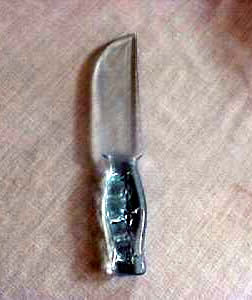
Over the last 50 years these blades have shown up in ones and twos at Glassmaker dig sites, in the hands of collectors, and on occasion in the possession of criminals. By comparison, Verge law enforcement has seen a flood of appearances of these weapons that started six months ago.  The Verge Alliance Admiralty spokesman, Ori Tactentoff, has repeatedly denied that recent military and covert missions to Mantebron are to blame.  The numbers of these weapons here in the Verge are so great that they have become known as verge blades.

The verge blade comes in two forms.  Both appear to be of ancient Glassmaker origin, seemingly made of glass but far, far stronger.  The rarer and more eagerly sought form is that of an elegantly made dagger complete with blade, guard, and handle.  It is seemingly free of ornamentation, but a lidless eye sigil is visible beneath energy spectrums lethal to carbon life forms. The second form is much more common and estimated to number in the thousands. At first glance it appears to be only a cruel shard of glass. Closer inspection reveals a crude blade and handle. The blade is often only a needle sharp tip. Many have a single or double sided blade.  A few have more than two sharp edges.

The verge blade is a sturdy tool and for those with the necessary skill it is a good weapon.  However, some users have unlocked capabilities beyond the obvious in both blade forms:

Tattooing

The t’sa and some other races who embrace body decoration value the blades for their utility in tattooing. The blade delivers precise cuts much smaller than the blade seems capable of delivering.  It is also capable of “inking” the resulting wound in any color except for royal purple.

Medicine

The blades have proven popular with some members of the medical profession who prefer surgical work using their own hands over robotic devices.  These individuals are eccentrics who cling to the belief that a surgeon can resolve any ailment.  The most prominent example of this group would be Dr. Felicity Barnes, who was arrested on Blue Falls earlier this year for illegal experimental psychiatric surgery.

Crime

Vandalism has been linked to these blades, wherein the user was able to easily cut thru superior materials including dura-crete and even warship grade armor.

B&E criminals have used the blade to cut thru safes and even building walls.  The renowned jewel theft, The Otter, recently turned a criminal dealer of verge blades over to police, declaring, “What will become of sportsmanship and skill when any amateur can steal the crown jewels?  I suspect that common thief, Den Bevaring, owns dozens of these!”

Organized crime has also been found using the blades to “brand” victims as examples to others.

Unfortunately, ordinary citizens have also abused the verge blades to mark those suspected of or caught collaborating with the I’Krl. This sorry tradition originated with the Light House’s Pict Expeditionary Force. From there it spread to the rest of the Verge Alliance military and even law enforcement.  The most common examples of the traitor’s brand are the letters “VC” and a barcode-like pattern used on citizens of the VoidCorp nation.  Prosecution of these criminal acts has been weak, uneven, and largely unsuccessful for obvious reasons.

Lunacy

Serge Roskoloff, aka “Doctor Cannibal,” had a verge blade in his possession when he was arrested onboard the Lighthouse last week by Verge Alliance Adminstrator Haggernak and his officers. Serge’s victims had been dissected with great skill and precision; the sweet meats were missing and assumed consumed.  Police had previously investigated and dismissed Serge as a suspect because he lacked the necessary tools and medical background to accomplish the dissection.  Luckily Ghayth Ahrian, a fraal administrator with an archeology hobby, was re-interviewing suspects and spotted Serge’s verge blade amongst his mother’s glass figurine collection. Court ordered lab tests were forcibly administered revealing human, fraal, and t’sa remains in Serge’s digestive tract.  Lawsuits against Serge’s family restaurant have just begun.

To date the ability to cut through superior substances has only manifested when a verge blade is wielded by individuals with psi abilities, though several instances have been found where the wielder was only a latent.  In addition, these individuals uniformly suffer decreased vitality; their ailments include high blood pressure and intense migraines.  Long term or extreme users also manifest advanced cancers, Dante’s Oblivion Type III, and varying yet intense forms of psychosis.

Serge Roskoloff is the only known individual that appears to have acquired skill or knowledge from a verge blade.  He now posses, even absent his blade, an encyclopedic medical knowledge of human and alien life forms, including those of of the I’krl menace. He claims to have retained his surgical skills, but this remains unproven as suspicious law enforcement officials refuse to give Serge access to the necessary tools and materials. By comparison everyone else using these blades in a professional manner (e.g. medical professionals, tattoo artists, etc…) arrived at their skills thru the timed honored traditions of study and hard work.

When used for violence a verge blade inflicts wounds that result in extravagant scarring. The wounds themselves are no more life threatening than those dealt with similar, mundane weapons.  But the scarring is permanent and beyond the treatment of even advanced plastic surgery techniques.  Doctors using verge blades have also failed to reverse the scarring damage.

Law enforcement and the judiciary in the Verge have been unsuccessful in outlawing verge blades, mostly due to the more pressing demands of the war.  However, Verge Alliance members have declared these blades a restricted item, requiring license to carry and use.  Said licensing is retroactive and immediate for any individual already using a blade in a professional capacity, including armed forces.  Sources within the Admiralty Council claim that a certain Asian admiral demanded the “retroactive and immediate” clause so that his favorite stylist could maintain his signature couture haircut.

Reavers on the Seas of Fate – Season Two, Fifteenth Session

Fifteenth Session (13 page pdf) – “Shadows Over Riddleport” – The PCs get back to Riddleport at long last with their new ship and spoils, but it’s not all booze and broads – the phantoms from the Devil’s Elbow are here too!

Welcome to Riddleport!

It’s the Teeth of Araska’s first time into port under their new charter, so there was a lot of fiddling around with how to calculate treasure shares and when to pay out what amount and the like. Chris and Paul spent a good part of the first hour of the session cross-checking their cargo lists against each other, valuating the goods, etc.

Prepping a session like this now requires me to bring a metric ass-ton of materials to the game. They can go anywhere in Riddleport, which I have cobbled together from Riddleport and Freeport materials; vex me with questions about past and future adventures that I need to look up, and you never know what high level NPC it’ll enter their mind to try to kill. I had a duffel bag full of books, another full of papers, and a computer will all past session summaries and other notes in it.

Anyway, after briefly contemplating murdering their hostage, they dock and take the traditional pirate crew’s pilgrimage to the temple of Besmara. All pirate crews go there and toss a coin per man into the beast-haunted pool before doing anything else to thank her for a safe return. They run into friends new and old, but it’s not long before the gendarmerie shows up and tells them the Overlord wants to see them. Apparently the All Due Restraint’s absence has been noted and all pirate captains who dock are being hauled in for questioning.

Along the way, another squad of gendarmes turns out to be phantoms in disguise! The characters’ sigils warn them by flashing with pain at their approach.  Once revealed, they float about with shadowy bodies, have broad sword-blades for arms, and impassive white masks for faces. “Very anime,” noted Paul. And they seem to absorb blood at a frightening rate. They kill all but one of the gendarmes before the PCs manage to defeat them with their orichalcum weapons. (Wogan healed the head gendarme, which is the only reason he survived.) Which was a bit of a disappointment, I had hoped they’d kill all the gendarmes – let the PCs try to talk their way out of that! “Oh, it was disappearing monsters that killed all those cops that were taking you in last time they were seen? Sure it was…”

The PCs manage to parlay their questionable decision to retain the corpses of the dwarves from the drifting All Due Restraint into a full pardon for past crimes from the Overlord, once he is convinced they had no hand in it. So despite two cunning plans to entrap them, they come out smelling like roses! Ah well, I’m sure they’ll do something demented in the future where I can get them all on the run and underground.

Speaking of that, then they wander by the Cypher Lodge looking for boots and poontang (no, really, pretty much) and discover the place is mostly abandoned and really creepy and Thorgrim, who was there when they fought atop the Riddleport Light, is in charge now and has portraits of himself hanging everywhere. They poke around until they find some trouble, and we left it at a cliffhanger – hey, why is half-orc God Squad member Salvadora Beckett hanging from shackles in Thorgrim’s battle circle?  Why are our sigils burning?  Why are the shadows moving? “I CAST THINGS” cried all the PCs at once, and I said “And that’s where we’ll pick it up next time…” Always leave them wanting more!

Reavers on the Seas of Fate – Season Two, Fourteenth Session

Fourteenth Session (11 page pdf) – “Return to Riddleport” – Extracting the Teeth of Araska from its precarious harbor at Shatterhull Island is difficult, and becomes more difficult when some merrow show up to the party.

Shatterhull Island

The first part of the session was the PCs sweeping and clearing the hags’ lair looking for treasure. But quickly they had to turn their attention  to getting  their ship out of its dangerous perch surrounded by rocky spurs.

This wasn’t a trivial maneuver and proved to be the action setpiece of the session.  It actually got a lot worse by dumb luck – I was rolling random encounters by the hour and three sea ogres showed up first thing in the morning, which was when they decided to try to extract the Teeth of Araska. So what I figured would be an important but minor part of the session turned into most of the session!

Maneuvering a large sailing ship is very imprecise work. They wisely decided to try to tow it out with the longboats.  This is safe if arduous in open water, but in the swells that near the island it was extremely dangerous. The first critical step was swinging the ship’s prow around to point away from the island. Sindawe and Serpent each led a longboat and Wogan and Tommy kept order on the ship. Many Profession: Sailor checks were made and they got the ship reoriented OK (though Serpent’s launch was bashed against underwater rocks enough that it was starting to leak). And then the sea ogres attacked.  Dude, the saltwater ones are fricking huge!

This was complicated for me, the beleaguered DM. The PCs had a crew of twenty diverse crewmen (some pirates, some ex-slaves) I was handling, along with the merrow and the forces of nature. There was fighting, sailing, paddling, shooting of cannon, falling overboard… My goal with this game is to make the naval stuff not just “color” but to make the sea, and the ship, important characters of their own and I think it was a success.

Then they loaded on the cargo from the island and headed out. They came across the Riddleport ship that left the Devil’s Elbow before them, the All Due Restraint.  All the gendarmes had been killed and were missing; all the dwarves had been killed and hung by ropes off the ship so that sharks and whatnot would eat their lower halves. This caused a lot of debate amongst the PCs. Bringing in or trying to claim the ship would almost certainly get them hung for piracy against Riddleport. They made the somewhat questionable decision to leave the ship, but take all the dwarves with them, stuffed into barrels in the hold. The crew was so not happy about that. The PCs, ever frugal, seriously asked “Can’t we fit more than one dwarf per barrel?” “Fuck you, man,” was the general tenor of the response to that. Then Wogan spent a lot of time down in the hold muttering to the barrels. This revealed that Morgan Baumann of the Kraken’s Claw took the ship, and further convinced the crew of the monstrousness of their new officers.

And then finally, Riddleport hove into sight! R&R at long last?  Fie on that!