Category Archives: talk

Sentinel Comics RPG – Kaiju Hunters, Collection 5 – “The Heart of Egg-celeration”

Welcome to the fifth collection of us playing the Sentinel Comics RPG with our Aussie family of Kaiju hunters. This collection revolves around Golden Key, his roguish ex-wife Ermine, their baby Rain, and alien weirdos wanting to get the “Heart of Acceleration” from him (well, probably from his limp body).

Follow along with our exploits!

Twenty-fifth Session – “My China Girl”
We did so well in Shanghai at the end of last issue that we have a secondary HQ there now. Our second string team, the Bondi Beach Brawlers, is getting pretty butch and star in their own cartoon show. And Golden Key’s villainous ex-wife (aren’t they all) and baby get kidnapped again! Talk about fridging! They want the Heart of Acceleration, which I guess is like the Speed Force from the Flash. We save her but I (The Yowie) get my ass well and truly kicked in the process. After recovering with lots of hot-pot, we decide rather than let the space baddies come after us again, we’re going to proactively hunt them down – IN SPACE!!!

Twenty-sixth Session – “Snarfhockers”
Super space battle! We use our new attack ship the McTits to attack General Stryken’s Domination. Pretty much one big fight scene, from ship combat to boarding to hand to hand on the enemy ship. Remember, even though “In space, no one can hear you scream,” your copilot will still turn around and tell your bitch ass to shut up. (Yes, this is a Star Thugs reference. RIP Mark Argyle.)

Twenty-seventh Session – “Battle of the Bands”
Splitting time between stalking Golden Key’s ex-wife and looting the Domination of alien tech somehow ends up with us forming a rock band to take on an evil rock band, Helfyre. Our band ends up consisting of Ermine on vocals, 4 entirely different genres of drums, and El Genio stripped to the waist and playing the saxophone like the guy in The Lost Boys. Then, a big ass battle. It has something to do with the Heart of Acceleration somehow since we need a theme.

Twenty-eighth Session – “Bung on a Blue”
A very short session, mostly spent on forcing the Bondi Beach Bruisers to fight Fright Train by themselves. But hey get the home field advantage since we do it at Bondi Beach! It was on for the young and the old, a real barney. There is a perhaps unsurprisingly large number of Australian slang terms for a brawl.

Twenty-ninth Session – “Stowaway”
We take the Domination to planet Vollax and infiltrate Kronus Station in orbit around it with El Genio posing as the captured General Stryken. We disguise and sneak and sabotage and then break out into a good old fashioned melee. We capture Scientist Karna and plan on how to take the fight to the Unspeakable Wave! (To be honest, we’re not really sure what the Unspeakable Wave is – sounds like it might be weirder than some alien in Spandex but I guess we’ll find out.)

Thirtieth Session – “You Can’t Make An Omelet…”
If you haven’t noticed yet, Sentinels is organized into six “issues” of a “collection”, comic style, so this was inevitably a climax. We discover a giant Cosmic Egg and a priest-attended, Unspeakable Wave-infused – kaiju! Our specialty. We take it down, the Wave comes out, the scientist zaps it – all to plan, but then the Cosmic Egg starts hatching, which will apparently be a Neverending Story level negative event. The Yowie considers sacrificing himself somehow (getting in the egg?) but luckily enough violence solves all problems. And he gets to see the giant Jansa Vi Dero again and lay some mack down on her.

Sentinel Comics RPG – Kaiju Hunters, Collection 4 – “The Semi-Secret Invasion”

Our fourth collection of the Sentinels RPG with our Aussie family of Kaiju hunters. The Umbral turns into a villain and then the rest of us turn into pretend villains and see the world. Meet the Yowie’s new alter ego, “Creepy Uncle!”

Follow along with our exploits!

Nineteenth Session – “The Savage and Confusing Land”
We take the Argent Adept who wields the Zither of Zarathorpe on an ekranoplan to the island of Insula Primalis to find the Nexus of the Void because… The Heretic is being controlled by the spirit Song of the Swarm… Or something… Jesus, I don’t even know any more. We do fight dinosaurs though.

Twentieth Session – “Inception”
From Insula Primalis, we go into the Void, which is remarkably like everywhere else, but then from there we go on a ganja-fueled vision quest and fight the Song of the Swarm. But the main villain as usual turns out to be our player-comrade Bruce, as his character Umbral goes full villain!

Twenty-first Session – “Rock Me, Dr. Chaos”
We “welcome” Bruce’s new character, the Argentinian two-fisted super-scientist El Genio. And we finally get to do more stuff back home in Australia instead of the less weird super-dimensions we keep going to! Sure enough, we go out to Woop Woop Station in the Outback where a “Razorbeast” has stomped the town flat. We go out to the aurichalcite mine and it is inhabited by Dr. Chaos!!! Chaos ensues.

Twenty-second Session – “Eat This Kitten!”
We had loads of fun in this one – Golden Key has been going undercover as a villain, “Black Clavis,” and since his ex-wife and baby momma gets abducted we all join him in a place inspired by the Evil Eye Cafe from The Tick. We took great glee in coming up with supervillain identities. Kanga-Crime! El Rato de Piedra! And I take on the identity of “Creepy Uncle,” whose Grunkle Slam attack gives him the proportional strength of ten uncles. Many of my creepiest lines were omitted from the session summary by our delicate WASP session scribe. And then we go shoot up Kuala Lumpur.

Twenty-third Session – “Clones a-poppin’!”
We go to the Biomancer’s island and fight all manner of freakydeaks from antibody bots to radioactive shrubberies to cloned versions of Malaysian superheroes to cloned versions of ourselves! And we rescue Golden Key’s ex-wife and daughter.

Twenty-fourth Session – “Are Those Tentacles Or Are You Just Happy To See Me”
A giant Vibravore from the planet Vollax attacks Shanghai! We go there to beat it into submission and shoot it with N-rays and/or Q-rays but are then confronted with the dual threats of alien goons and wealthy Communists. The Oriental Pearl Tower and the Qingpu Loop Waterside Park may never be the same again, but we save Shanghai Disneyland at least.

Ty & That Guy Podcast

I just got turned on to the video podcast by Ty Franck (one half of James S.A. Corey, author of The Expanse), and Wes Chatham (Amos Burton on The Expanse). It’s fascinating, and in the first episode Ty talks about how he basically used a D&D game to develop the plot – in fact, the core characters like Holden were named by their initial players!

It’s a great podcast about the Expanse, other classic sci-fi we all know and love, and more – check it out on YouTube!

Gaming in 2020, A Retrospective

Well boy this has been quite a year. And it’s put a little bit of a dent in our gaming, but luckily, not too much. We’ve had a couple folks get laid off, and one who got COVID but recovered. But we’re all here and still gaming.

We finished out a 20-session campaign of Blades in the Dark, where our mercenary company the Gamblers’ Orphans end up in Duskvol, become a criminal gang, run an orphanage, and stop a crazy guy from destroying the city, by hook and by crook. We transitioned this one to Roll20 in March and didn’t miss much time during the pandemic. All the session summaries for this will publish by the end of this year!

We’re into the tenth year of my long-running Pathfinder 1e pirate campaign, Reavers on the Seas of Fate. One of our members doesn’t have solid Internet access so come March we had a bit of a hiatus, during which we played one or at least few-shots of games like Troika! (surreal science fantasy) and Heart: The City Beneath (a spinoff of Spire) and the Sentinel Comics RPG (based on the Sentinels of the Multiverse coop card game we’ve played many times). We also did a good bit of online board gaming using Tabletop Simulator. But Reavers marches on, we meet in person with open windows, social distancing, and masks. I’m even catching up in posting session summaries. We are well into Razor Coast and are in the endgame of the campaign (that endgame may well take a year, fair warning).

After the Blades campaign, we started a D&D 5e campaign but using the Pathfinder 1e Iron Gods adventure path, enhanced by the Numenera-for-5e Arcana of the Ancients rules, all on Roll20. We are keeping session summaries for this but I haven’t started editing and posting them yet, but I surely will.

There weren’t a lot of super interesting new releases we were waiting on. Group members did some Kickstarter backing and/or receiving of things they’d Kickstarted, from Reichbusters to Fading Suns (3e?) to Mork Borg Cult: Feretory to Empire of the East. I backed SLA Industries 2e which is shipping now, Eclipse Phase 2e, Nahual: A Tabletop RPG Of Mexican Urban Fantasy, Carbon 2185: A Cyberpunk RPG, and Arcana of the Ancients, a 5e science-fantasy sourcebook. Things like Freeway Warrior and Demon City keep creeping along and may or may not finish sometime.

Looks like Pathfinder 2e and D&D 5e are publishing away but we’re not into those too much. The new Aliens game looks interesting, and for my next game after Reavers I’m thinking something cyberpunky either using Cyberpunk: RED or Carbon: 2185.

Gaming’s important to all of us, and having a regular hobby and social outlet has always been a stress reliever in even normal times, and has kept us doing OK during pandemic times. I hope you’ve all been able to keep some gaming up too, and here’s to a better 2021!

Mike Pondsmith, Cyberpunk RPG Author, Interview In The Atlantic

Mike Pondsmith

Due of course to the computer game Cyberpunk 2077 dropping, The Atlantic did a full interview with R.Talsorian founder and Cyberpunk RPG creator Mike Pondsmith called “The Roleplaying Game That Predicted The Future”. It’s great to see a RPG author getting mainstream media exposure (and one that’s not affiliated with D&D, at that)!

Adventure Calendar

Hot tip from Tim: Grant Howitt, the guy who wrote Spire, is writing an adventure/setting entirely in the form of random tables, released once a day, until Christmas. One might call it an advent calendar but I guess that isn’t PC? Anyway, we’re at Day 11, D8 Slumbering Creatures That Have Awoken With The Coming of This Dreadful Winter. Seems fun!

Still Here, Still Gaming…

I know I have trouble posting much any more, but I am putting session summaries up still on the Reavers page.  The campaign’s still going (in fact, I see that we just passed 10 years!).

We’ve been playing other stuff in the off weeks as well – currently, a Blades In The Dark campaign – I’m putting some summaries up (they’re hand written by a player), the campaign page is here.

We briefly played Coriolis but the GM had trouble keeping it going. It’s supposed to be Arabian Nights in space but it kinda felt like all our other space games in the end.

Gamer Cocktails: The Sharknado

This one is actually by Robin Laws. One day he tweeted “Has anyone named 1 oz sloe gin, 1 oz spiced rum, orange juice? Because if not I’m calling it a Sharknado.” It’s where I got the idea for the sloe gin component to the Midsommar.

So we made it!

Sharknado

1 oz. sloe gin
1 oz. spiced rum
orange juice
gummy shark

Except we couldn’t find gummy sharks but could find gummy octopi so this is technically a “Sharktopus.”  Even better since I used Kraken spiced rum. Refreshing!


Gamer Cocktails: The Midsommar

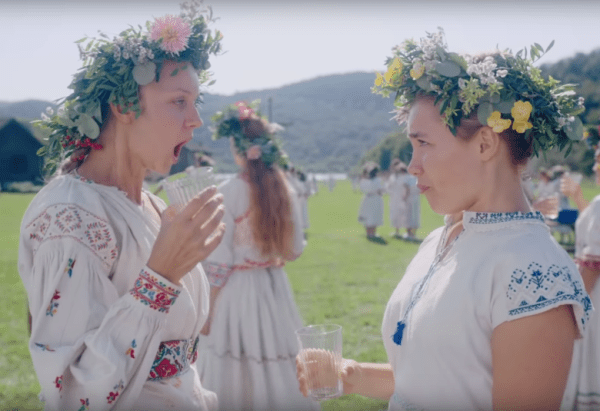
Midsommar-Screenshot-e1562172378921My gaming group likes the odd cocktail every now and then.  I’ve come up with some custom concoctions we’ve enjoyed so I thought I’d start sharing them!

I enjoyed the horror movie Midsommar when I saw it last week.  As luck would have it, I am also a fan of gin and had just gotten a bottle of Hendricks’ limited edition Midsummer Solstice gin. It’s a very floral gin, which makes it a little hard to fit into some things.  I made a gin and tonic with it, but that was not super. But, I thought, I’ve also made Aviations for this group, and those are floral… Maybe I should make a new cocktail! And I did just go see Midsommar, that’s quite a coincidence…

aviation-new-720x720-recipe-1The Aviation is a classic gin cocktail that largely disappeared after Prohibition because its ingredients weren’t available here, primarily a violet liqueur named Creme de Violette. It had a hipster-type renaissance when it became available again in the 2000s.  But… I’ll be honest, the violet is a little overwhelming. Some people describe it as “drinking hand soap.”  The classic Aviation is (amounts vary from recipe to recipe):

Aviation

1 1/2 – 2 oz. gin
1/2 – 3/4 oz. Maraschino liqueur (Luxardo is the good one)
1/4 – 1/2 oz. Creme de Violette
1/2 – 3/4 oz. lemon juice

Shake with ice, strain into a cocktail glass, garnish with a cherry.

I’ve made Aviations for the group but no one’s asked for more. So I thought “what about an Aviation, except instead of using dry gin and Creme de Violette, I just use Hendricks Midsummer Solstice as both those parts?  It’s floral but not gag-me-with-a-spoon floral.” Thus, the Midsommar was born.

2019-07-10 10.42.02Midsommar

2 oz. Hendricks’ Midsummer Solstice gin
1/2 oz. Luxardo
1/2 oz. lemon juice
dash of sloe gin (if making multiple, optionally add this only to one)

Shake with ice, strain into a glass.  (If you care about what kind of glass and what to garnish it with, more power to you, but I’m just a civilian.)

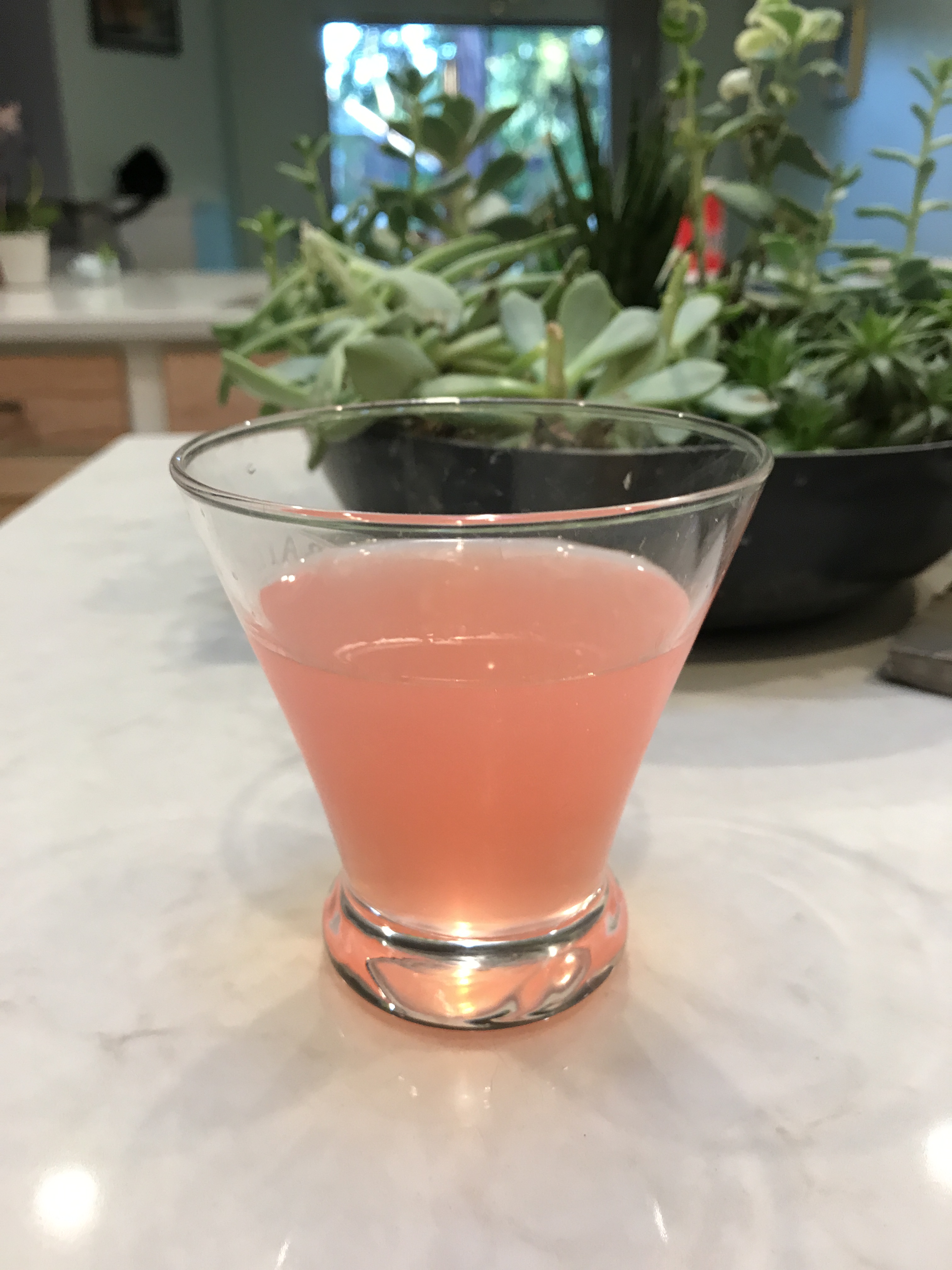
Results: Really good!  Very well balanced, floral and summery but not overly cloying. Better than a stock Aviation. The only drawback of my first iteration is that it was just clear/lemon juice colored, without the fun purple of the Aviation. I happened upon the idea of adding just a touch of sloe gin to this to add a tinge of red, for reasons that should be obvious to those who have watched the movie. The result:


Give it a try! All these should be available at your local liquor store and aren’t terribly expensive; a .75 of the Hendrick’s was $40 at my nearby Twin Liquors. (I’m actually disappointed that the Alamo Drafthouse isn’t doing some Midsommar-inspired cocktail using this… Seems like the kind of thing they’d do…)

Your gaming group can then look like this.

midsommar

Pathfinder 2e Playtest Retrospective

Well, we played through the Pathfinder 2e “Doomsday Dawn” adventure through 7th level (the first three scenarios, The Lost Star, In Pale Mountain’s Shadow, and Affair at Sombrefell Hall).

It was… fine.  It’s not super different from Pathfinder from a 10,000 foot view. The main changes were:

  • the “three actions a round” thing – you get three actions, which can be any mix of attacks at iterative -5s, or moves, or spells, or whatnot. made rounds take longer, but probably at higher levels cuts down on time since you can’t do 20 attacks.
  • how crits work – if you beat what you need by 10+. More crits but more math.
  • how magic weapons work, with plusses adding whole dice of damage.
  • Spell Points for everyone to power whatever innate abilities, but not spells, which kept confusing us.  Why not Power Points?
  • Random slight spell changes
  • A weird baseball diamond icon used to indicate how many actions something takes instead of just using a damn number
  • encumbrance simplified into “Bulk”
  • magic item slots simplified (?) with “Resonance”

It didn’t seem better or worse really, just different. You may recognize some of these specific rules from 5e, 4e, and other RPGs, none of it was real innovative.

Unfortunately, that is a bit of a deal-killer for us.  We have loads of PF 1e stuff, more than we can ever play.  We play other games too.  There’s no killer feature in PF 2e that makes us say “I really want to play this!” It’s unexciting.  And from running through the adventure, it’s not just on paper – in play it’s the same thing, like Pathfinder 1 but just with some warts removed and some new ones added. Huzzah?

I was leaning on Hero Lab hard for the deep NPC work in Pathfinder.  They’re (Wolf Lair) apparently not carrying on with existing Hero Lab, they’re abandoning it in favor of a new subscription-based online service (Hero Lab Online) that I’d get to pay for new and differently, despite investing probably near $1000 into HL over time. Again, starting over for “different but not better really.”

I mean, I don’t *dis*like the game – but it’s telling me “abandon all previous thousands of dollars of product, for something that’s… like it but slightly different.” And I’m not clear what I’d get out of that.

I love Golarion and their Adventure Paths (I got into it from being a Dragon and Dungeon subscriber and converted over).  They know how to write adventure and setting for sure.  In Pathfinder 1e the mechanics weren’t too revolutionary, but as they went on they had a knack for picking good and iconic classes instead of the weird junk WotC had been doing even in 3e/3.5e.  “Witch, Alchemist, Cavalier”, makes sense!  “Acolyte of the Skin! Candle Caster!” No. The archetype system allowed a lot of class customization and that was cool. Fun game, played it a lot, though I must admit over time the extreme amount of rules content caused us to play other, lighter games about 50/50 (they call it Mathfinder for a reason).  But heck, I’m still running a 5 year old Pathfinder campaign, it’s a good game. They’ve had good instincts and business practices. I wish Paizo well.

To really make PF2 a success like PF1 they’re going to have to come up with something besides “inertia of PF 1e players” to drive adoption. The kids nowadays are moving to D&D 5e. If I’m going to coast, I want to coast on the existing game.  For a new Pathfinder to get me to keep subscribing (to the tune of a lot of $$ per month), I need *something* new and exciting.  It could be more rules light, but doesn’t have to be, it could be anything really innovative. But it’s pretty clear they didn’t have a huge innovation in mind that drove them to make 2e – they just figured it was time and started cobbling something together. Is the setting new?  No, same setting I have 100 supplements for, they’ll just re-release the exact same content with some new stats so I won’t really get anything new.  Do the new rules unlock any new actual kinds of classes or characters?  No, so all the new supplements will just be “and now here’s the witch with some different rules.” What am I supposed to be looking forward to?  There’s not really messaging on that.  Check out their Web page – it’s just like “playtest this now.” It’s not even trying to hype me on something.

When D&D went from 1e to 2e to 3e, each time was a really big change and improvement. Hit tables to THAC0 to DCs level improvement. I just don’t see anything like that in Pathfinder 2e.  If it was released 10 years ago as “our new D&D killer” instead of 1e, I would have loved it and played it and it’d be in the exact same spot as 1e is now, like I say, there’s nothing wrong with it.  But after 10 years, a new edition should be something to really move the needle on your gaming, and after giving it a fair shot at play – it’s just not.  At least not in the current playtest form.  But I don’t have a lot of hope it will change dramatically from the playtest – I mean, I’m sure they’ll fix some of the issues, but you don’t fix “it’s not really that innovative” in a playtest.

I fear the net here is “I and the gamers I know here will keep playing PF 1e, just a bit less each year; we’ll wish Paizo well but not buy much.” Starfinder didn’t grab me (science fantasy isn’t my thing), and PF 2e isn’t grabbing me.  Maybe they’ll put out another RPG that’ll draw me in eventually, but thus far looks like I’ll need to pack up my love for Paizo products, put it in a box, and bring it out and remember it from time to time.

Pathfinder 2e Playtest First Impressions

I was in my FLGS (Friendly Local Gaming Store) the other day and saw the printed copy of the Pathfinder 2e playtest.  Paul had been talking about running a one-shot for us so I decided to go ahead and pick it up.

I’m a long time Pathfinder player (as long as you can get, I migrated from Dragon/Dungeon to Paizo APs in 3.5 to Pathfinder Beta to Pathfinder as it happened).  I’ve been a superscriber for all that time so I have every Player’s Companion and rulebook and everything.

As a result I wasn’t chomping at the bit to look at 2e – I have more Pathfinder stuff than I can probably use in my lifetime, and my gaming group is mainly playing other games nowadays, but this prompted me to pick it up and read through it.

Overall it’s good. It’s different than Pathfinder/3.5e.  I’m not sure how many of the changes are really better or worse instead of just being different, however.  More on that after the details.

The book is beautiful, it’s full color and pro layout and no typos; better than most non-playtest RPGs (and definitely levelled up over the initial printed Pathfinder Beta I still have a copy of).

Overview

Intro

It starts with the usual RPG intro, which is fine.  They go a little overboard on the nearly page worth of SJW-speak in the beginning.  I want gaming to be inclusive and fun for all too, but they drone on about “safe space” and how GMs should be “pay[ing] careful attention to players’ body language” to police anyone being “uncomfortable.” Yes, job #1 of a GM is to carefully monitor everyone’s emotional state and make sure everything’s light and non-challenging in 2018 I guess. But, whatever, the book’s 432 pages long already why not pad it out.

Basic Concepts

The basic concepts are the usual, and you’ll generally get AC, HP, and so on. You get 3 actions (and a reaction) per round from general inflation, I wish it was more like 1e/2e – do one thing and the action will get back to you quickly, instead of doing 4 things and then waiting an hour for your next turn. Though there’s one real problem I had  – the new icons to indicate action types.  It smacks of trying to IP-protect your trade dress for the sake of it, and they are not more concise than just using a letter or whatever.  For 2 actions I need two little baseball diamonds instead of a 2?  Making a character sheet or spell cards gets to be a non-plaintext exercise now?  Boo.

Anyway, then important concept, Proficiency Modifier!  Like D&D, you have a proficiency modifier that applies to everything (weapons, skills, etc.) that is based on your level. It can be slightly less than your level or slightly more than your level if you are untrained or master or legendary.

In the book, untrained is level-2 and legendary is level+3.  That is terrible and let me explain why.  It means there’s only a 5 point spread, on a d20 roll, between the most hapless and the most skilled of a given level.  This means that when faced with the nearly ubiquitous adventure option of “do some skill challenge, or fight them,” it’s a sucker bet to try to beat them at the skill challenge because a 5 point spread on d20 is very, very failable, where if you differ enough levels you’re basically guaranteed to beat them in the fight because of how many things stack onto making you better and it’s effectively a complex skill check of many many rolls and not just one.

But all is not lost!  Paizo listens to their playtesters, and in the current rule update, they change this so unskilled is level -4.  It still means “trained” and “legendary” is only a 3 point spread though, which isn’t great, but it’s nice to see it iterating in the right direction.  It does mean “mommy taught me the guitar” can beat Robert Johnson 34% of the time in a straight roll-off, which kinda sucks. At least untrained at -4 only beats him… 20% of the time?  That’s not excellent.

Character Creation

Then you get a summary of character creation. It’s straightforward, though they hide how you determine hit points in the middle of a long “Apply Your Class” section and I went past it and it took me a while to find it – I’d think that would at least merit some bold or a header or a sidebar or something; it’s more complicated than previous because you have an ancestry set of hit points and then a class set of hit points you add together.  (And it’s here instead of in the definition of Hit Points with a header in the previous section why?) There’s a lot of formulas like that that are only explained in this section (AC calculation too) that really should be set out to look like

AC = 10 + Dex modifier (up to armor cap) + armor proficiency modifier + armor item bonus to AC + other bonuses/penalties

instead of just being text inline which is what they are.  You’re Mathfinder, own it.

Alignment is skimmed over pretty much in passing.

Ability Scores

Next we do ability score generation.  It’s the usual 6 D&D stats, but the generation is a little tricky. You start with 10 and then do a bunch of iterations of adding ancestry ability boosts (boost = +2), two background ability boosts, four free ones, a class one…  But you can’t double up in a given iteration, but you can stack them across iterations. OK, fair enough, though I suspect we’ll always be seeing the same Backgrounds for the same classes since it’s the only way to min-max your stats to 18. Or you can roll if you’re a real man.

Ancestries and Backgrounds

Next we do the races, except it’s racist to call them races so they’re Ancestries I guess?  You get the venerable Dwarf/Elf/Gnome/Halfling/Human and can do half-orcs and half-elves as variant humans. All pretty cool, and instead of a standard set of abilities there’s “ancestry feats” you can choose from both at start and then you get more every 4 levels. Not sure how you explain “suddenly I can do that thing that I learned growing up I guess” story wise, but eh, everyone likes more powers.

Only humans have ethnicities, which is weird because in Golarion there’s elf ethnicities and stuff.

And the big bad in this chapter is goblins as a playable race.

Look man, I’ve played all the goblin modules too and I love them.  The goblins are some of Pathfinder’s most recognizable IP. But in Golarion, goblins are crazed spazzes that are in no way compatible with other people.  And people already use gnomes and sometimes halflings if they want to play a little spaz.  By them being a core race instead of just in some later race guide, that means 1/6 of characters, especially in Pathfinder Society play, get to be disruptive illiterate arsonists.  Great. Needs to be pulled and put into some later more optional thing, even if it’s the first AP, with some warning text.

Backgrounds

Then we have two pages of Backgrounds, which give ability boosts and skills usually. Acolyte, Criminal, Warrior, and so on.  (I wonder which map to which classes?) There’s not that many but I assume they’ll get the shit splatbooked out of them eventually.

Languages

The next chapter is Languages, which generally works like you’d expect except for a weirdly complicated full half page on sign language (every language you choose normal or signed and if signed you get the Read Lips feat for free and blah blah see page 301)…  It also weirdly assumes that every language/race has sign language and that they’re tied to languages?  So gnoll sign language is different from celestial sign language?  Plus IRL sign language wasn’t developed until post-Renaissance so it’s all just kind of weird and overwrought. Like, the sign language section is larger than the entire alignment section.

Classes

Classes.  The first class is Alchemist because they’re alphabetical and it really threw me, I started reading it and my reaction was “what the hell is this?!?”  I had to start looking up bunches of other game concepts (“Resonance?”) and it was super confusing. I punted and went forward to Fighter to figure out the game.  Turns out they published a massive revision to the Alchemist in the errata because I guess that was a common reaction.

Anyway, the classes go to a pick-and-choose set of feats, you know, like every video game skill tree. I approve.  So many archetypes in 1e were just to basically move around things you didn’t really want for things you did, so going to “pick a class feat” is more elegant.

But I speak too soon.  While most items are turned into class feats, there is still a level advancement table with some things built in (Barbarian gets rage and totem at level 1, “juggernaut” at level 7, and so on). It’s not clear why these aren’t just class feats with that level as their level restriction, so you could take some other thing at 7 and then juggernaut at 8 if that floated your boat.

It’s the normal core classes plus alchemist, a solid list with no surprises.  Without actually playtesting them it’s hard to tell, but they seem to generally do what they did in previous editions.

Skills

They combined skills into a semi short list of 17 skills. They are still complicated because they basically pasted the rules for each more granular skill under them, so in Acrobatics you get a long ass thing about Balance, Escape, and the 5 other uses each of which has its own ruleset.

You don’t have skill points any more, it’s just those untrained/trained/expert/master/legendary levels. Everyone gets skill advances that boost your skill ranks pretty frequently.  Even the wizard, which starts with 2 + INT skills, gets one skill every 2 levels so can have 11/17 of the skills (barring mastery, but each level of mastery only gets you +1, so they’re a poor investment).

Each skill, like many of the feats in the class section, have these little “Traits” associated with them.  Some are defined here, like Secret.  Some are off in Appendix 1 in the back; I’m not sure how you’re supposed to know that.

The organization of this book starts to fall down about this point.  There’s a lot of inconsistency.  Take classes and their class feats.  OK, those are described under the class entries, not lumped into the general feats chapter.  But then “powers”, like the monk’s ki strike, aren’t in the class section, they are lumped into the Spells section!

I know in a complex game you can’t always have it where you read the definition of something before you have rules using that something, but at least have a consistent design philosophy of where you’re going to squirrel things away.  Do class things go under the class or sorted into other categories? Do traits and such get defined in the relevant section or in the back?  On p.144 it explains what a Secret skill check is.  Secret is in the traits section in the back but there it just says see p.293. Where it has the exact same text as on p.144 duplicated.  What?!?

Anyway, organizational gripes aside – they’re skills.  They let you do the normal panoply of stuff you want to do in D&D/Pathfinder.

Feats

Feats feats feats!  Only 13 pages of them. They are almost all skill feats and then some general feats, there’s no like metamagic or combat feats, which are just in the classes I reckon.

Equipment

They go to the silver standard, which I like. Gold is just for magic items and super expensive stuff, normal folks use silver for conventional expenses.

Armor is mostly like armor used to be, although with AC and touch AC (TAC) stats.  Shields are weirder and more complicated, you have to use an action to get their AC bonus.

Weapons, predictably, are like they used to be except we love traits now so every single weapon has 1-6 traits on it. Axes sweep, mauls shove, bows are deadly and propulsive… Entertainingly they define all the traits but not any of the weapons, I guess if you don’t know what a main-gauche or guisarme is, your hapless noob ass can google it? Maybe that’ll be added in the final book.

Gear is gear, but encumbrance has changed to a more abstract Bulk system instead of weight, with all the complicated junk about well this is negligible and this is Light so 10 of those become 1 Bulk and so on. Not that anyone uses encumbrance anyway.

There’s item qualities, like “masterwork” was but they can go up to +3 if you spend about x10 more money for each increment.

Spells

We’ll pick this up next time in a Part 2!  I’ll discuss spells and then the actual gameplay rules, which are hidden behind everything else. And then GMing and treasure if I reach it.


Support Our Troops With D&D Shirts

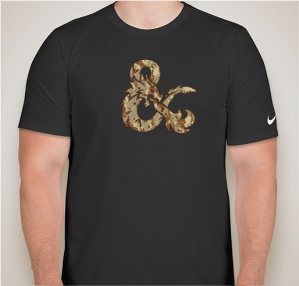
PO24964905-frontCThey’re selling boss D&D T-shirts for Operation Gratitude, which sends care packages to US armed forces members!

They’re 19 away from hitting their minimum goal with 23 hours to go, so go buy one!

(They have women’s, performance, and hoodie options…)