Category Archives: talk

Warning, Don’t Update Your Hero Lab Yet

Flash traffic – the new Hero Lab updates for Pathfinder will crash your Hero Lab  if you are on Windows XP, Vista, and maybe other platforms.  Don’t update.  If you have already updated and are crashing, there is a Lone Wolf forums messageboard thread with details and a workaround which is to download the older Pathfinder datafile and import it.

The error for Google reference is:

ACCESS VIOLATION
Address: 0x005ab17d
Type: bad read

Every D&D Edition For Sale!

In case you’re one of the few who missed it, Wizards of the Coast has finally joined the Information Age and decided to make all old D&D editions available for sale electronically at D&D Classics. (It’s a white label DriveThruRPG/RPGNow site.) B1: In Search Of The Unknown is free for their launch week!

They have loads of the classic modules up already and they say they plan to get everything up there eventually.  Good on them!

Razor Coast Kickstarter

Bethany Razor Works It

Bethany Razor Works It

Razor Coast, the mega-adventure by Paizo fan favorite author Nick Logue, has had a long and checkered past. But Frog God Games has it now and is running a Kickstarter to get it out the door finally! It’s in Pathfinder, but they also have Frank Mentzer (Red Box, fools!) himself working on delivering it for Swords & Wizardry too at the same time.

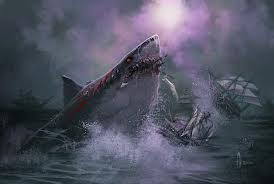
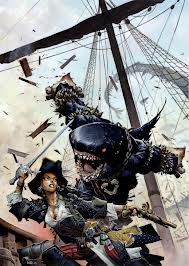
Razor Coast is set on an untamed coastline, with home base being a colonial power’s city and it surrounding plantations. Just on the land you have slavery, hostile natives, crocodile men, volcanoes, and monster-infested jungle to contend with. But Razor Coast, like Skull & Shackles, has a strong nautical component too.  Ply the waves and fight pirates, or be a pirate and fight the navy – plus weresharks and sahuagin and other demented denizens of the deep! (You can get a sneak preview of the maps for RC on Sean MacDonald’s site!) It wouldn’t be Nick Logue if it didn’t reveal the worst side of human nature and end up in various shrieking bloodbaths.

Pele, Goddess of Fire and Wrack

Pele, Goddess of Fire and Wrack

The good news is that the content is pretty much all done.  I was a volunteer editor originally and still am; this adventure (and all the related Indulgences and extras and whatnot) are in the can and just being fine-tuned.  I just finished another round of editing the various Indulgences to make them even better. So there’s not much standing between this and release, unlike other Kickstarters that are being done completely from scratch.

Yes, it’s pricey.  The hardback level is $110, but you are getting a huge tome and a lot of extras for that.  Lou Agresta explains the value and all what you get on the Paizo boards if you’re interested. FGG uses a very high quality textbook printer, made in the USA, so you are paying more but get a book that won’t fall apart and whose binding isn’t mixed with the tears of child laborers. Check out the higher Kickstarter levels too, they have sweet ship models and other cool swag. They’re 2/3 of their way to goal with 19 days left, now’s the time to get in on it! If you preordered back in the day from Sinister, they’ll honor that preorder, so no worries there. You can pledge some to get other bennies though.

Dajobas, Devourer of Worlds

Dajobas, Devourer of Worlds

I’m going to be running Razor Coast as part of my Pathfinder pirate campaign (“Reavers on the Seas of Fate“) soon! Actually, I already ran one of the Indulgences that were available back originally to kick off the campaign, and you can read the extended session summary here to get a feel for the kind of adventure we’re looking at!  (Well… I did zazz it up a bit myself.) I’ll be setting it south of the Shackles with Port Shaw as a Sargavan expansion port.

Do note that you don’t have to be  a pirate for Razor Coast, unlike with Skull & Shackles – it works for good parties as well. In fact, it starts at level 5 (and goes up through 12+), you could capture and impress your PCs with the first chapter of Skull & Shackles and if they end up being goody-goody and don’t want to go pirate, they could flee to Port Shaw and slot right into Razor Coast!  I actually used the first two chapters of Second Darkness to start my Reavers campaign and went pirate from there, out to Azlant and now to the Razor!

Maybe my PCs will see you there… Kickstart now to become on of their many victims!

Geek Related – 2012 In Review

Geek Related is hosted on wordpress.com, and each year they create a lovely summary of our traffic from the last year!  They give us an option to share it with our readers, so since I’m a big believer in transparency, feel free and poke behind the scenes below.

Here’s an excerpt:

19,000 people fit into the new Barclays Center to see Jay-Z perform. This blog was viewed about 120,000 times in 2012. If it were a concert at the Barclays Center, it would take about 6 sold-out performances for that many people to see it.

Click here to see the complete report.

A Geek New Year

Welcome to 2013! It’s been a good year for geekdom and now we’re launching into a brand new one.  My main order of business is to expand the scope of the blog!  I’ve been pretty militant about keeping Geek Related to roleplaying game content only.  Well, I’ve been wanting to start sharing my opinions on other geek media – movies, books, and so on – so consider this fair warning!  Most of the content will still be RPG related but you will get a bunch more in the bargain. If that gripes you, I consistently tag all my RPG articles with “RPG” so you can follow them discretionarily!  Let me know what you think, and if you want more or less of the new stuff.

Pathfinder Class Guides

Merry Christmas!  I was kicking around and found this post on the paizo.com forums with links to all the existing Pathfinder class guides out there and I thought I’d share!  Here’s the link to the excellent post curated by harmor. It’s also mirrored at the d20 Min-Max wiki.

In fact, it links a mostly the same but a little more complete list, The Comprehensive Pathfinder Guides Guide from Zenith Games – check it out!  Adding this puppy to my blogroll.  Every class, most prestige classes, and other guides that might come in handy when coming up with Pathfinder builds.


Player Conflict In RPGs

On the RPG Stack Exchange lately, there have been a couple questions about conflict in gaming groups.  Stylistic conflict, player conflict, etc. “What do I do about it?”

Seems like that in real life, people have trouble with handling these conflicts – usually, they let them fester and refuse to confront them because geeks tend to be passive-aggressive (see Five Geek Social Fallacies for more). But then on RPG.SE, we tend to get more immediate recourse to Internet tough guy syndrome where the answer is always “leave the group/kick them out!  How dare they disrupt your fun, even though we have no doubt been fed an incomplete and biased view of events!”  Perhaps “nothing” and “nuclear option” are not the only conflict resolution choices open to us.

You know “All I Really Need To Know I Learned In Kindergarten?”  Well, it’s true and applicable to this situation as well. It’s been amazing how much seeing a young child go through this stage of character development has helped me as a manager at work and a GM at home. Most conflict ends up being addressable by the basic stuff you were supposed to learn in kindergarten, but apparently didn’t.

Conflict resolution.  Someone’s doing something that bothers you.  What do you do?  Well, at my daughter’s kindergarten, they used a frog mascot named Kelso who had a number of Kelso’s Choices you should select from to handle conflict without escalating it. “Try two of these before calling an adult.”

  1.  Wait and cool off.
  2.  Go to another game.
  3.  Talk it out.
  4.  Share and take turns.
  5.  Ignore it.
  6.  Walk away.
  7.  Tell them to stop.
  8.  Apologize.
  9.  Make a deal.

Next time you have a problem in your gaming group – try two of these options before escalating, please. No, seriously, these really are the civilized answers to virtually every problem you’re going to have with another player or GM or play group. If you can’t exercise kindergarten level conflict management, then probably seeking others’ help won’t really get you very far – reteaching people the basics of human interaction is pretty out of scope for most of daily life.

I might venture that there’s one choice that can be viable in the scope of RPGs that isn’t just plain ol’ kindergarten behaving, which lies in the distinction between in-game and out of game.  Sometimes in-game conflict bleeds into out of game conflict or vice versa. So you might also consider more strongly firewalling in game behavior, or even crafting it to sublimate the out of game behavior.  In the same way that nothing relieves some intra-group tension like some Quake deathmatching where you get to shoot at each other, a clever GM/players can set up in-game situations to generate desired outcomes.

In my long term AD&D 2e “Night Below” campaign, we had a problem player. He would flip out about in-game things and then get really agitated in real life.  I remember once a tribe of hobgoblins captured the party and made them go in and fight a cave full of orcs. They killed the orcs and bundled up the treasure, but left their couple thousand copper pieces hoping that might placate their former captors as they snuck out a side tunnel.  This player, I think it is fair to say, “freaked the hell out.” He went mental.  He was yelling. “IF WE’RE NOT GOING TO TAKE THE COPPER WE SHOULD LEAVE ALL THE REST HERE TOO!” All the rest of the players were very uncomfortable. Shortly after, they went into a forest and in a fit of demented pique he ran up and hugged a wraith till it energy drained him to death. Then he went home.

I figured that flameout was the last I’d hear from him, but he called me up mid-week and said “I have a great idea for a new character!”
I said, “Uh, well, we’ll have to talk about that…”
“I know what my last character’s problem was!”
“Really?”  Maybe he’s learned, I told myself.
“Yeah, he was way too much of a team player!  My next character is an assassin!”
“Jesus Christ,” I thought to myself while facepalming.  But then inspiration struck.
“OK, great.  You’re an assassin of the Scarlet Brotherhood.  You’ve been sent to spy on the PCs and find out what they’re discovering about the Underdark.  You have to totally get into their confidence and convince them you’re their good cleric friend.  Send Scarlet Brotherhood HQ letters about what they’re up to every week. Never break your cover!”

This worked better than it had any right to.  The player then “pretended” to be a helpful good cleric 100% of the time.  Then he’d snicker at night as he wrote his poison pen letters back to HQ.  The rest of the players though I must have subjected him to some North Korean style torture or something for him to shape up so fast.

Other games, too, are more explicitly PvP or shared-story – Amber Diceless Roleplay and Fiasco come to mind – where as long as people get together well enough that they don’t just attack each other when they enter the same room, you can perhaps avoid the need for a pure buddy-collaboration feeling on the parts of players not fit for it.

This is a bit of an advanced topic and requires subtlety and brinkmanship, however, so you’re usually good sticking to Kelso’s Choices.

Mythic Adventures Playtest Begins

Epic level rules in D&D have always sucked.  Usually they’re just bad rules, but also no one ever really gets to those levels – I’ve been playing D&D in various states with various groups since the 1980s and have yet to play any character over level 16. And they don’t end up really simulating much.  The superheroes of myth, Perseus et al., they don’t usually show the totally “uber” attributes of a high level character.  They’re just special.

Paizo had a massive flash of inspiration around this problem.  “Hey, what if there’s levels of mythic type, proto-deity power, but those work at low levels?  So you could be Perseus, the fifth level fighter demigod, where a cyclops or whatever is still a real threat, unlike if he were level 25?” And thence came the new Mythic Adventures rules for Pathfinder, available for free download and up for discussion in the playtest forums.

Now of course, it wouldn’t be D&D 3.5e/Pathfinder if they didn’t take a cool idea and mechanize it all to hell – “You need four greater and seven lesser trials to gain the 7th mythic tier, and if you complete one in excess you regain a use of your mythic power” – which can threaten to turn the sweet idea into more number crunching.  But I plan on giving it a good solid read and, who knows, maybe even playtest it.  It’s the kind of thing I’d like to use, as I prefer lower level play because of the more human, less videogamey feel and the lower complexity. But say “E6+M3″… Now that’s something.

I was initially put off by the path names, thinking “well what about character type X?” But as I looked at it, they are pretty wide ranging.  I can see a niche character (alchemist?) having problems but I tried to map my Reavers party to them, and I think Sindawe the monk/pirate captain would be a Champion (he focuses more on ass-kick and less on leading people, so not really a Marshal), Wogan the cleric of Gozreh would be a Hierophant, Tommy the assassin would be a Trickster.  Serpent the druid/ranger/barbarian is the hard one, I didn’t think there was a fit, but after reading Guardian more in depth it really fits him.  The fluff on that one doesn’t really do it justice. Although with each of them, I could see them making an argument for one of the others depending on how they wanted to spin themselves.

Check ’em out, see how you like ’em!

Campaign Tool: Agile Session Ratings

This last campaign session, I had an idea inspired by some of the agile planning I was doing at work.

At the beginning of the game, the players (the Reavers) had just returned to their pirate ship to find that Lavender Lil, Tommy’s tiefling girlfriend, had been abducted probably by the vampire that they’d been dealing with earlier. I handed out index cards asking the players to rate how they wanted the session to play out on four vectors:

  • Difficulty
  • Complexity
  • Ultraviolence (just saying “Violence” in a D&D game is redundant)
  • Eroticism (“Sex” is more constraining a term)

One of the major lessons from agile software development planning (story points in particular) is don’t worry about defining things, just develop a shared understanding over time.  So rather than discuss at length what each meant and “what a 3 is,” I just said “rate ’em. They are what they sound like.”

Because this is a proactive methodology you don’t ask for a rating on “How Much You Like It” or something, obviously the request is always for 5 there, and the point here isn’t to find out how you did but to actively guide your behavior this session).

The ratings I got back for what people wanted that session were:

  • Difficulty 3, 3, 2
  • Complexity 3, 2, 2
  • Ultraviolence 5, 4, 2
  • Eroticism 3, 3, 2

So I interpreted those as:

  • Difficulty ~3- (hard fights but no super boss stuff)
  • Complexity ~2+ (pretty straightforward, several phases but no major twists/turns/complications)
  • Ultraviolence ~4- (bring on the hack and gore)
  • Eroticism ~3- (PG-13)

We ran the session – I’ll post the session summary soon.  After the session, I asked them to rate how they thought it turned out on those axes. I didn’t even hand the cards back so people weren’t unduly influenced by their request number. The results were

  • Difficulty 4, 3, 2 (only 1 point off)
  • Complexity 3, 2, 2 (bang on)
  • Ultraviolence 4, 3.5, 2 (a little low – I need more splatter narration practice, I could tell halfway into the session)
  • Eroticism 1, 2, 2 (wow, I was real low and needed to recalibrate)

My interpretation of the results is that I was well calibrated with the players – and they with each other – on difficulty and complexity. I ran a little low on the ultraviolence, and I knew it – I understood the goal, I just fell short some. The players have one calibration issue here, the “2” guy. And then on eroticism – in my mind I figured 1=G, 2=PG, 3=PG-13, 4=R, 5=X.  But I guess since there’s been sexual content in the game, the stuff I put in (nudity, sex talk) was super tame to them.  So I note to myself “OK, 3 means a lot more to these players.”

Therefore I have confidence that next time I ask for proactive session ratings, both they and I will know what we mean by them – without spending an hour arguing about “what the ratings mean!”  It took like 5 minutes out of the session to do this.

I don’t ask for ratings every game – some sessions I have a clear plan for what I intend to happen.  But especially on side treks like this – it could be super simple or multi session, super hard or real easy…  Why not see what kind of an experience they want to have today?

RPG Podcast Roundup

I’ve been listening to a lot of podcasts lately and thought I’d share the good ones.  I’ll be honest, I didn’t use to listen to podcasts. I read faster than I listen so considered it simply lazy production. But with my new job I have a commute pushing an hour so it’s a great thing to fill the gap with. (Video podcasts are still out for this reason…)

Dirty secret, I only listen to podcasts I can get on iTunes. Why? I’m a single dad with a challenging job and most of my RPG hobby time I spend doing something actually useful like playing or GMing or writing content. Fiddling around with people’s Web sites and manually downloading crap is right out.

Game publishers –  you want to support podcasts.  Hearing people talk in depth about products is better than any marketing. I was very cool towards the Pathfinder MMO and I had picked up Night’s Dark Agents (Ken Hite) in the game store and put it down again. But then Chronicles’ GenCon recording about the MMO and RPPR’s discussion of Night’s Dark Agents (I didn’t know it used the Blowback pyramid and had decent combat rules!) sold me on those products.

Without further ado, here’s my favorites.

Chronicles: Pathfinder Podcast – it’s irregular and when they do come out it’s these 3-7 hour long monster episodes (hint: audio editing software allows you to release that as 7 1 hour episodes!) but it’s got great Pathfinder coverage, they go over AP chapters in depth, get the authors on, detail fixing the problems with it, etc.  As a Pathfinder GM I get the most direct use out of this podcast.

Role Playing Public Radio – they have both a discussion podcast and an Actual Play podcast.  I prefer the discussion – most Actual Plays are very hard to listen to without headphones and using  a lot of mental CPU to overcome the audio problems endemic to the format. But the great thing about them is that they do a wide variety of games. CoC, Eclipse Phase, Wild Talents, and more. Loads of shout outs to RPGs and other genre stuff they come across and like. And they come out weekly!

Geek In Review – Geek talk from RPGs to movies to TV to politics. Comes out religiously every week. Very knowledgeable commentators. Has become my first weekly go-to podcast.

Others Worth Mentioning

Podcasts I’ve run across and listened to some of.

So in honor of my newfound love of gaming podcasts, I’ve added a new Podcasts section to my links, check them all out!

Razor Coast Lives Again

Back in 2009, noted Paizo freelance author Nick Logue started Sinister Adventures, a small imprint which announced a great-looking product, the pirate mega-adventure Razor Coast. Sadly, it was colossally mismanaged and closed its doors in 2011 without having delivered.

However, the manuscript showed promise and Lou Agresta did a huge amount of development work (for free I might add) to try to save it at the time. I was one of the volunteer editors and it definitely was shaping up well.

So Nick has come back to the States and is paying some attention again and has said “Sorry I was such a doofus” (I’m paraphrasing), paid off refunds, and Lou got Frog God Games to pick the thing up as a Kickstarter starting on Christmas!

It’s a good play.  If I didn’t personally know the state of the manuscript I’d be staying way the hell away from this – “I know I colossally screwed it up once, but let’s try again” is the uninspiring clarion call of various sad sacks of the RPG industry. But it’s reasonably close to completion, and as long as they keep on top of the schedule, this could be sweet.  Certainly the Paizo faithful are eager to pour money into anything they do (the hugely successful Paizo MMO Kickstarter where you don’t even get the game for your pledge proves that). So maybe Razor Coast will see the light of day after all.

Just one caution.  Kickstarter is in a huge bubble right now. The RPG industry in general is all over patronages and pledges and kickstarters and all.  But it just takes a couple where people mess it up and don’t come through to tarnish it for everyone.

I personally am wrestling over pulling out of the Open Designs “Dark Deeds in Freeport” patronage.  I love Freeport but the project (started in 2010) has been plagued with designer turnover (“Previous one just disappeared”) and delays; two years in it’s unclear what’s going on. When head Kobold Wolfgang Baur is asked about progress and schedule, the answer is “I don’t know! I’ll refund you if you want.”

Well, I was going to bail, and it’s only the fact that that very day I got the email that the other Open Design patronage project I was in (Journeys to the West) had finished and would ship stopped me, raising their cred just above my waterline. Kickstarters/patronage projects get you seed money but they don’t reduce AT ALL your need to project manage the heck out of a product to get it out.

I hope FGG structures this so they’re not putting Nick on the critical path for anything, and that this one doesn’t become the thing that gives RPG kickstarters a bad name. With how much companies are starting to go all in on that model, if public opinion turned it could really hurt a lot of people in the industry very quickly. It’s a somewhat fragile trust-based mechanism to convince people to pay you up front – something that historically has been an awful bet in the RPG industry – and it’d be easy to convince people that “wait till it shows up in the store to plunk down money” is the more prudent course.

Anyway, let’s see if Razor Coast can finish out super strong! The third party ecosystem for Pathfinder has oddly been shying away from adventures and adventure paths – that’s maybe 20% of their output and they tend to focus on rules splatbooks just like the ones we all didn’t buy back in the 3.5e days – and since you can never have too much adventure, a third party AP that is a credible major success would encourage that!

D&D Makes You Confident and Successful

This video has Mike Rugnetta from PBS’ Idea Channel.  He uses Heidegger and Vin Diesel to prove that playing D&D makes you an all around better person.  Just in time for Romney to pull all his funding.

Via Topless Robot